

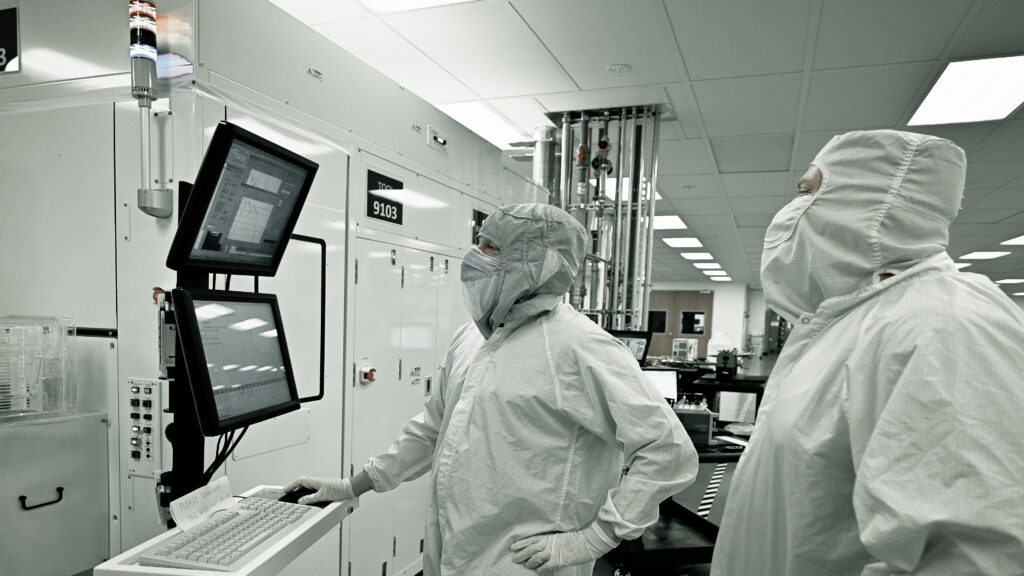
The semiconductor industry always seemed to me to be a distant industry where AM would not have a major role to play, until Formnext 2024, where I saw several interesting applications enabled by this technology. The more I dive into this topic, the more I realize that these are two sectors that can help each other.
For those new to semiconductors, it’s essential to note that this industry encompasses everything related to the design and fabrication of semiconductors and semiconductor devices, including transistors and integrated circuits.
“When we talk about the semiconductor industry, we’re referring to the electronic chips that are everywhere around us, from phones, tablets, data centers and accelerators to cars, airplanes and satellites. The semiconductor capital equipment (SCE) industry makes the equipment utilized to make those chips. As far as manufacturing is concerned, one important point we need to clarify is that there is often confusion between printed electronics and AM applications in the semiconductor industry. These are two different topics, and they should be discussed separately,” Dr. Ahmed El Desouky, Director of Additive Manufacturing at Veeco, clarifies from the outset.
While this sector is the driving force behind the wider electronics industry, it is the supply-demand imbalance that governs the year-on-year dynamics. Interestingly, the challenges that arise across this supply chain somehow led to the opportunity to use AM.
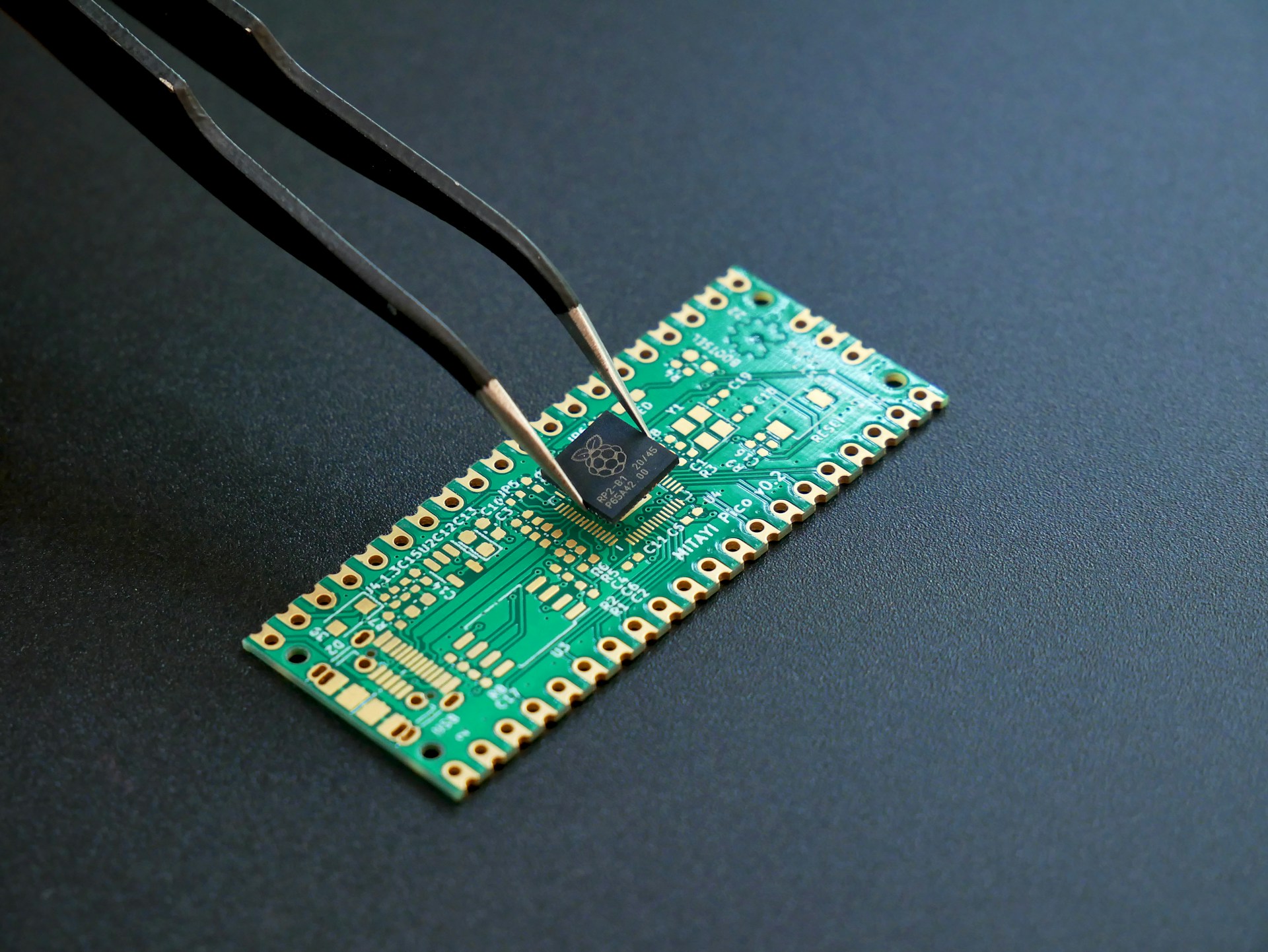
This dossier aims to help industrials understand:
- Miniaturisation, Moore’s law and equipment manufacturing constraints
- The use of AM in the semiconductor industry
- Challenges & future outlooks
While we aim to highlight a wide range of applications enabled by AM, a key focus will remain to understand the challenges and use cases specific to semiconductor capital equipment manufacturers.
Moore’s law
According to Dr. El Desouky, Moore’s law best illustrates the opportunity Semiconductor Capital Equipment (SCE) manufacturers have seen in exploring the use of AM.

“Sixty years ago, Moore[1] observed that the number of components per integrated circuit will double every 2 years, and this law has held since then”, Dr. El Desouky explains.
Historical context: Moore’s 1965 prediction used an annual doubling; he revised it to a two-year cadence in 1975. This industry projection does not, by itself, explain supply-chain disruption.
Several decades later, one observes that as time goes by, devices produced by OEMs across the world are more and more complex, and so is the complexity of microchips that power them.
Increasing chip complexity places greater demands on production equipment. Manufacturers must balance performance, reliability and component availability. Supply disruption can extend delivery times, which depend on the equipment and supplier.
“Semiconductor Capital Equipment manufacturers like Veeco play a critical role in upholding Moore’s Law, but doing so involves significant technological challenges. This also presents an opportunity for adopting new technologies such as Additive Manufacturing. The need to constantly and quickly develop new materials, processes, and architectures aligns perfectly with the design freedom and innovation that AM brings to the table,” The Director of AM points out.
The use of AM in the semiconductor industry
It is now clear that SCE manufacturers turn to AM to produce parts for their existing machines or to manufacture highly sophisticated components.
Our coverage of Formnext 2024 identified several processes worth investigating for equipment components: laser powder bed fusion, directed energy deposition, metal binder jetting, bound metal extrusion, stereolithography and lithography-based ceramic manufacturing. Suitability depends on the part and its qualification. Electrohydrodynamic inkjet printing also concerns the fabrication of electronic structures and should be distinguished from printing machine components, the focus of this feature.
For Dr. El Desouky, “Among all these technologies, the more mature one remains Laser powder bed fusion. That’s the AM process we are using the most right now as last year Veeco acquired the NXG XII 600 system from Nikon SLM Solutions to achieve our production objectives,” he adds.
Nikon SLM Solutions announced Veeco’s NXG XII 600 acquisition on 8 October 2024. The maturity assessment in the interview reflects Veeco’s experience.

“There are dozens and dozens of applications that use semiconductors but the way they affect the supply chain is mostly in communication networks, network infrastructures, and end-user devices. That being said, semiconductor manufacturing is a highly intricate process that relies on various types of capital equipment to perform many different tasks,” AM Engineer Eilis Taylor said to introduce the applications enabled by AM. These tasks may include gas mixing, deposition, masking and slicing.
Lattice structures and internal channels offer design possibilities for equipment components. The examples discussed here address three areas: structural optimisation, thermal management and fluid flow.
“At Veeco, some of the primary applications where AM plays a key role include gas injectors for manifolds and water-cooling heat exchangers,” Taylor notes.
In heat exchangers, AM enables investigation of channel networks and heat-transfer surfaces that can be difficult to produce with some conventional methods. Any benefit depends on geometry, material, operating conditions and the manufacturing baseline.
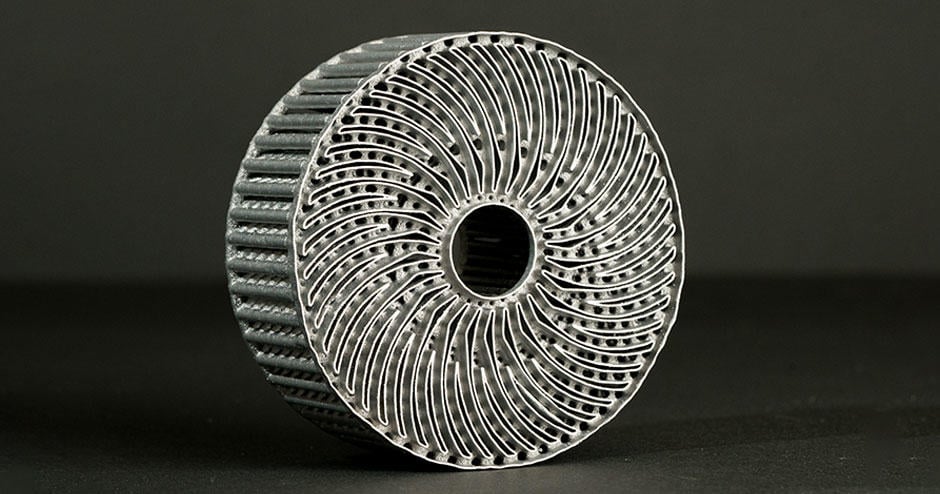
3D Systems reports a 1–2 nm improvement in accuracy through wafer-table thermal optimisation. This is an application-specific improvement reported by the supplier, not a guaranteed absolute accuracy for every printed part or a measurement presented by Veeco.
“Since we are 3D printing machine parts, we can explore a lot of material combinations in this industry (metal, plastic, ceramic…)”, Dr. El Desouky starts.
“The reality is that most of the process combinations that exist were first designed for other industries. Those industries that first adopted AM develop the materials that are specific to their applications, and that’s what we need to do in the semiconductor industry where AM is still in its infancy,” Taylor continues.
“There is room for expansion in many areas, in refractory metals and ceramics. We don’t have to use the same alloys that we’ve always used in casting and machining. We could look for alloy designs that could meet the specific needs of certain applications in semiconductors,” Dr. El Desouky adds.
Challenges & future outlooks
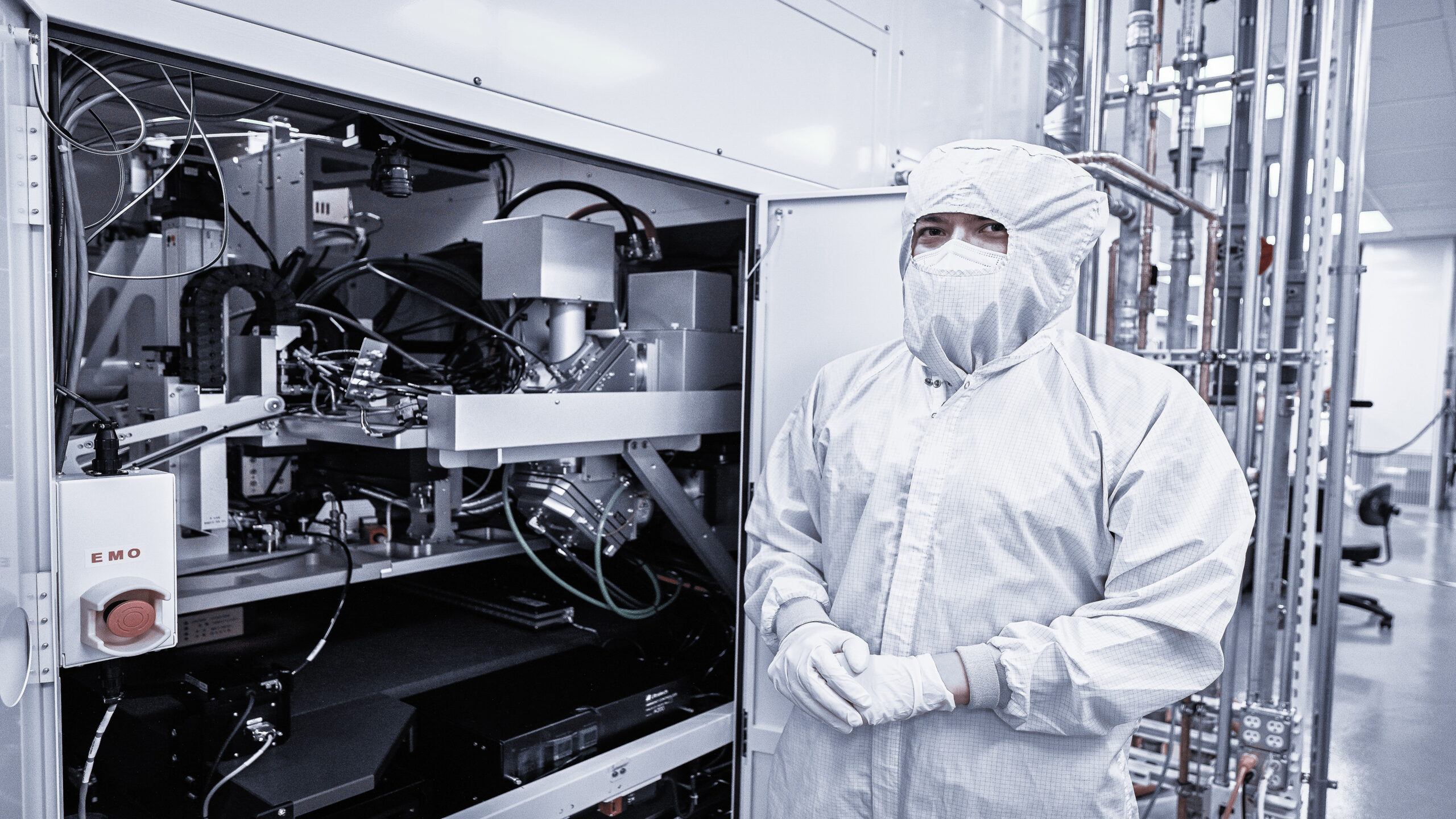
The conversation with Veeco’s experts highlights material selection and qualification as a major challenge for SCE manufacturers. AM materials that could meet the stringent performance requirements of semiconductor devices could be challenging to identify as they should be able to deliver electrical, thermal, and mechanical properties – all of which are crucial to unlocking the potential of AM in semiconductors.
Repeatability and qualification remain essential. Cleanliness, safety and performance requirements must be assessed for the equipment and customer; a general comparison with aerospace does not establish these requirements.
We didn’t discuss this point, but I believe the ‘repeatability’ constraint could pose challenges when scaling up AM in this vertical—particularly when trying to maintain consistent device performance.
Given that we are still in the early stages of adopting AM in this vertical, it’s not surprising that the cost per unit for certain components might remain relatively high compared to traditional manufacturing processes. However, as with many applications in other industries, the use of AM in this vertical should always be “product-driven.”
Lastly, the lines above may emphasize how AM benefits the semiconductor industry, but the challenges that remain to be addressed will urge AM technology providers to collaborate with SCE manufacturers to develop solutions that are specific to semiconductor applications.
Editor’s notes
To discuss this topic, we invited Dr. Ahmed El Desouky, and Eilis Taylor from Veeco Instruments. Their comments have been edited to maintain clarity and brevity. The portraits and remaining uncredited illustrations are courtesy of Veeco; the other image credits appear in their captions.
Veeco designs semiconductor process equipment, including wet and laser processing, lithography and several deposition technologies. Its 2024 NXG XII 600 acquisition illustrates its investment in additive manufacturing.
[1] The law is named after Gordon Moore, co-founder of Fairchild Semiconductor and Intel and a former CEO of Intel.
THE 3D ADEPT WEEKLY NEWSLETTER
The industry moves fast. Stay ahead.
Every week, the latest additive manufacturing news, in-depth features and real-world applications, straight to your inbox. Plus, be the first to know when a new issue of 3D ADEPT Mag is out.
Free · One email a week · Unsubscribe anytime
Clicking loads our email provider’s sign-up form, including its analytics and Google’s anti-bot protection. You’re only subscribed if you complete the sign-up. Read our privacy policy.