

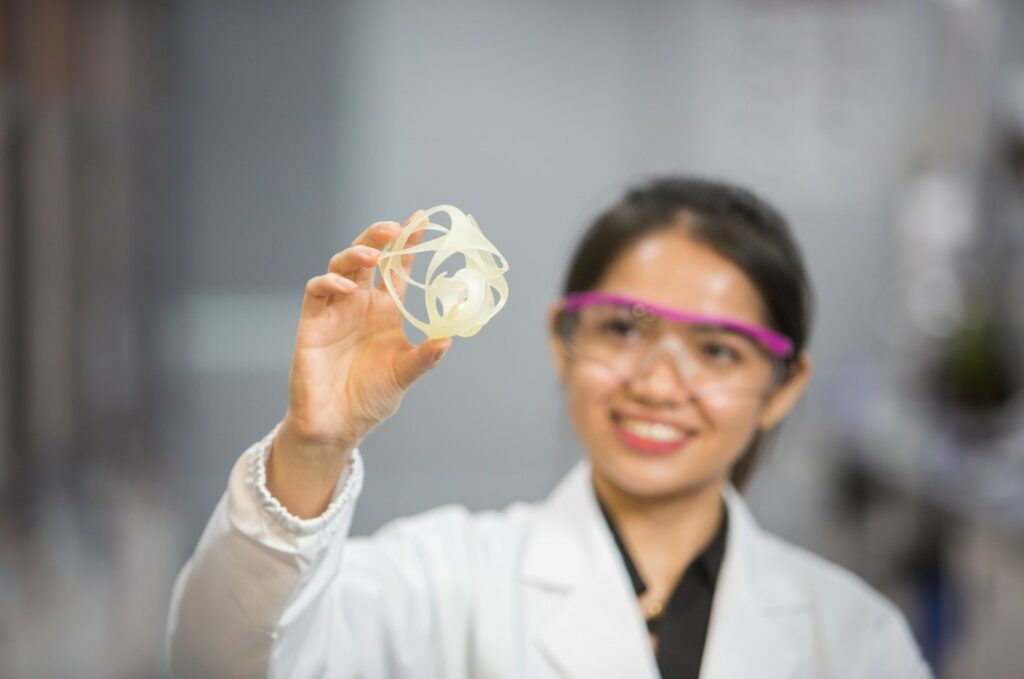
Interview from the September/October 2023 context. References to “this year”, the next Formnext and forthcoming launches refer to 2023.
We have grown up in an environment where plastic, once used, is considered waste. This burden has prevented generations of consumers and industries from capturing the economic benefits of plastic. With Additive Manufacturing and circular economy at the top of Europe’s agenda, waste that was considered a burden before has now turned into gold. The only thing is that it’s up to each company to find the right way to make it glitter. We put difficult questions to Evonik’s Dominic Störkle to understand their strategy.
Why specialty chemicals company Evonik, you may ask? Because I strongly believe that a circular economy strategy for 3D printed plastics starts with material. More importantly, material producers have the right expertise and can leverage the right resources to put in place a circular economy or a system that avoids waste and limits resource consumption by recirculating existing materials. Such circularity would mean recapturing and reusing existing polymers when and where possible, as well as controlling or restricting the development of new, virgin materials made from non-renewable fossil fuels.
To do so, material producers have to understand the specific market they operate in. Indeed, each material producer will have unique objectives when it comes to circular economy.
The article below aims to help you understand:
- The specifications and the challenges for a material producer operating in the AM industry
- The decisions made at the manufacturing level to produce 3D printing materials with circular economy in mind
- Where Evonik is in its sustainability journey
The specifications and the challenges for a material producer operating in the AM industry
Plastic-waste management presents challenges that vary with material and process. According to Evonik, one issue for AM is turning interest in reuse into effective collection and recycling systems.
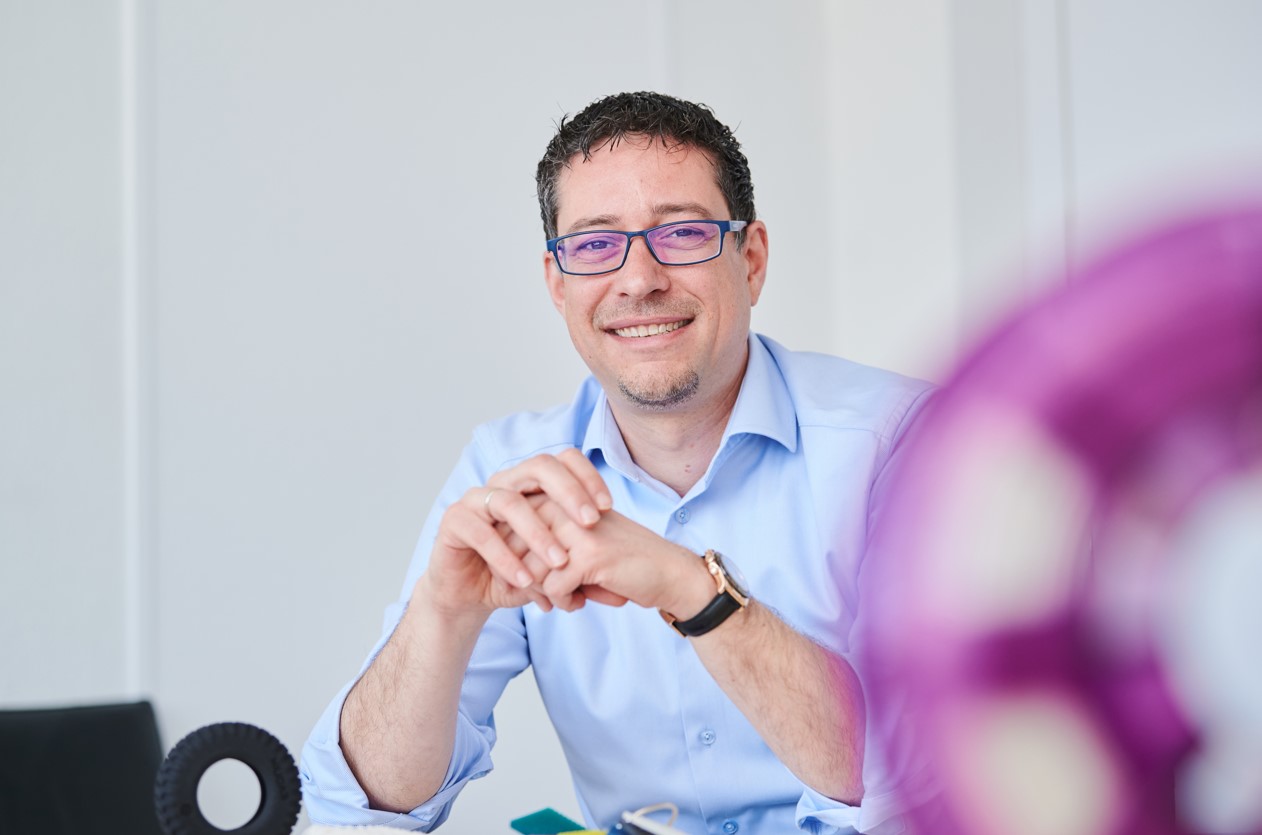
“There are good examples already of well-working recycling concepts like in the case of PET bottles. In the next step which is already ongoing, we have to transfer this know-how to other application areas in order to circulate high volumes and thus improve the economics of plastic recycling. The plastics industry understands the need to force innovation in mechanical recycling but also in chemical recycling technologies,” Dominic Störkle, Head of Additive Manufacturing Innovation Growth Field at Evonik explains from the outset.
According to Plastics – the Facts 2019, 32.5% of collected post-consumer plastic waste in 2018 in the EU28, Norway and Switzerland was sent for recycling. This does not cover all plastics produced, nor is it an AM-specific rate. To advance circularity, Störkle discussed legislation:
“Legislation will play an important role in driving circular plastics economy like, for instance, the EU’s directive on end-of-life vehicles, which will trigger significant demand for recycled materials from the industry. In this regard, EU legislation on recycled content target in automotive is looking at 25% recycled content in the near future. This target is also supported by the Plastics Europe Association.
Driving circularity for special polymers such as polyamide 12 requires close collaboration across the entire value chain to find out the right concepts. As a market leader for PA12 materials, we are at the right point of contact for key market players to get this started.”
This comment belongs to the context of the July 2023 European proposal on end-of-life vehicles. Its 25% target concerned recycled plastic in the vehicles covered, not a quarter of the vehicle’s total mass. It was then a proposal, not an already applicable requirement.
Recycling economics also depend on collection, sorting, processing and quality requirements. The competitiveness of recycled versus fossil-based feedstock varies by market and application; there is no universal cost ranking.
Answering this question will help AM users understand the decisions you made at the manufacturing level to produce materials.
Producing 3D printing materials with circular economy in mind

Traditionally, the philosophy of the circular economy has been structured around the 3Rs: reduce, reuse, and recycle. As someone who is well familiar with organizations providing ESG services, I know it’s more than that because each company tackling this topic defines its own terminology. Evonik is no exception.
“In our terminology, reusability of materials refers to the refresh rates over several printing cycles, defined by the replacement of just the powder that was used to form the part created during the previous job. In this regard, our PA12 grades exhibit the market’s best reusability rates while evidencing high surface quality and stable mechanical properties of 3D printed parts over several printing cycles. When it comes to recycling, 3D printing is a great technology because it enables a toolless design for recycling of highly complex parts and structures that are manufactured next using only one type of material. These practices help bring end-of-life parts into a second life cycle, creating an optimized closed-loop ecosystem,” the Head of AM explains.
So, how do we define a strategy that aims to reduce plastic waste and greenhouse gas emissions in the plastic value chain while delivering market returns?
The range of uses complicates this strategy: 3D printed polymers can serve medical applications or automotive parts. Performance, traceability and end-of-life requirements differ between these uses.
“That’s why today’s shift from a linear to a circular plastics economy is crucial to safeguarding the quality of life for next generations,” Störkle adds, before attempting to respond to the question: “Establishing an efficient circular economy, however, is a complex thing: every single step in the production cycle must be re-evaluated, supply chains must be reorganized, sustainable materials like our footprint reduced PA12 with a high reusability rate are needed and eventually new way of parts design is necessary. For material producers like Evonik, living circularity might not be so self-evident for everyone. However, the more aware and transparent the sustainable journey becomes at the beginning of the additive value chain, the more impact these effects will have in the final application. Yet material manufacturers bear a great responsibility here because the sustainable result of an application stands or falls with the sustainable performance of the materials used.”
In this vein, Störkle agreed with us: moving away from fossil resources is a must and this can be done in several ways. For Evonik, this means acknowledging the importance of biobased raw materials in sustainable manufacturing.
“An unreflected use of biobased raw materials as a more sustainable choice for so-called eco-friendly manufacturing is changing at the moment. Fact-based decisions should be made. There are other biobased raw material alternatives available on the market today like bio-circular oils or rapeseed oil grown in closer proximity to our production site. Transparency is key,” the expert points out.
More than cutting CO2 emissions, it’s about determining “a holistic analysis that includes other important factors, such as water consumption or land use along improved overall eco-balances. Evonik drives the circular plastics economy by contributing to both footprint and handprint values. Alongside factors such as production efficiency or the reusability of materials, our circularity approach includes the total life cycle assessments of our materials and their consistent improvement. We look not only at carbon footprint as well as other important factors such as water consumption and land use. Through the use of renewable energy sources and renewable or recycled feedstocks for production, we are significantly improving the overall eco-balance of our materials. Looking ahead, we are working on end-of-life opportunities for our polymers,” he adds.
“Handprint” here refers to the positive contribution sought through applications. On its own, the term does not mean that the material’s overall environmental footprint is negative.
Where is the company headed?

As the first tangible and publicly announced step to back words with action in the AM industry, Evonik introduced a new grade of PA12 powders with significantly reduced CO2 emissions. We caught up with the company at Formnext 2022 to learn more about the cornerstones of their sustainable manufacturing approach (carbon footprint, saving fossil resources, reusability rate and recycling). While other releases have marked this year, we were keen to discover what specific progress has been made in their sustainability journey. Störkle’s response did not disappoint:
“Since introducing our carbon-footprint-reduced PA12 materials for powder bed fusion 3D printing technologies last year, we have been developing an eCO grade of our nylon powders that is aligned with Evonik’s mass-balanced approach. At this year’s Formnext trade show, we will be launching a new PA12 grade that exhibits the highest circular benefits available on the market for additive manufacturing today.
The product will be called INFINAM® eCO, and it will be the world’s first PA12 powder material for 3D printing that substitutes 100 percent of fossil feedstock with bio-circular raw material from waste cooking oil in a mass balancing process. By using 100 percent renewable energy for production, the new ready-to-use PA12 powder features a carbon footprint reduction of 74% – in comparison to our castor seed oil-based INFINAM® Terra grade. Furthermore, INFINAM® eCO will offer the market’s best reusability rate to eliminate production waste even further. It can be reused over several cycles by only replacing the powder needed to form the part created during the previous job.”
Evonik’s 23 October 2023 release places the claimed 74% reduction against the INFINAM Terra development grade on a cradle-to-gate basis, including biogenic carbon. It specifies a refresh mix of 70% used and 30% virgin powder. This establishes neither a 74% reduction over the full life cycle nor reuse without fresh powder. Interview superlatives remain supplier claims.
Mass balance accounts for and attributes certified feedstocks within a system where input streams may be mixed. It does not guarantee that every granule physically contains 100% biobased material.
What’s next, you might wonder?
The growing need for environmentally friendly manufacturing has emphasized the need for assessments like LCAs that demonstrate the environmental impact of one’s technology. Evonik is aware of that and strongly believes that true circularity leads to a successful business.
“As a pioneer for polymer-based 3D printing materials, we will follow our formula for our PA12 powders to drive circular plastics economy in additive manufacturing by improving the efficiency of our production processes and the overall improved of eco-balances of our materials,” Störkle comments.
At the time of this 2023 interview, the company was exploring end-of-life options for its polyamide 12 powders and seeking collection and reuse partners.
“We are always on the lookout for companies to collaborate with in the field of additive manufacturing in order to establish material collection schemes and promote the reuse of polymers,” Störkle concludes.
This content has been produced in collaboration with Evonik. It was first published in the September/October 2023 edition of 3D ADEPT Mag.
Review note: 2023 context, data scope and terminology clarified; the interview’s claims remain attributed to Evonik.
THE 3D ADEPT WEEKLY NEWSLETTER
The industry moves fast. Stay ahead.
Every week, the latest additive manufacturing news, in-depth features and real-world applications, straight to your inbox. Plus, be the first to know when a new issue of 3D ADEPT Mag is out.
Free · One email a week · Unsubscribe anytime
Clicking loads our email provider’s sign-up form, including its analytics and Google’s anti-bot protection. You’re only subscribed if you complete the sign-up. Read our privacy policy.