

Feature published in the September–October 2020 issue of 3D ADEPT MAG, then online in April 2021. Roles, products and outlook reflect that period. Interviewees’ remarks are preserved; added editorial clarifications are identified.
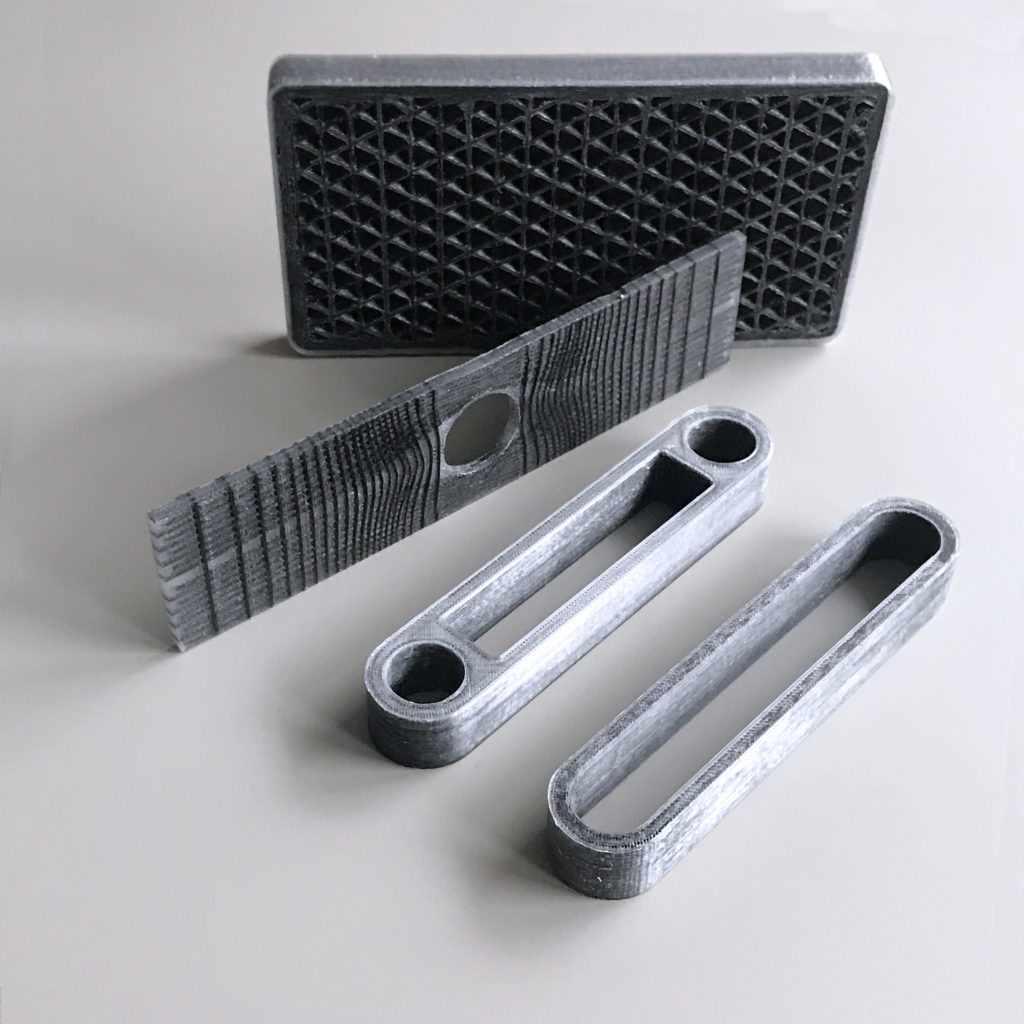
Combining additive manufacturing and composites creates opportunities for lightweight parts and tooling. A SmarTech Publishing projection anticipated a market exceeding $9 billion in 2028: this is a historical forecast, not recorded revenue. This feature examines the materials and processes behind those expectations.
To explore reinforcement, matrix and process choices, 3D ADEPT interviewed two complementary businesses: continuous-fibre specialist Anisoprint and materials supplier SABIC.
Anisoprint develops composite fibre co-extrusion printers. Founder and then-CEO Fedor Antonov brings academic and industrial experience in the design and optimisation of composite structures.
Next to Anisoprint, is SABIC. This expert in the chemical industry delivers value by providing materials at various points throughout the global additive manufacturing value chain. Kim Ly, Lead Scientist, Application Technology at SABIC’s Specialties Business answered our questions as part of this feature.
The 2014 introduction of Markforged’s Mark One was one milestone in continuous-fibre-reinforced polymer printing. In 2020, the interviewees describe a widening range of materials, machines and applications.
For Antonov, Composite 3D Printing is less widespread compared to other AM technologies because “it is one of the youngest branches of AM technologies. New players are entering the market every year and the number of applications and use cases is growing rapidly”. “I’m pretty sure that in 5-10 years composite 3D printing will be one of the biggest things in AM”, Antonov said.
Why consider additive manufacturing of composites?
We tend to believe that the “virtuous cycle of the 3D Printing industry” drives this change. As per the words of Shane Fox, Founder of Link3D, “the more designers design products, the more applications we will have. The more applications there are, the more materials will be developed, and the more printers will evolve or be introduced to the market“.
This cycle describes one possible innovation dynamic. Additive manufacturing can also address some constraints of conventional composite manufacturing, without being the only solution.
Depending on the material and process, conventional manufacture may involve hand lay-up, vacuum processing or autoclave curing. These operations require time, equipment and expertise. Their cost should be compared with an additive route for a defined part and production volume.
Composites are attractive for the combination of mass, stiffness and strength they can provide. Replacing metal is worthwhile only when design, loading and service conditions support that choice.
Speaking of the way the use of composites differs from conventional manufacturing processes & additive manufacturing processes, Antonov stated:
“There is not just one conventional composite manufacturing process. And most of them are also additive by definition (the materials is added to create an object, not removed). Moreover, Automated Fiber Placement (AFP) or Tape Laying (ATL) technologies, that are successfully used for decades to produce high performance composite parts, could be called 3D printing. Some of the new composite 3D-printing companies are offering technologies that are very similar to AFP or ATL, and some of the old AFP/ATL providers now start calling their machines 3D printers. There are other composite manufacturing technologies, such as hand layup, filament winding, pultrusion, resin transfer molding and many others, that are quite different one from another, but all of them are additive. What really makes the difference, is not the fact that these technologies are additive, but rather higher level of automation, digitalization and customization of the manufacturing process. Most of the conventional technologies are multi-stage processes that require lot of hand and paper work, and have many limitations. The ideal composite manufacturing technology of the future (anisoprinting) is a fully automated, single-stage, digital manufacturing process that imposes no limitations on the shape and internal structure of the part”.
Editorial clarification: Antonov is setting out his view of composite manufacturing. Adding material does not by itself classify all these processes as 3D printing. The absence of limitations describes an ideal: geometry, fibre paths, consolidation and printhead access remain practical constraints.
Automation can reduce some manual operations and provide greater control over reinforcement placement. It does not necessarily remove consolidation, finishing or inspection requirements.
The use of composite materials in Additive Manufacturing
A composite combines constituents with different properties. In the polymer-matrix composites discussed here, the matrix surrounds and binds the reinforcement, which may consist of short or continuous fibres. The matrix is not simply surrounded by the fibres.
This combination can tailor stiffness, strength, weight or thermal behaviour. It does not automatically improve every property. Fibre orientation, content, matrix adhesion and porosity matter; a carbon-reinforced composite may also conduct electricity rather than act as an electrical insulator.

Composite materials can be found in various forms. Taking SABIC’s materials as an example, Kim Ly explained that “glass- and carbon-reinforced polymer pelletized compounds can be used in Large Format Additive Manufacturing (LFAM), also known as Fused Granular Fabrication or pellet extrusion Additive Manufacturing”. However, these materials can be found in many different forms as the way they are utilized also depends on the type of AM technology that processes them. Speaking of LFAM for instance, Ly explained that this technology is commonly associated with print envelopes of 1 cubic meter and larger and pellet feed rates ranging from 5-250 kg/hr.
Editorial clarification: the build volumes and feed rates reflect the interviewee’s description of LFAM at the time. They are not standardised thresholds or guaranteed performance figures for every machine.
Anyway, SABIC’s “primary base polymers include ABS (Acrylonitrile-Butadiene-Styrene), PC (general purpose and high-heat polycarbonate), PPE (NORYL™ polyphenylene ether resin), and PEI (ULTEM™ polyetherimide resin), as well as a new compound based on our FST PC for enhanced performance with respect to low flame, smoke and toxicity”.
Speaking of challenges operators can encounter at the materials level, Ly continued:
“We have learned that many early LFAM adopters have less experience processing polymers than our traditional customer base in injection moulding, particularly in the areas of material selection and Design for Additive Manufacturing. In addition, understanding best practices in material handling, drying, and processing are critical since there may be differences in the behaviour of grades, even within the same polymer family. For that reason, SABIC also provides support including fundamental polymer education when needed. Further, since we use our Large Format printer to screen compounds under development, we are very aware of the potential design and processing challenges that can arise, so we offer to review proposed print configurations and can be present either in person or online during first prints to help diagnose any issues. This can help accelerate the learning curve for our customers”.
Chopped vs Continuous fibres
Two reinforcement forms are discussed here: chopped fibres dispersed in the matrix, and continuous fibres placed along defined paths. Their processing requirements and mechanical effects differ.
Chopped fibres are short segments incorporated into a polymer. Their length depends on the material and processing; it is not universally below 1 mm. Matrix choice, fibre content and orientation influence the resulting properties.
Continuous-fibre processes combine long reinforcements with a matrix according to their particular architecture. PLA, ABS, polyamide, PETG and PEEK are not interchangeable on the same printer. PEEK in particular requires equipment suited to its processing temperatures. Anisoprint’s Composer documentation, for example, specifies compatible plastics processed at up to 270°C. Any comparison with metal must identify the measured property and loading direction.
Reinforcement form and process therefore need to be considered together.
“Printers built for LFAM utilize compounds based on chopped fibre to take advantage of the strength properties along with widespread availability and lower cost of pellets as compared to filaments. Use of chopped fibre provides distributed reinforcement throughout the matrix of the print. Printers that incorporate continuous fibre into a matrix of molten polymer have more recently been introduced and offer additional functional capabilities; however, use of continuous fibre may have some limitations on design and full incorporation into the matrix, particularly in gantry-based AM systems” SABIC’s speaker pointed out.
Chopped fibres can be used in several extrusion processes, while continuous fibres require control of their path and incorporation into the matrix. This feature does not, however, provide application counts establishing the relative use of the two families.
The key focus on Carbon fibre
Carbon, glass and aramids, including Kevlar, are among the reinforcements used. The interviewees link interest in carbon to the required performance and intended applications.
For Anisoprint’s CEO, it is a matter of performance. “As the main UVP (Unique Value Proposition) of composite 3D printing is high performance (high strength, stiffness and low weight) it is logical to use the most high performance components. When the price topics will become more important with the maturity of the technology, probably, other types of fibers (such as glass, basalt, aramid or natural fibers) will become more popular, but everyone will find its own niche”, Antonov notes.
Even though she recognizes that the primary use cases to date, are seen with carbon-fibre and glass-fibre, Ly also lays emphasis on the expensive cost of carbon-fibre-reinforced compounds as compared to glass-fibre compounds. However, despite this expensive cost, operators are attracted by the high strength, modulus, thermal conductivity and the lower coefficient of thermal expansion that carbon fibre delivers, properties that are “all highly critical for tooling applications”. Not to mention that carbon fibre compounds are also less prone to warpage, a key advantage for robust manufacturing.
Editorial clarification: thermal behaviour and warpage also depend on the polymer, geometry, fibre orientation and printing conditions. Adding carbon alone does not guarantee equal dimensional stability in every direction.
A chopped-fibre-filled thermoplastic should therefore be distinguished from a continuous-fibre-reinforced composite. In the examples discussed here, “carbon-fibre 3D printing” refers to a composite part, not an object made exclusively of carbon.
Materials vs AM technologies
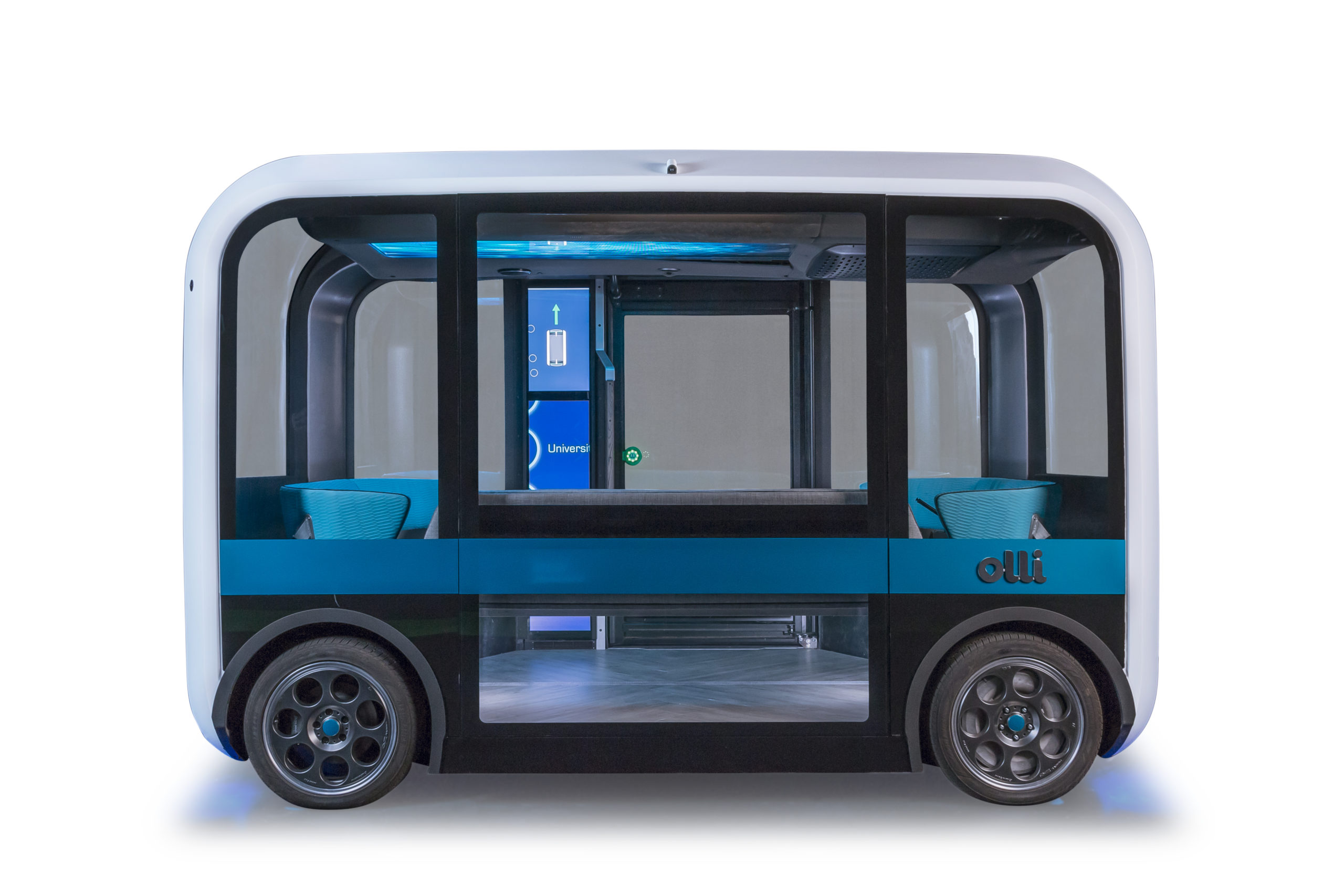
The 2020 feature listed several participants, some specialising in composites and others working in materials, equipment or services. This historical list is not an up-to-date commercial directory:
Anisoprint, +Lab/moi composites, 3D Fortify, 3DXTech, Advanc3D Materials, Arevo Labs, CEAD Group, Cincinnati Inc., Continuous Composites 3D, CRP Group, EOS, Impossible Objects, Ingersoll, Markforged, Roboze, Ricoh, Stratasys, Thermwood, Desktop Metal.
Feedstock is not limited to liquids and filaments: pellets, powders, tapes and fibres also shape process selection. SmarTech’s historical overview identified material extrusion and powder bed fusion, alongside developments based on lamination.
Furthermore, as composite materials require a dedicated approach, existing technologies that were not developed with the goal of processing composites, cannot process them. Antonov did not take into account short fibre reinforce composites here, as “they do not offer a different value proposition”.
Nevertheless, “most of the composite AM are material extrusion based, or lamination based. At the moment it’s quite hard to categorize them, as every vendor has its own process, each of which has its pros and cons” Anisoprint’s CEO completed.
Editorial clarification: Antonov’s assessment concerns his value proposition for continuous fibres. It does not mean short fibres lack value, or that extrusion and lamination cover all composite AM. Machine compatibility must be checked for the particular material and reinforcement.
In Anisoprint’s described co-extrusion process, one inlet receives the reinforcement and another the thermoplastic filament. They are combined in the head and deposited through the same nozzle. This is the composite nozzle, distinct from the separate FFF nozzle on the Composer.
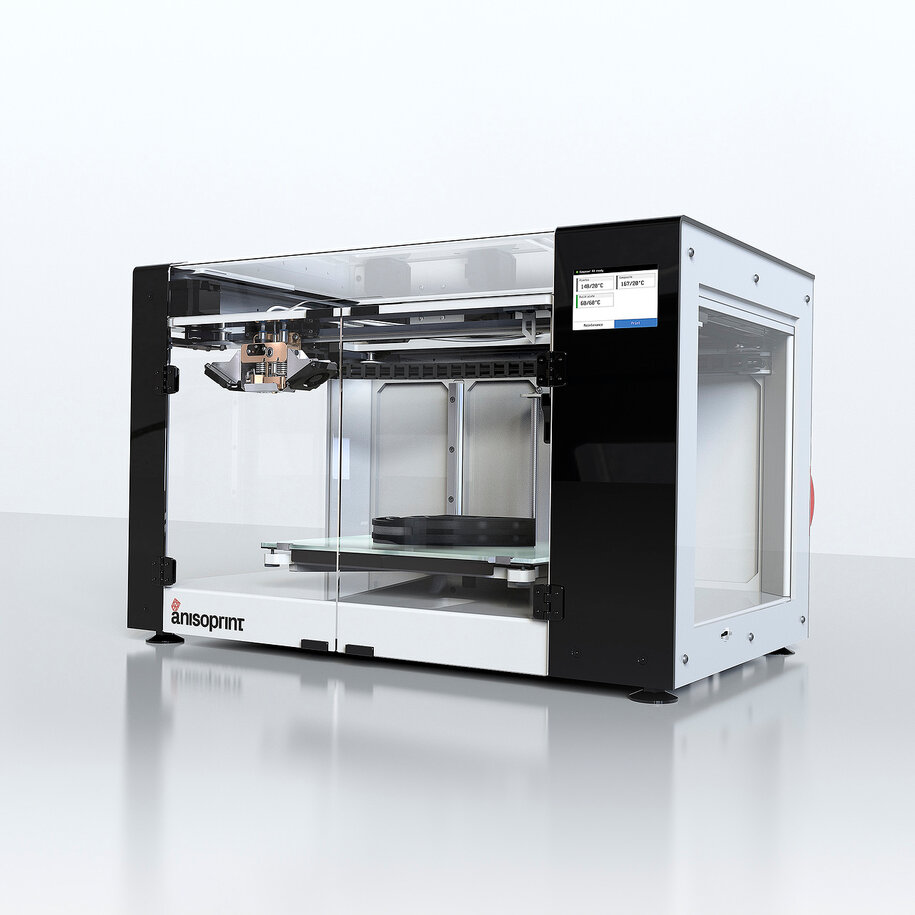
To comment on what makes their technology outstanding, Antonov states: “in most of the other extrusion-based continuous fiber 3D printing processes, the fiber is preliminary impregnated with plastic, and the print head has one input (for fiber, impregnated with plastic) and one output (for the same, but plastic molten inside). The co-extrusion approach allows us to use different types of plastics as a matrix (binder) material, and this choice is made at the customer side, which is not possible with the pre-impregnation approach. And more important, with co-extrusion you can locally change the volume fraction of the fiber that allows for printing more complex structures such as lattices or using layers with variable thicknesses”.
Editorial clarification: co-extrusion does not exclude all pre-impregnation. In Anisoprint’s technical description, the reinforcement already contains a thermoset resin; thermoplastic is added during printing. The interview’s comparison addresses other architectures and should be read in its 2020 context.
Concluding Thoughts
Lightweight parts, tooling and selected functional applications offer development opportunities for composite AM. A suitable choice depends on part requirements, design and a controlled process, beyond weight reduction alone.
Shortening tooling lead times can accelerate use and reduce some costs. Claims of days rather than months nevertheless need assessment for a specific case, including preparation, finishing and inspection. They do not guarantee increased sales.
“However, from the perspective of the material supplier, improvements in material quality and consistency continue to be a primary focus. Because prints can span hours or even days of run time, errors that may occur well into the printing cycle can result in material waste and highlights the need to minimize process fluctuation”. This is therefore the next area for improvement of AM specialists.
This dossier has first been published in the September–October 2020 issue of 3D ADEPT Mag.
THE 3D ADEPT WEEKLY NEWSLETTER
The industry moves fast. Stay ahead.
Every week, the latest additive manufacturing news, in-depth features and real-world applications, straight to your inbox. Plus, be the first to know when a new issue of 3D ADEPT Mag is out.
Free · One email a week · Unsubscribe anytime
Clicking loads our email provider’s sign-up form, including its analytics and Google’s anti-bot protection. You’re only subscribed if you complete the sign-up. Read our privacy policy.