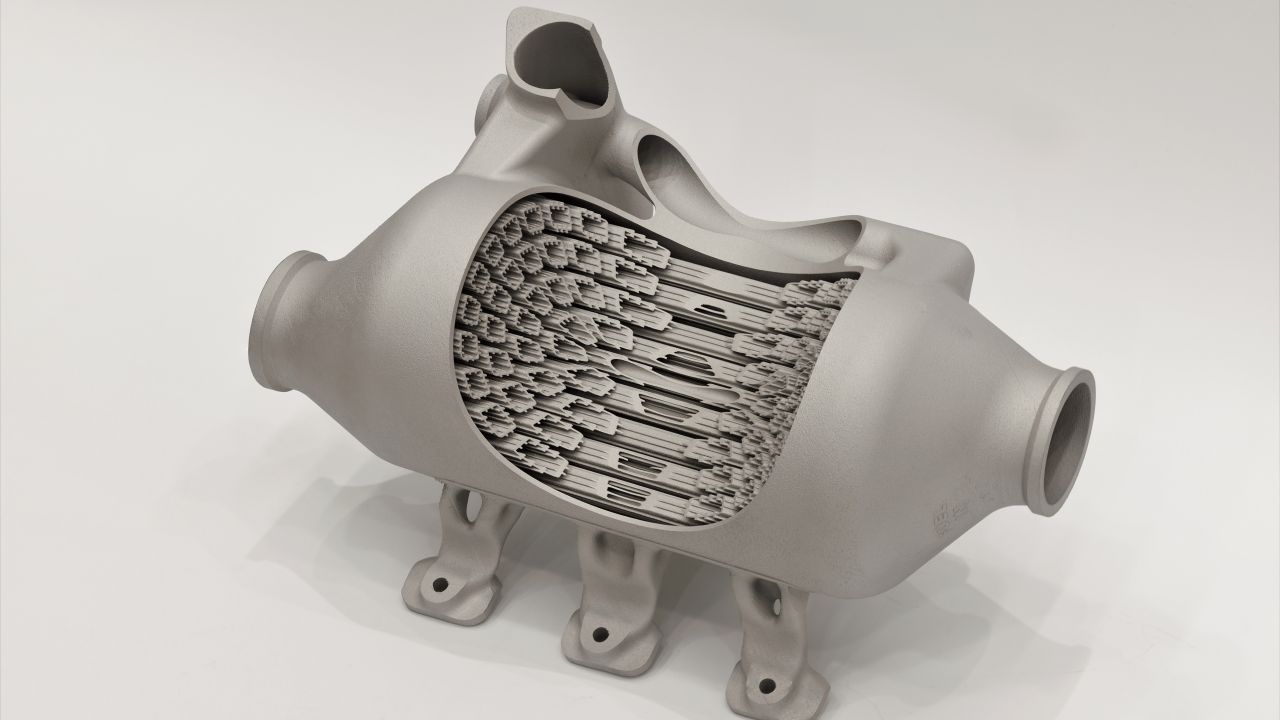
Sintavia delivered a fully optimized, 3D-printed heat exchanger in just two weeks, powered by GPU-accelerated simulation.
The latest NVIDIA Blackwell architecture GPUs and integrated workflows have recently enabled Sintavia to produce an enhanced designed of a heat exchanger.
The aerospace part manufacturer aimed to deliver efficient, lightweight heat exchangers for the aerospace and defense industry.
By using NVIDIA RTX PRO 6000 Blackwell Workstation Edition GPUs in its workstations and NVIDIA data center GPUs in its high-performance computing (HPC) clusters, Sintavia was able to design parts more freely and remove slow points in its integrated production workflow.
This improvement was made possible by GPU-accelerated software from nTop and Siemens, which uses NVIDIA CUDA technology to run computational fluid dynamics (CFD) simulations and design processes faster.
A closer look at NVIDIA CUDA technology
NVIDIA CUDA is a parallel computing platform and programming model developed by NVIDIA. It allows software developers to use NVIDIA GPUs to perform complex calculations much faster than a CPU alone. This means software like nTop or Siemens Simcenter can be built to support CUDA.
NVIDIA GPUs are graphics processing units (GPUs) designed by NVIDIA. A GPU is a specialized processor built to handle many calculations at the same time.
Originally, GPUs were created to render graphics for video games and visual applications. Today, they are widely used for high-performance computing, artificial intelligence, simulation, and engineering workloads.
A simulation-driven approach
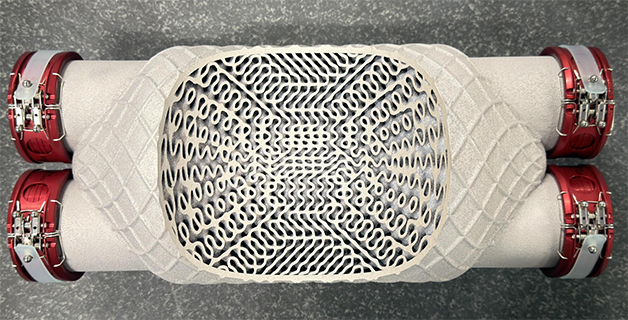
NVIDIA explains that the development of complex thermodynamic components previously relied on manual CAD and iterative prototyping, a slow, resource-intensive process. More advanced designs meant scaling complexity: as models grew to hundreds of millions of cells, compute limitations stalled progress.
“Before, we were constrained by compute,” said Jose Troitino, principal design engineer at Sintavia, “Large simulations could take days—even weeks. With NVIDIA Blackwell GPUs, we’ve cut runtimes dramatically and scaled to models we never thought possible.”
Sintavia broke this cycle by embracing a simulation-driven approach. Their workflow now integrates CFD in Siemens Simcenter STAR-CCM+ and implicit modeling in nTop, powered by local NVIDIA Accelerated Computing platforms.
Building on the previous-generation NVIDIA GPU platform, Sintavia upgraded to the latest NVIDIA Blackwell architecture to unlock next‑level performance on increasingly large, compute- and memory‑intensive workloads. This breakthrough enables rapid iteration without sacrificing fidelity or safety, NVIDIA explains.
*We curate insights that matter to help you grow in your AM journey. Receive them once a week, straight to your inbox. Subscribe to our weekly newsletter.