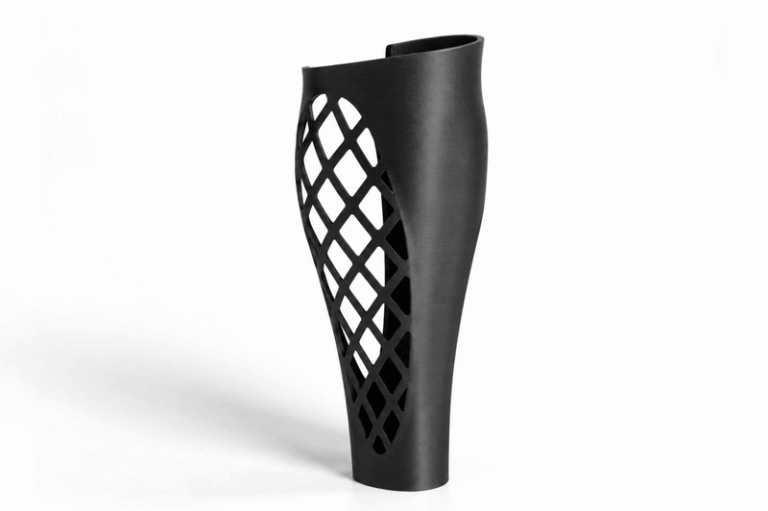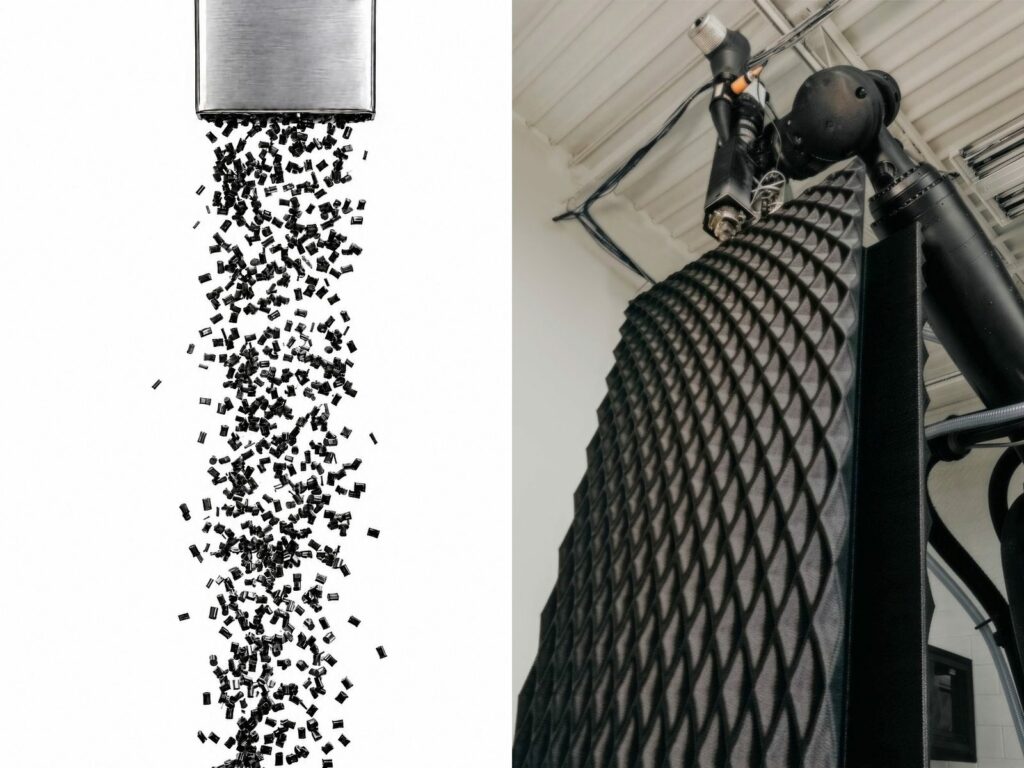
Printerior has launched a full range of recycled pellet grades for large-format additive manufacturing (LFAM). The Missouri-based 3D printing service provider and material manufacturer now has 9 grades in stock. It can also produce more than 15 formulated grades on order and over 35 combinations upon request.
In LFAM, the material must meet several conditions to print a part several meters long correctly. It must flow evenly through the extruder, hold its shape after deposition and barely shrink while cooling. According to Printerior, its grades meet these three requirements. The company tests each lot for melt flow and strength.
The offer also reflects a focus on domestic manufacturing. Printerior makes all grades at its facility in Chesterfield, Missouri. According to the company, its U.S. production capacity can reach 1 million pounds per year.
Buyers can start with a sample jar or a 25 kg trial box. They can then order a gaylord or a full truckload of the same grade, without waiting for material from abroad.
“More manufacturers are turning to LFAM for tooling, molds and large production parts, and they need specialized material made for the process and a supplier they can count on. Bringing our full range of pellet grades to market gives U.S. manufacturers both, straight from stock,” says Trent Esser, Co-Founder & CEO of Printerior.
Where do these LFAM pellet grades come from?
Printerior has been compounding its own filament and pellets since 2021. The company refined its formulas through client projects that it printed in-house. Its fleet includes over 375 FDM, SLS, SLA and LFAM printers. According to the company, finished parts in 2026 alone used over 250,000 lb (113,000 kg) of its material.
This year’s LFAM projects include two 25-foot (7.6-meter) high walls for KI. Printerior also printed a structural RV interior part in glass-fiber-filled polypropylene and modular hospital headwall frames for Nexxspan. The company says it 3D prints single parts as long as 40 feet (12.19 meters) without lifting from the bed.
“A 40-foot-long part only comes off the printer flat and true to shape if the material is engineered for it,” Esser explains.
Recycled feedstock and material options
The pellets would contain up to 100% recycled U.S. plastic waste from food packaging, cosmetic waste or production scrap. Customers can also return printed parts at the end of their life. Printerior then shreds them into new material.
According to Printerior, this service has diverted over 85,000 lb of plastic from landfill to date.
The stocked range includes rPETG, UV-stabilized rPETG and rPLA. It also features glass-fiber rPETG grades, including one rated UL 94 V-0. Other options blend rPETG and rPP with glass fiber or wood.
Custom grades combine base resins with additives. The resins include rPA6, rPA12, rPC, rABS, rASA and rTPU. Additive options include carbon fiber, halogen-free flame retardant and ESD additives. Printerior also offers virgin versions of every grade.
Recycled feedstock also sits at the core of Aectual’s recent partnership with Caracol’s robotic LFAM network. Meanwhile, material suppliers like Polymaker keep adding options for large-format pellet printing studios.
The stock-based approach will matter as much as the formulas. Manufacturers printing tooling or large production parts can order the same grade at every scale from a domestic compounder. This reduces the risk of supply interruption.
LFAM users can request samples through Printerior’s website.
THE 3D ADEPT WEEKLY NEWSLETTER
The industry moves fast. Stay ahead.
Every week, the latest additive manufacturing news, in-depth features and real-world applications, straight to your inbox. Plus, be the first to know when a new issue of 3D ADEPT Mag is out.
Free · One email a week · Unsubscribe anytime
Clicking loads our email provider’s sign-up form, including its analytics and Google’s anti-bot protection. You’re only subscribed if you complete the sign-up. Read our privacy policy.