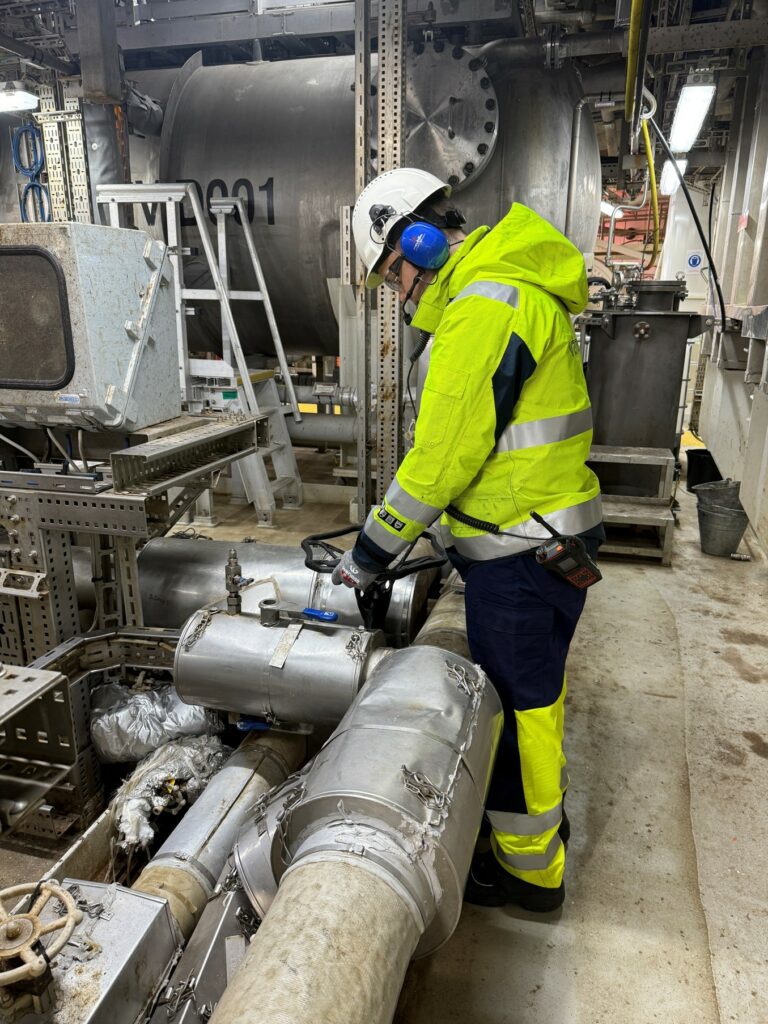
When we map additive manufacturing in energy, a handful of names regularly surfaces. They include Shell, Equinor, Kongsberg Ferrotech, SINTEF, Gassco, and Vår Energi.
Except for Shell, these names share a connection to Norway. Together, they highlight the region’s strength in industrializing AM for oil and gas.
Several of these players have joined forces to standardize the digital supply of 3D-printed spare parts. The consortium includes Vår Energi, an independent pure play upstream oil and gas company. Its role is to help provide reliable, affordable, and sustainable access to energy.
From R&D to the frontline

Trine Boyer’s title is “Portfolio On-demand & AM Implementation Lead”. In practice, she leads the full implementation of additive manufacturing across Vår Energi.
She began working with AM at TotalEnergies in 2020. Then, in 2022, she joined Vår Energi.
For three years, Boyer and her colleagues explored AM and digital inventories within R&D. The company then changed its approach, moving her from research to the frontline.
As Boyer puts it, Vår Energi is a young company with old roots. It emerged in 2018 from the merger of Eni’s Norwegian upstream business and Point Resources. The latter held ExxonMobil’s former Norwegian assets. In 2024, Vår Energi further strengthened its business by acquiring Neptune Energy’s Norwegian portfolio.
From pilot to industrialization
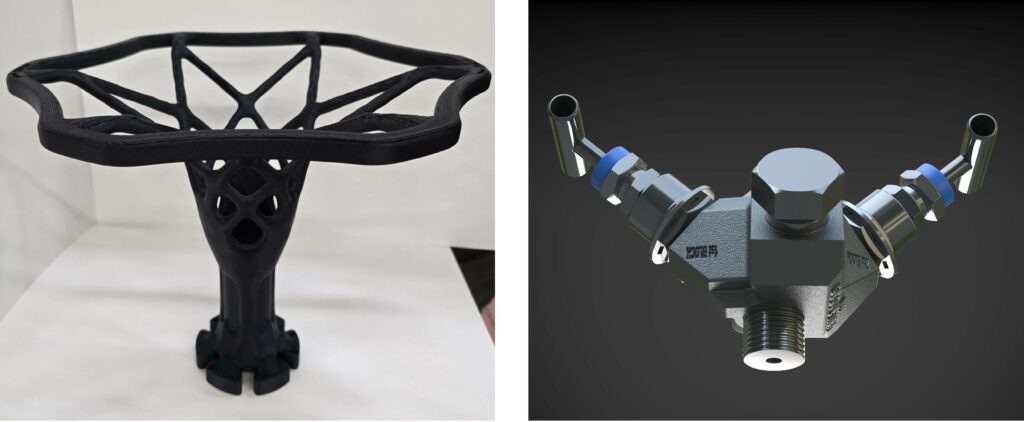
When a company says it uses AM across its activities, we often picture a production floor full of printers. However, energy companies tend to follow a different approach. Vår Energi is no exception.
Like many adopters, Vår Energi wants to industrialize AM. Yet industrialization means different things to different people. Boyer defines it in practical terms:
“Industrialization is not a printer count or a percentage of printed spares. It is an outcome: the right part, qualified for its use (not over-engineered, not under) at the lowest cost, delivered on time, with the lowest emissions, produced as close to the site as possible.”
The operator sets the outcome, while the supplier chooses the method. That method may be CNC machining, forging, or AM. The choice depends on what suits the part.
“We have changed,” she says, “from running around asking people to print everything, to telling suppliers: print what is suitable.”
Some companies follow the philosophy “if it can be printed, it shall be printed.” Vår Energi instead favours a different principle: “print what is suitable, so the part arrives at the lowest cost, in the shortest lead time, and the lowest emissions”. This may sound like a small shift, but it has significant operational consequences.
Vår Energi does not intend to run its own AM production floor. As an operator, its expertise lies in producing oil and gas.
Nevertheless, it owns printers to support learning. Colleagues use them across the company’s offices. Internal “AM Ambassadors” help run the machines and teach others.
What value and what limitations
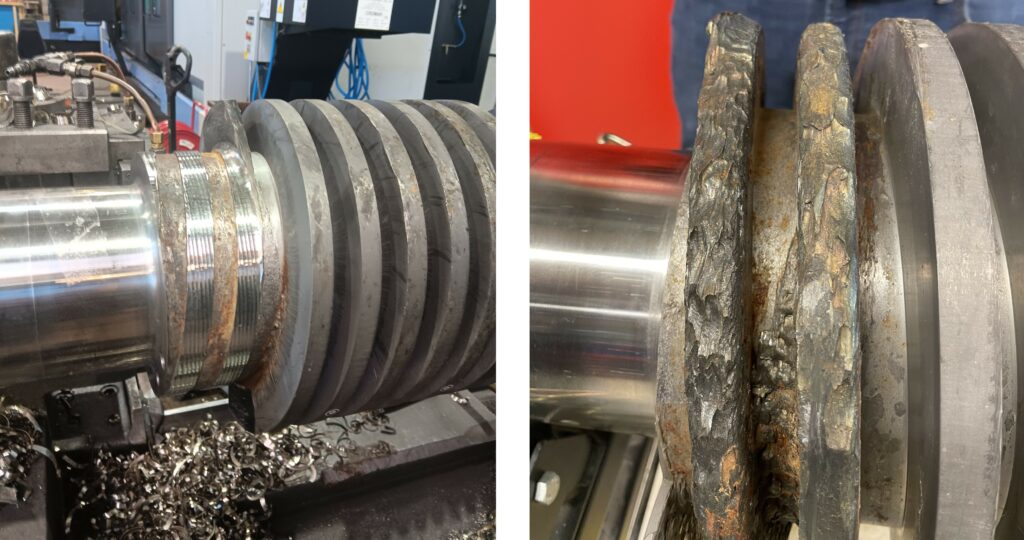
From the outset, Vår Energi has built its implementation strategy around close collaboration with suppliers. Since 2022, this has included work with Fieldnode. That partnership forms part of a wider industry effort to standardize digital part files across competing operators.
The priorities are shared digital inventory, qualified supply chains, faster lead times, and better traceability. These are themes 3D ADEPT Media has tracked closely across the energy and maritime sectors.
Suppliers help advance AM within the organization through their competence, trust, flexibility, and adaptability to Vår Energi’s daily needs.
However, suppliers also remain the main challenge. Boyer believes progress would follow if each supplier provided a clear list of parts, lead times, and production methods. Some already have that maturity; others do not. Changing this mindset is therefore central to the work.
Building confidence and changing habits
Boyer compares this transformation to the arrival of Netflix, Amazon, or Spotify: change driven by end users. Here, however, it reaches an industry she describes as deeply traditional. There are good reasons for that caution: established methods have also kept people safe.
Meanwhile, confidence in printed parts is growing. Documentation now shows that their properties hold up. NASA, aviation, and the automotive industry already use AM. Boyer therefore argues that oil and gas can trust it too.
What would she most like to change about the way AM suppliers serve operators such as Vår Energi? Her answer is simple: that suppliers just deliver, always on time, lowest emission, on site.
Boyer will explore this further during the technology talk organized by Formnext. She will discuss how to implement AM in the oil and gas industry from the operator’s standpoint. For anyone following industrial AM in energy, the discussion offers a closer look at that direction.
*All images: Courtesy of Vår Energi AS
THE 3D ADEPT WEEKLY NEWSLETTER
The industry moves fast. Stay ahead.
Every week, the latest additive manufacturing news, in-depth features and real-world applications, straight to your inbox. Plus, be the first to know when a new issue of 3D ADEPT Mag is out.
Free · One email a week · Unsubscribe anytime
Clicking loads our email provider’s sign-up form, including its analytics and Google’s anti-bot protection. You’re only subscribed if you complete the sign-up. Read our privacy policy.