Legacy Effects, one of Hollywood’s most established practical effects studios, integrated Bambu Lab 3D printing systems into Superman 2025’s production workflow mid-shoot. What started as a trial became a cornerstone of fabrication across multiple characters and builds.
Legacy Effects and the use of AM
Before adopting the Bambu Lab X1C platform, Legacy Effects operated a range of industrial systems — Stratasys Fortus, Raise3D, Markforged, and WASP machines — each suited to specific tasks, but none eliminating the persistent tension between turnaround time and surface finish. Fast FFF prints required secondary SLA processes to reach camera-ready quality. That extra step extended timelines and added labor.
The X1C changed that balance. During early testing on the Hammer of Boravia armor, parts printed rapidly in FFF demonstrated a surface quality sufficient, in many cases, for final on-screen use, bypassing the need for full SLA reprints. The studio expanded its Bambu Lab fleet and transitioned the majority of its FFF production accordingly.
A production-wide shift
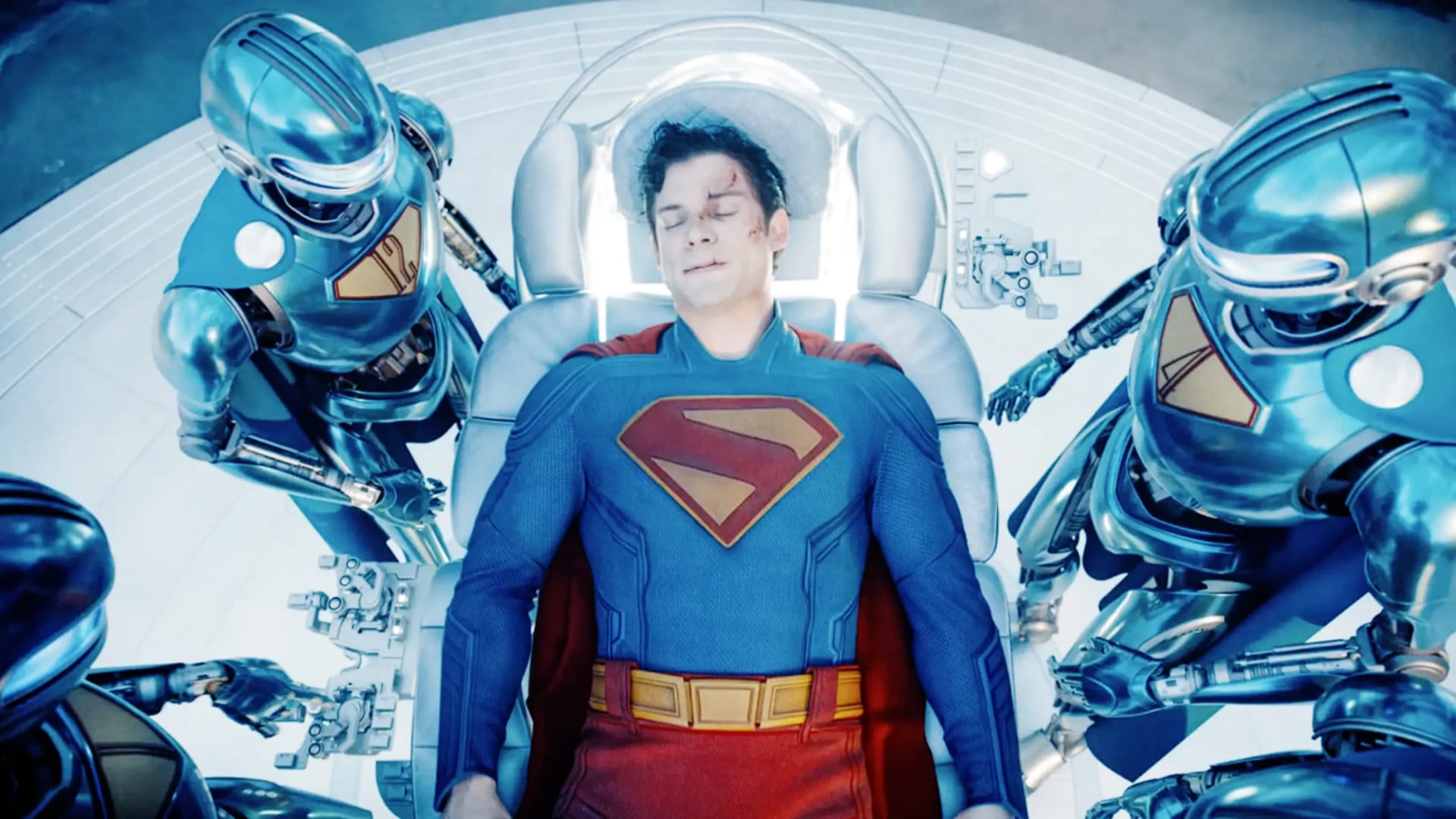
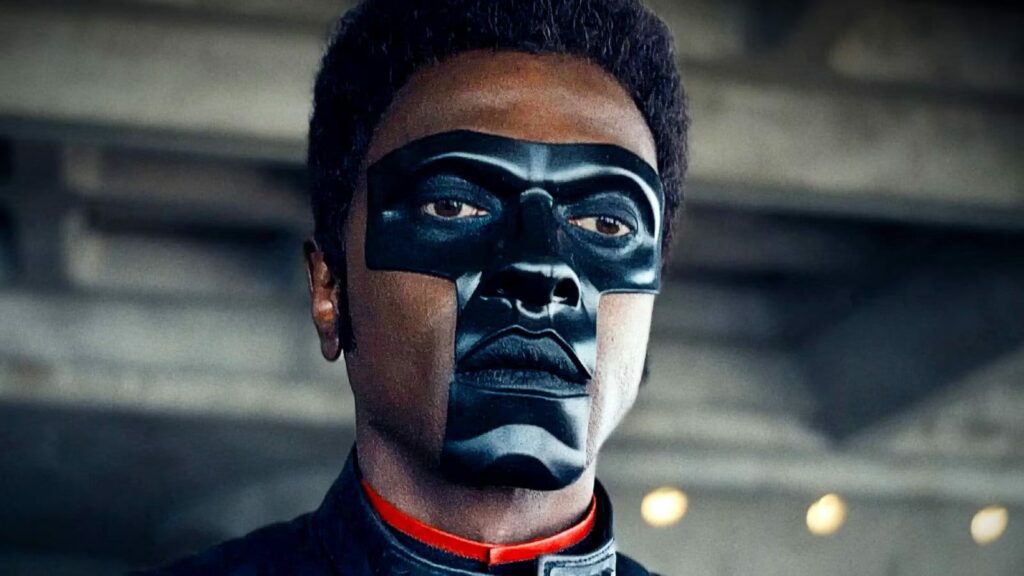
The scope of application was broad. Full test suits for the Hammer of Boravia and LexCorp Raptors were printed as multi-part assemblies, fitted to stunt performers to validate articulation and fit, with same-day reprints when adjustments were needed. Mr. Terrific’s transforming flying chair, one of the production’s most complex stage items, was built largely from FFF-printed components, supplemented by MJF-printed mechanical joints and metal hardware.
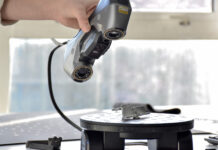
![[1] Hammer of Boravia armor, just 3D printed and not yet surface finished;](https://3dadept.com/wp-content/uploads/2026/03/Bambu-Lab-Legacy-Effects-06-1024x683.jpg)
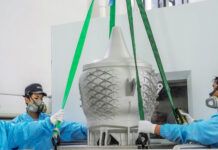
![[2] Hammer of Boravia armor undergoing surface finishing;](https://3dadept.com/wp-content/uploads/2026/03/Bambu-Lab-Legacy-Effects-07-683x1024.jpg)
![[3] Hammer of Boravia armor on the movie set](https://3dadept.com/wp-content/uploads/2026/03/Bambu-Lab-Legacy-Effects-08-1024x775.jpg)
For Superman’s animatronic robotic assistants, including the character Gary, the team used the printers extensively to iterate mechanical brackets and internal joints. Engineering components initially printed in PLA were later produced in PA-CF once tolerances were confirmed, reducing weight and consolidating multi-part mechanisms into integrated geometries.
Material strategy revealed that PLA was used for rapid iteration and art components, TPU (95A) for flexible mask prototyping (including Mr. Terrific’s T-shaped mask) and PA-CF for structural brackets that replaced previously milled metal parts.
A pattern, not an exception
The Superman 2025 example is striking, but it is not isolated. It reflects an accelerating pattern of AM adoption across the entertainment industry.
We covered how Gentle Giant Studios used Nexa3D’s polymer 3D printing to produce life-size characters for Disney Pixar’s Elemental, meeting manufacturing timelines that no other process could have accommodated. More recently, the final season of Netflix’s Stranger Things highlighted how 3D printing — from massive set pieces to intricate miniature props — is now embedded across production pipelines, enabling sequences that would have been logistically impossible with conventional rigging.
The processes most frequently deployed include PolyJet, SLA, FFF, and binder jetting. They are increasingly being selected for prototyping alone, and production-grade fabrication tools.
What this signals for the industry
Legacy Effects describes its outlook as one of continued expansion, with larger-format systems, improved material durability, and workflow automation as the next frontiers, particularly for oversized creature builds and extended production runs.
3D printing is becoming a primary fabrication method, with direct implications for how studios plan schedules, manage iteration, and control cost.
For AM technology providers, the entertainment industry represents both a validation ground and a growing market.
*We curate insights that matter to help you grow in your AM journey. Receive them once a week, straight to your inbox. Subscribe to our weekly newsletter. All images: Courtesy of Bambu Lab.