You don’t get many chances to put industrial AM in Africa in the spotlight, and when you find a company that’s serious about it, it’s hard to ignore. RusselSmith is one of them.
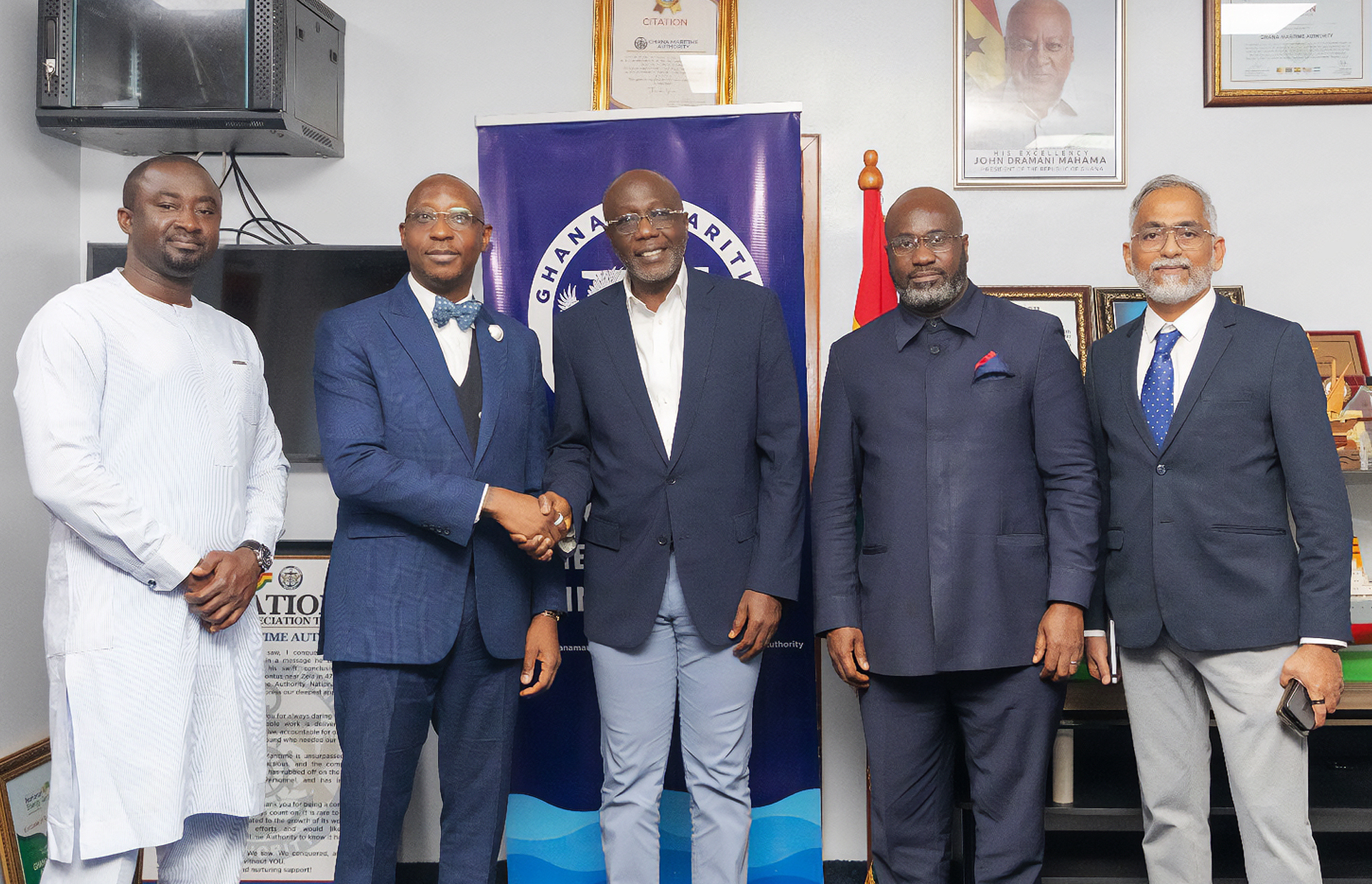
The Nigerian firm has just confirmed it is in discussions with the Ghana Maritime Authority (GMA) to introduce its additive manufacturing capabilities to Ghana’s maritime sector. The potential partnership, facilitated by the Commonwealth Enterprise and Investment Council (CWEIC), was formalized during a courtesy visit to the GMA in Accra, where RusselSmith’s Co-founder and CEO Kayode Adeleke made the case for a regional shift in how West Africa produces and maintains critical maritime assets.
The pitch rests on a sobering reality Adeleke put plainly during the visit: Africa accounts for roughly 2% of the global additive manufacturing market; a market valued at approximately $32 billion in 2024.
That gap, he argued, is not just a statistic. It represents a structural dependency: spare parts sourced internationally, long lead times, high logistics costs, and industries left exposed when supply chains break down. The Ghana Maritime Authority’s Director-General, Dr. Kamal-Deen Ali, signaled clear alignment with RusselSmith’s proposal, noting it supports Ghana’s ambition to become a leading “Blue Nation” by prioritizing maritime safety and environmental sustainability.
What makes this announcement credible is the track record RusselSmith has been quietly building over the past several years, and the pace at which that track record accelerated in 2025.
We covered the company when it partnered with SPEE3D, positioning itself explicitly as an AM reseller and solutions integrator in West Africa. We also reported on its collaboration with 3YOURMIND to build a digital parts inventory for Nigeria’s oil and gas sector.
These partnerships reflected a methodical approach to building end-to-end AM capability: identify viable parts, qualify them for additive production, manufacture locally, and manage inventory digitally.
That foundation deepened significantly last year. In September 2025, RusselSmith and CEAD announced a strategic collaboration to introduce large-format additive manufacturing technologies to African markets, with RusselSmith appointed as CEAD’s exclusive regional implementation partner for LFAM systems in designated West African territories. The focus: maritime, defence, construction, and energy — exactly the sectors now being discussed with Ghana.
A month later, in October 2025, Caracol and RusselSmith signed a strategic partnership to deploy Caracol’s robotic Wire Arc Additive Manufacturing technology across key West African markets, with the stated aim of establishing a world-class advanced manufacturing hub in the region.
Two major technology partnerships in two months. Both targeting large-format AM. Both anchored in sectors where part availability and lead times are operationally critical.
The Ghana discussions sit squarely within this logic. RusselSmith is preparing to commission the Omnifactory, Nigeria’s first multi-technology industrial 3D manufacturing facility in Lagos, with plans to develop a flagship Mega Omnifactory facility later this year Zawya, and Ghana is being considered as a potential next market.
The maritime application is concrete: large-format AM to produce vessels up to 12 metres in length, local printing of spare parts, and a digitally managed component library to reduce dependency on international procurement. There is also a broader circular economy angle, using locally sourced iron ore refined into feedstock for industrial printing.
For the GMA, the internal next step is appointing a focal person to assess technical feasibility. Discussions are ongoing.
*We curate insights that matter to help you grow in your AM journey. Receive them once a week, straight to your inbox. Subscribe to our weekly newsletter.