

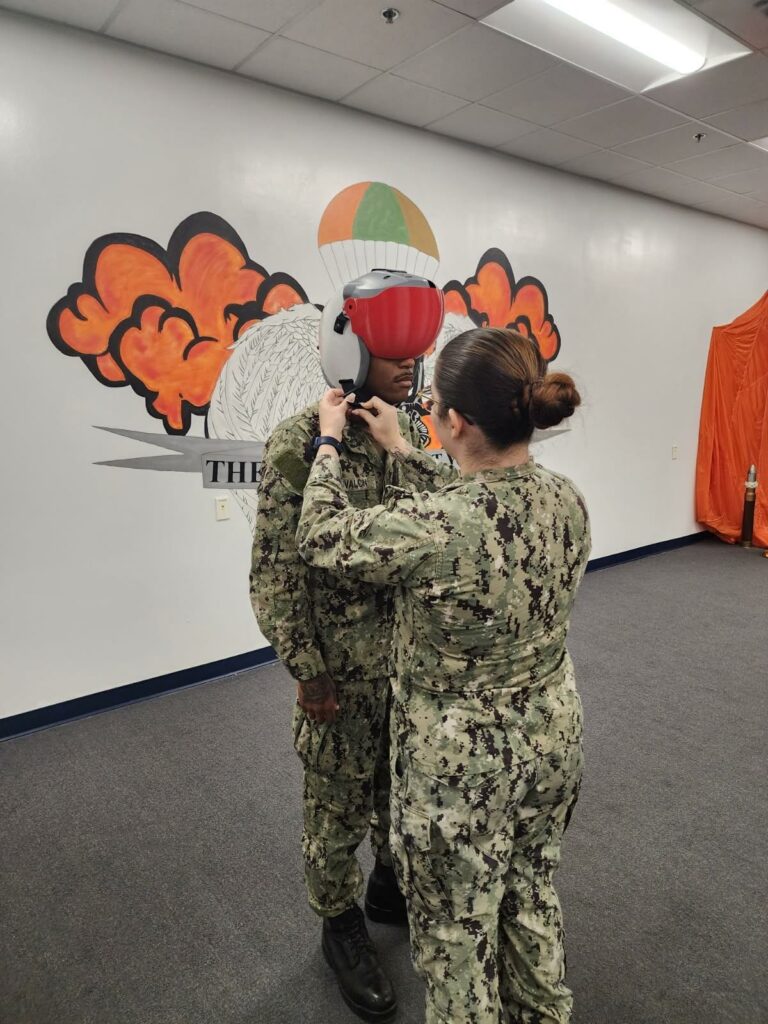
The Naval Aviation Training Systems and Ranges Program Office (PMA-205), Naval Education and Training Command (NETC), Center for Naval Aviation Technical Training (CNATT), and Commander, Naval Air Forces training and readiness (CNAF N7) joined forces. Together, they were able to improve aircrew survival equipmentman training with a 3D-printed Joint Helmet Mounted Cueing System (JHMCS) visor.
Using an AM process powered by FFF at the manufacturing level, the teams were able to meet critical training requirements, advance readiness and cut lifecycle costs, directly supporting their Sailors and the mission.
At a unit cost of $870 and multi-year procurement timelines, the legacy JHMCS visor posed delays to curriculum execution and fleet sustainment. Faced with CNATT’s projected requirement of 40 visors annually, the existing supply model presented significant fiscal and operational limitations, a press release reads.
The path forward via additive manufacturing
The team identified a path forward via additive manufacturing with an acrylonitrile butadiene styrene (ABS) prototype visor. It met essential design criteria, including dimensional accuracy, smooth Helmet Display Unit integration, and familiar trimming characteristics.
The new visors can now be produced with a 65 percent cost savings and in a compressed delivery timeline from years to mere weeks. The creation of a supporting technical data package ensures replicability across fleet intermediate level maintenance print sites. This unlocks a scalable and sustainable supply solution.
Editorial note: NAVAIR’s original release reports 65% savings in its body text but nearly 80% in its image caption. The discrepancy is unresolved; the two figures should not be treated as equivalent.
“This initiative represents more than just a cost reduction,” said Capt. Jonathan Schiffelbein, PMA-205 program manager. “It is a proactive investment in agility, instructional fidelity and long-term readiness.”
CNATT commander, Capt. Michael Polito, lauded the team’s collective performance focused on delivering to the Warfighter.
“This project is the epitome of what happens when we collaborate to provide aviation technical training solutions that will ultimately lead to positive outcomes in the fleet,” Polito said.
Source: NAVAIR, January 5, 2026.
THE 3D ADEPT WEEKLY NEWSLETTER
The industry moves fast. Stay ahead.
Every week, the latest additive manufacturing news, in-depth features and real-world applications, straight to your inbox. Plus, be the first to know when a new issue of 3D ADEPT Mag is out.
Free · One email a week · Unsubscribe anytime
Clicking loads our email provider’s sign-up form, including its analytics and Google’s anti-bot protection. You’re only subscribed if you complete the sign-up. Read our privacy policy.