Czinger Vehicles unveiled at Monterey Car Week, the 21C Spyder which is priced from $2.75 million, on top of the 80 coupes already in the program. What raises our interest in this new addition to the company’s portfolio is the BrakeNode that has been additively manufactured.
Before we move forward, in case Czinger Vehicles does not ring a bell, it’s a supercars manufacturer who designed, developed and built in Los Angeles, California using the Adaptive Production System from its sister company Divergent Technologies.
It seems that each supercar from Czinger Vehicles is always more impressive than its predecessor.
With a removable roof panel, the 21C Spyder comes with the company’s new BrakeNode technology, an updated dashboard design and new styling options.
Where AM has been leveraged
Credit: Czinger Vehicles
Czinger states that 23% of the 21C Spyder is produced using AM processes developed by sister company Divergent Technologies.
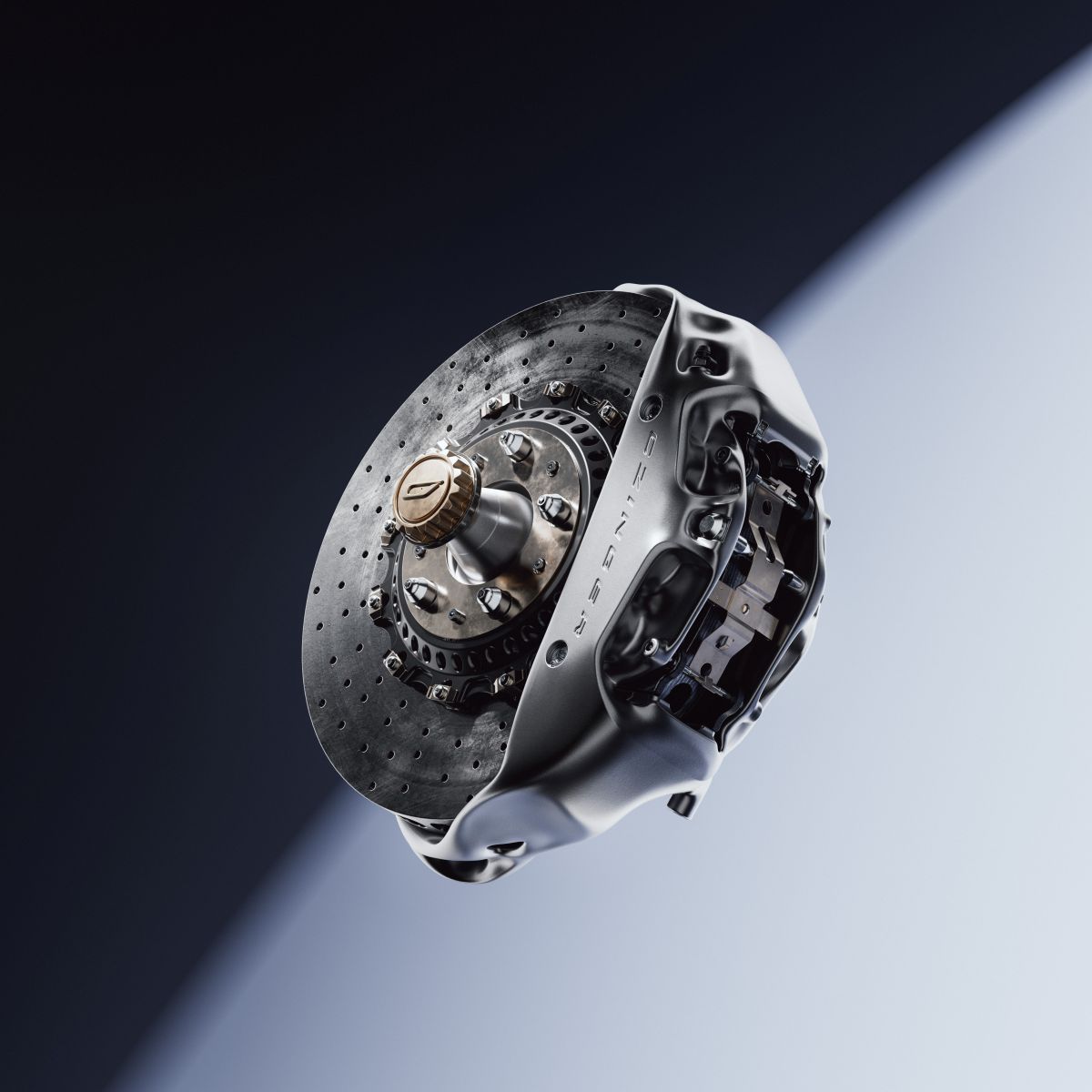
Built from Z301, an aluminium alloy Czinger developed in-house, BrakeNode is one of the key features that enables the new vehicle to stand out. It consolidates the brake caliper, the hydraulic fluid pathways and the suspension upright into a single additively manufactured aluminum structure.
According to Czinger, the design cuts stopping distances by 15%, increases stiffness by 30% and removes 1.5 lb (roughly 0.7 kg) of unsprung mass per corner, with 37% of the structure hollow. Thanks to AM, the new brakes should be smoother and make fewer squeals.
Furthermore, BrakeNode is easier to maintain than a conventional assembly: pads lift out from the top, rotors tilt out from the side, and a drain plug at the base simplifies fluid changes, with no need to disconnect the caliper.
The Czinger Vehicles team also applied the DfAM thinking to NeuralNode, a dashboard built as one large structure with air vents flowing through hollow internal channels.
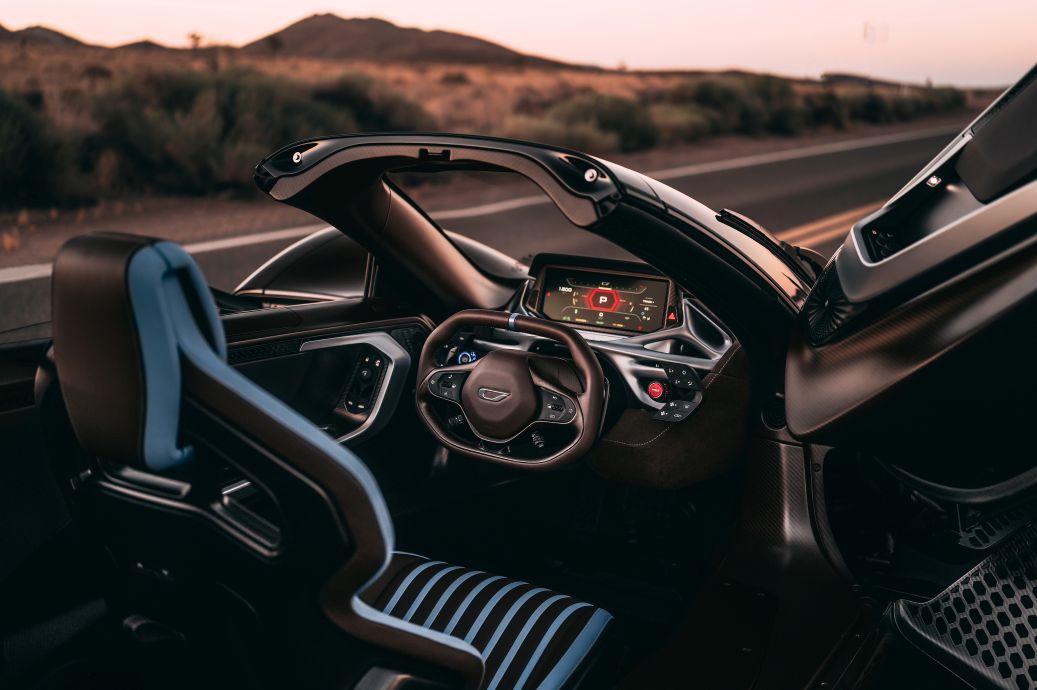 Air is routed from the HVAC unit through the NeuralNode structure itself and out through forward-facing vents fed by hollow internal channels. Other surrounding touchpoints have benefited from the use of AM. They include a redesigned, lightweight additively manufactured steering wheel, the removable carbon fiber hardtop weighs 22 lb. which detaches via two interior latches and stows on a dedicated mount built from additively manufactured aluminum and carbon fiber.
MegaNode consolidates the steering rack, electric motor housing, front suspension components and front crash structure into a single part, cutting 25% of the weight those components carried individually. The suspension control arms and steering rack housing are also 3D printed, and the topology-optimized gearbox casing is described by the company as the first of its kind fitted to a production car.
At the heart of every 21C variant is BioLogic™ Engineering, Czinger’s core design and performance philosophy in which human ingenuity is unshackled from constraints and turbocharged by the most advanced toolset in the industry. Guided by first principles, rather than restricted by the tools and conventions that have historically defined automotive design, BioLogic™ Engineering unlocks entirely new possibilities, the company says in a press release.
*We curate insights that matter to help you grow in your AM journey. Receive them once a week, straight to your inbox. Subscribe to our weekly newsletter.