OEMs exhibiting at trade shows face a recurring challenge: how to showcase large, complex machinery without transporting the full-scale system. From engine assemblies to automated mechanisms and sprawling factory layouts, businesses need display formats that are accurate, portable, and visually compelling. What if large-scale additive manufacturing was the answer?
With 3D printing moving beyond prototyping into product visualization and exhibition engineering, scale models have evolved from simple marketing tools into powerful instruments for communicating engineering complexity. They allow designers, engineers, and stakeholders to interact with a physical representation of machinery that conveys both form and function.
Beyond visual reduction
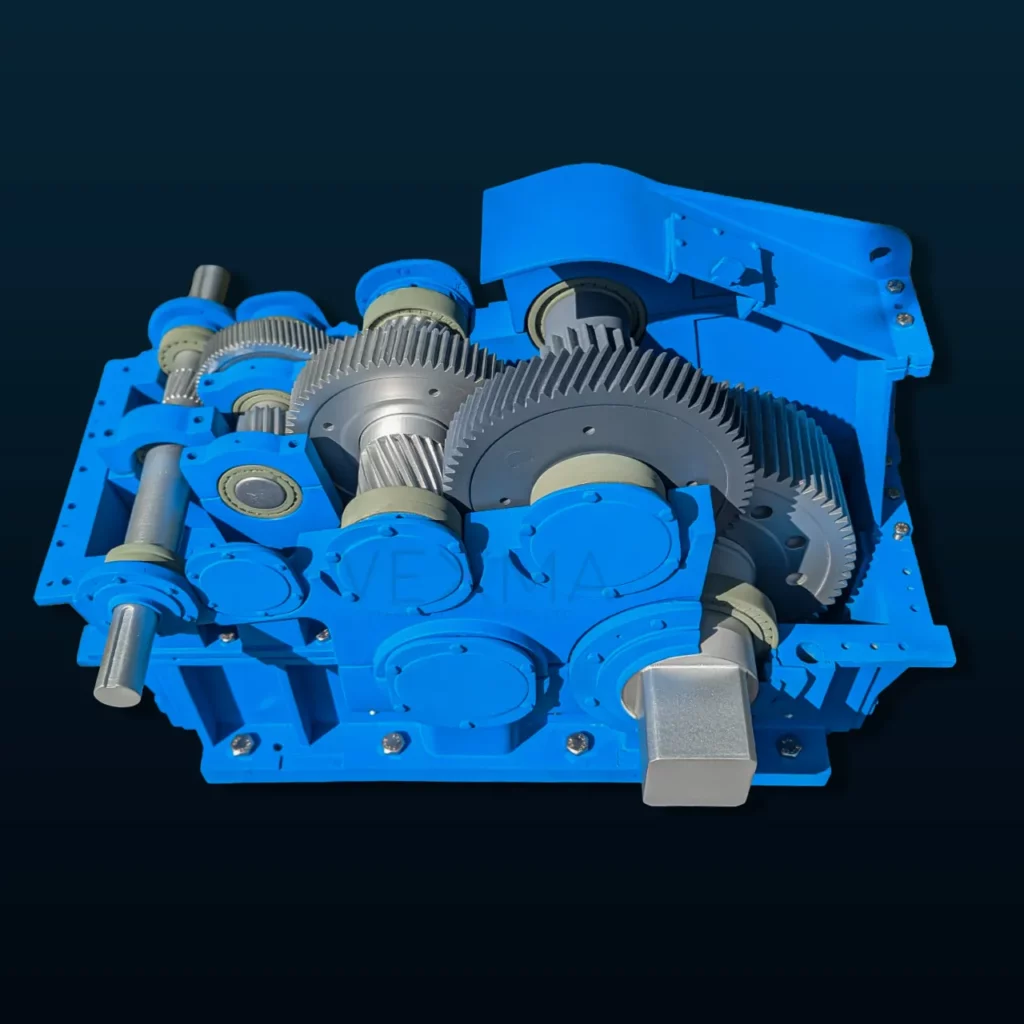
Traditional handcrafted miniatures often simplify details or compromise structural fidelity. By contrast, 3D-printed models are generated directly from digital CAD designs, ensuring dimensional accuracy, engineering fidelity, and geometric precision. These models are not artistic interpretations; they are precisely scaled-down replicas of actual machinery.
To explain industrial machinery clearly without full-scale transport, modern exhibitions increasingly rely on accurately scaled 3D-printed replicas generated from real CAD data.
Advanced 3D printing technologies – including powder-bed fusion, Multi Jet Fusion, and other layer-wise additive processes – make this possible by producing scale models that retain the mechanical and structural complexity of the original design.
This precision allows viewers to understand complex engineering relationships and the inner workings of machines in a way that was previously impossible with traditional display methods.
Functional vs visual models: two approaches, one pipeline
3D printing has given rise to two distinct exhibition philosophies:
- Functional models: These allow motion, assembly, or mechanical interaction, making it possible to demonstrate operational sequences or assembly procedures live.
- Visual models: These focus on aesthetics and detail, showcasing surface finishes, textures, and realistic color palettes for trade shows, investor briefings, and stakeholder presentations.
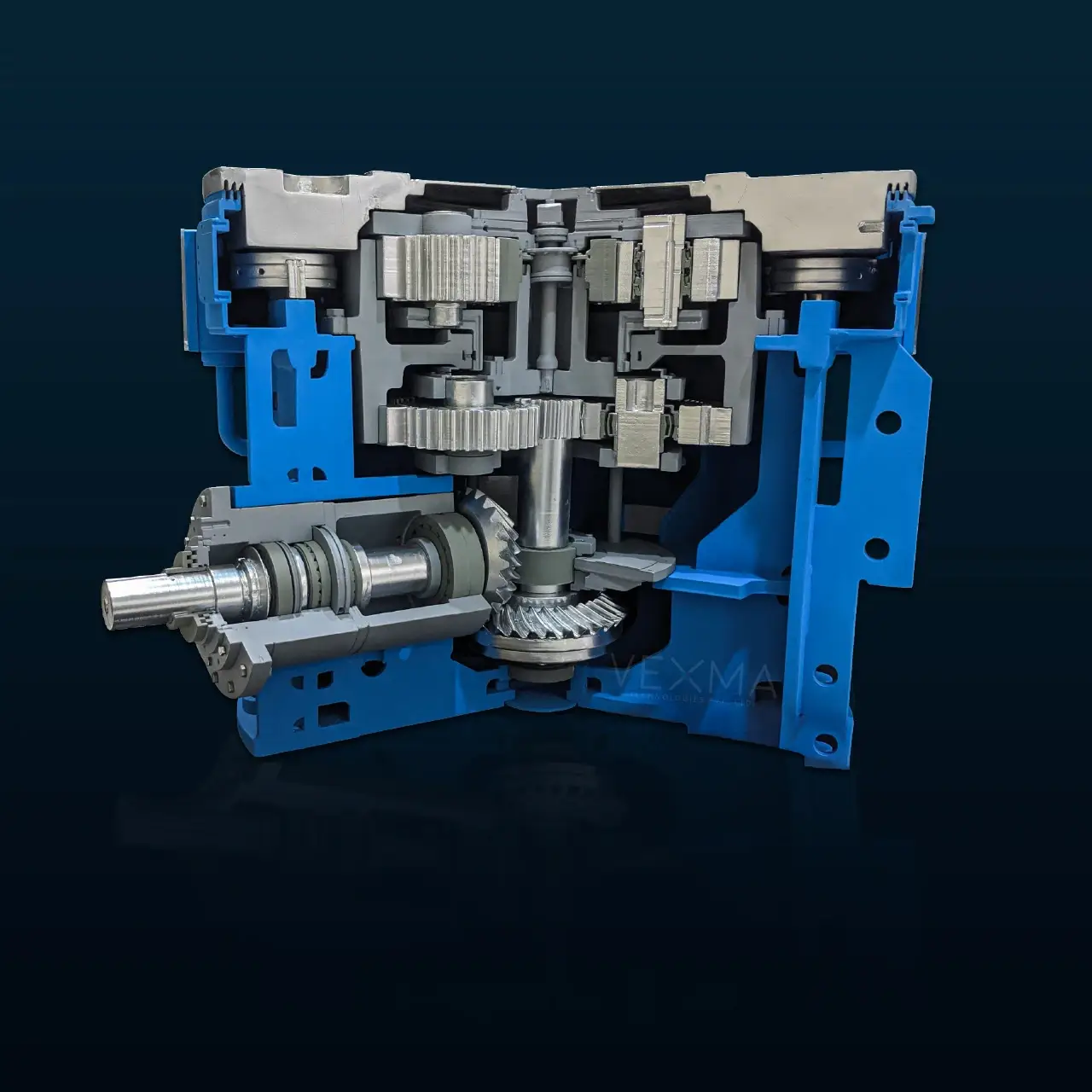
Some models combine both approaches, offering cut-sectional visualization where viewers can explore internal mechanics while interacting with external motion features. This duality provides a richer, more engaging exhibition experience.
Cut-sectional visualization: A new manufacturing approach
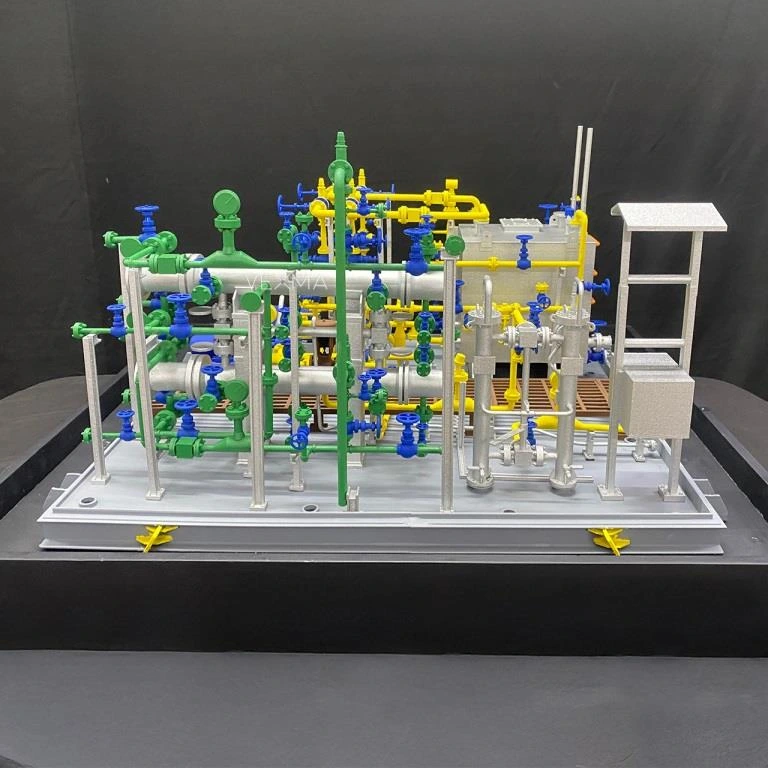
One of the most transformative aspects of 3D printing is the ability to create cut-section views without redesigning assets for traditional machining. Industries can now present:
- Engine gear matrices and housing structures
- Pressure-rated valves and complex fluid flow paths
- Anatomical mechanisms in clinical and orthopedic devices
- Drone motor mounts and structural interlock points
- Industrial assemblies in energy, automation, and heavy manufacturing
These models bridge the gap between design intent and audience understanding, offering insights into both external form and internal function.
The advantages driving adoption
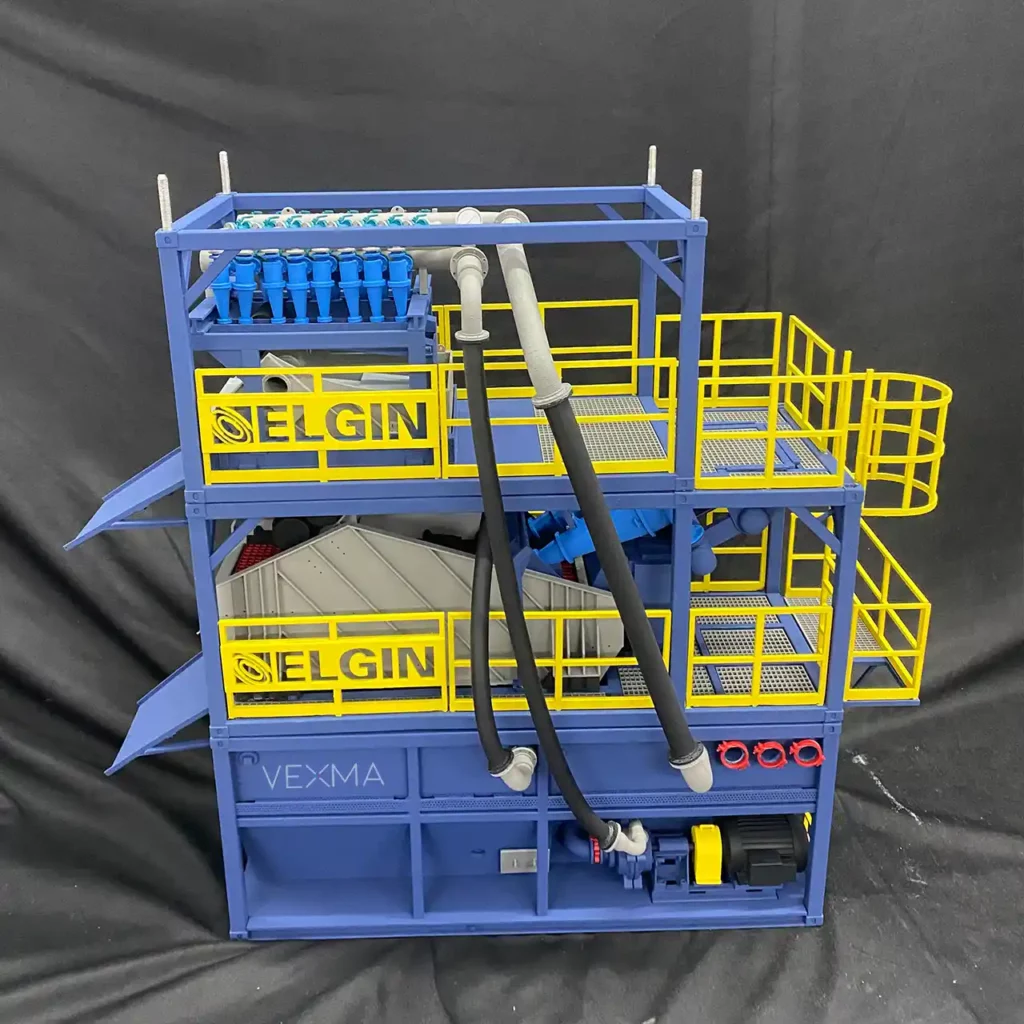
The growing use of 3D-printed exhibition models is underpinned by clear benefits:
- Portability: Lightweight, compact models convey full-scale complexity in manageable form.
- Customization & material flexibility: Colors, textures, sections, and interactive elements can be engineered to specification.
- Cost efficiency: Rapid production reduces time and resource requirements.
- Design clarity: Non-experts can understand complex systems quickly through tangible visualization.
- Manufacturing freedom: Internal features and intricate geometries that were previously inaccessible are now presentable.
Companies like Vexma Technologies are leveraging these advantages to help industries bring precision-engineered, interactive, and visually striking models to trade shows, R&D labs, and product demonstrations. By doing so, they enable faster decision-making, clearer communication, and more effective stakeholder engagement.
The value of an exhibition model today goes beyond appearance. It lies in how effectively it communicates engineering intent. Additive manufacturing has transformed scale models into tools that combine design fidelity, functional interaction, and visual clarity.
For industries navigating competitive trade floors and evolving hardware innovation cycles, these 3D-printed models serve as a tangible bridge between engineering reality and stakeholder understanding, creating experiences that can be held, explored, and understood instantly.
*All images: Vexma Technologies