With several large industrial players stepping away from composites additive manufacturing between 2024 and 2025, including Asahi Kasei Plastics North America, Braskem’s Xtellar unit, and ARBURG through ARBURGadditive, it is fair to question where the composites AM market is heading.
As JEC World 2026 approaches, we found ourselves doing what editors do best: stepping back, connecting the dots, and reassessing signals that are sometimes easier to interpret in hindsight than in real time.
What emerges is that the composites AM market is currently in transition. A market that feels unusually calm. Whether this calm reflects fewer real opportunities for existing players, or simply fewer companies willing to communicate openly about their developments, remains an open question. But silence, in itself, is a signal worth paying attention to.
A selective momentum
Over the past year, a handful of players have captured attention through product launches, and strategic acquisitions. In the materials segment, Xenia Materials, Airtech Advanced Materials Group, and Polymaker continued to invest in composite formulations that target industrial constraints.
On the hardware side, the growing visibility of Bambu Lab and Prusa Research in composites discussions emphasizes the importance of ease of use, reliability, and ecosystem thinking as another metric of success in this niche market.
Large Format AM, the true differentiator
One thing that has consistently validated the value of composites AM, is Large Format Additive Manufacturing (LFAM). To this day, we strongly believe LFAM represents the clearest differentiator for anyone considering investment in composites AM.
Last year, aerospace applications once again confirmed this trend, particularly where thermoplastic composites and additive manufacturing intersect. Increased activity around unmanned aerial vehicles (UAVs) and space exploration highlighted how composite AM can support lightweighting, rapid iteration, and functional integration.
Beyond aerospace, artistic and architectural applications continued to stretch perceptions of what composite AM can deliver. That said, one application remains our favorite: not for its aesthetics, but for its industrial and societal implications.
In collaboration with Oak Ridge National Laboratory, the nuclear energy company Kairos Power demonstrated how large-scale 3D-printed carbon-fiber-reinforced polymer (CFRP) forms could accelerate the construction of nuclear reactor bioshields. A 42-foot concrete reactor column was completed in 14 days instead of six weeks, using large-format 3D-printed composite molds.
This compelling example shows how composites AM can reduce cost, risk, and time in highly regulated environments.
From a manufacturing standpoint, composites AM continues to challenge conventional definitions, and that is precisely what makes it fascinating.
Remember this conversation with Fedor Antonov, founder of Anisoprint, during which we were reminded that composites manufacturing has always been additive by nature:
“There is not just one conventional composite manufacturing process. And most of them are also additive by definition…”
Processes such as Automated Fiber Placement (AFP) or Automated Tape Laying (ATL), long established in aerospace, could easily be labeled as 3D printing if viewed through today’s lens.
What changed is not additivity itself, but automation, digitalization, and customization. Traditional composite processes remain multi-stage, labor-intensive, and paper-heavy, limitations that newer, digitally driven approaches aim to remove.
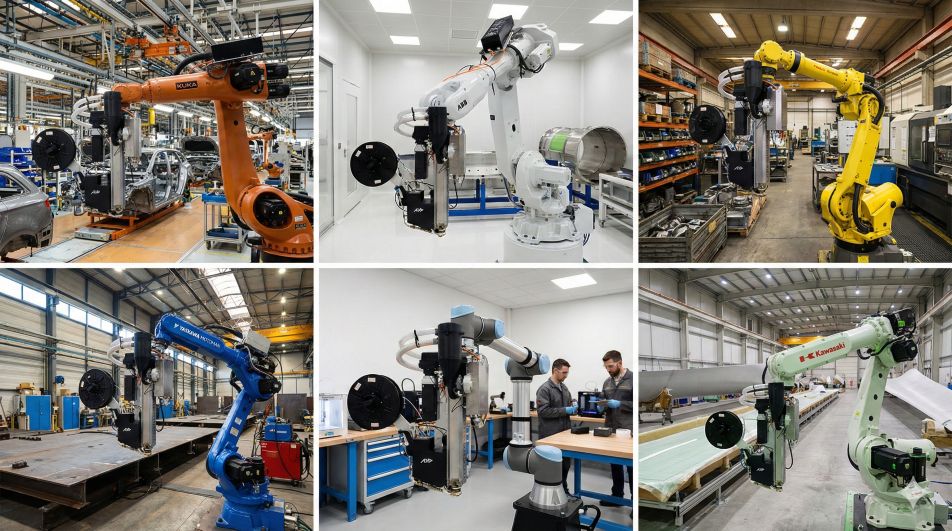
This perspective took on renewed relevance during a recent virtual visit to Finland, where another interpretation of composites “additivity” came into focus. This interpretation is the one of Addcomposites: it reveals that Automated Fiber Placement (AFP) does not fit neatly into the AM box, yet remains highly attractive for AM-driven applications.
From AFP to LFAM: Bridging two worlds of composite production
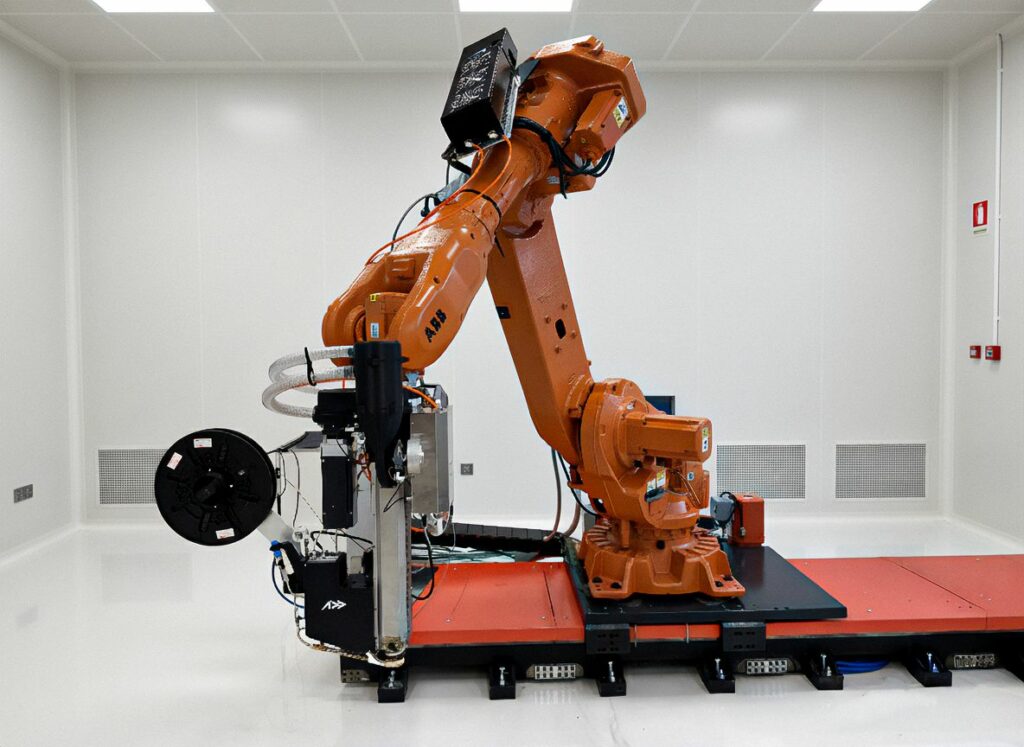 According to Addcomposites’ cofounder, James Li-Kuligoski, the company’s roots lie in AFP, not in conventional 3D printing. Their systems are additive, but not additive manufacturing as it is commonly defined.
By combining continuous fiber placement expertise with large-format additive principles, Addcomposites illustrates a hybrid path that would be more relevant to industrial composites than attempting to force composites into polymer-centric AM frameworks.
Li-Kuligoski joined Addcomposites shortly after it spun off as an independent company in 2018, following its founding by Pravin Luthada. With a background in Composites Manufacturing and formal training from the Rochester Institute of Technology, he brings both technical depth and long-term operational insight into the company’s evolution.
3D ADEPT Media: How does composite AM compare to other AM segments, such as ceramics?
Li-Kuligoski: Chopped-fiber composite printing is already quite mature. Several companies, particularly in Europe and the U.S., have the technology well established.
The real barriers today are investment and applicability. Large-format systems are expensive, and they don’t fit every company’s roadmap. For now, the strongest impact remains in tooling and molds. Structural parts are the next step, and that’s where the complexity really begins.
3D ADEPT Media: What are your thoughts on the growing number of hybrid manufacturing technologies in composite AM?
Li-Kuligoski: Hybrid approaches make a lot of sense for composites, especially in mold making. Printing alone is rarely sufficient.
Historically, 3D printing wasn’t considered structural or watertight enough for many composite applications. What’s impressive is how quickly that perception is changing, because manufacturers are now willing to test new workflows.
From an equipment supplier’s standpoint, this requires trust. These systems are costly, and many technologies are still relatively young. The fact that established manufacturers are investing in them shows increasing confidence in composite AM.
3D ADEPT Media: Many companies now position hybrid manufacturing as the key to scaling composite AM. Do you agree?
 Li-Kuligoski: Yes, largely. Composite AM is very different from other AM segments. In tooling and mold applications, surface quality is critical; any defect transfers directly to the final composite part.
Printing provides speed and design freedom, but machining and finishing are essential for airtight, high-quality molds. The goal is to integrate printing, machining, polishing, and sealing into a unified workflow, making the process more efficient and repeatable rather than fragmented.
3D ADEPT Media: Beyond tooling, where do you see composite AM heading next?
Li-Kuligoski: Structural parts are the next frontier. Today, composite AM is mainly used for mold making, but integrating continuous fiber reinforcement directly into printed parts changes that.
By placing fiber only where it’s structurally needed, we can move toward load-bearing components. We’re currently installing our second continuous-fiber-enabled large-format system, which we call ADDX. That’s where composite AM becomes relevant for a much wider range of applications.
3D ADEPT Media: In material qualification, which step remains the most fragile?
Li-Kuligoski: Material consistency itself is no longer the main issue; suppliers have made real progress there.
The challenge lies in temperature control, especially with continuous fiber deposition. The fiber tape, molten polymer, and previously deposited layer must all be at precisely aligned temperatures. If that balance is off, you risk poor consolidation or internal debonding. Maintaining stable thermal conditions throughout the process is currently the most critical difficulty.
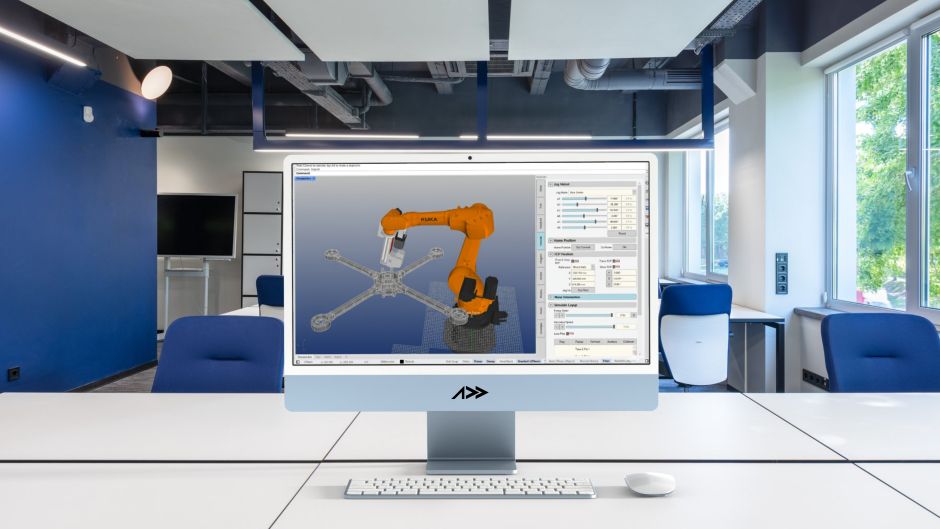
3D ADEPT Media: Do you see slicing software evolving into a structural design tool?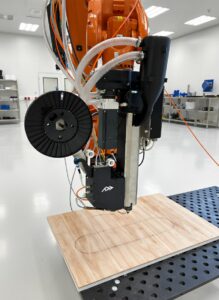
Li-Kuligoski: Absolutely. In our approach, designers define the part’s structural requirements first: fiber orientation, reinforcement zones, layer count.
That data then informs the slicing process. Continuous fiber is introduced only where it adds value. The slicer becomes a bridge between structural intent and manufacturing execution, rather than just a toolpath generator.
3D ADEPT Media: Can you explain how your technology works and what differentiates it?
Li-Kuligoski: Our background is in automated fiber placement, not conventional 3D printing. That gave us deep experience in continuous fiber handling and consolidation.
We developed an extruder that operates like a standard large-format AM system, capable of printing pure polymers or chopped-fiber composites. What differentiates us is the integration of a continuous fiber module into the same platform.
The system applies tension and feeds continuous fiber, filament or thermoplastic tape, into the process. A polymer bead is deposited over the fiber, followed by a compaction roller to improve consolidation. To our knowledge, no other industrial robotic LFAM system combines these capabilities at this scale.
3D ADEPT Media: Which vertical industries are you targeting?
Li-Kuligoski: Aerospace and marine are our primary focus, as both sectors have been relatively fast to adopt composite AM. Wind energy is another key area, particularly for mold making.
Large-format AM allows manufacturers to modify mold geometries; for example, blade pitch without waiting months for large machined steel tools. Printed mold sections can be produced faster, assembled accurately, and even recycled afterward into pelletized material.
What this tells us about the market
What emerges from this discussion is a pattern we’ve observed across the composites AM landscape: maturity is about proving that the technology works reliably, repeatedly, and at scale. As several large players have exited the market, the focus, as is the case for other AM segments, is moving toward narrowly defined, high-value use cases.
Li-Kuligoski’s perspective reinforces the idea that composites AM does not need to look like conventional 3D printing to succeed. In fact, its future may depend on how well it integrates legacy composite manufacturing logic (automation, fiber placement, process control) into digitally driven workflows.
*This article has first been produced in the 2026 January/February edition of 3D ADEPT Mag, which will be distributed at JEC 2026. You can read the full digital issue here. Images: Addcomposites.