The medical industry is witnessing a transformative era with the rapid adoption of powder metallurgy (PM) and additive manufacturing (AM) technologies. From patient-specific implants to regulatory-compliant materials, recent advancements are addressing longstanding challenges in biocompatibility, cost, and design flexibility.
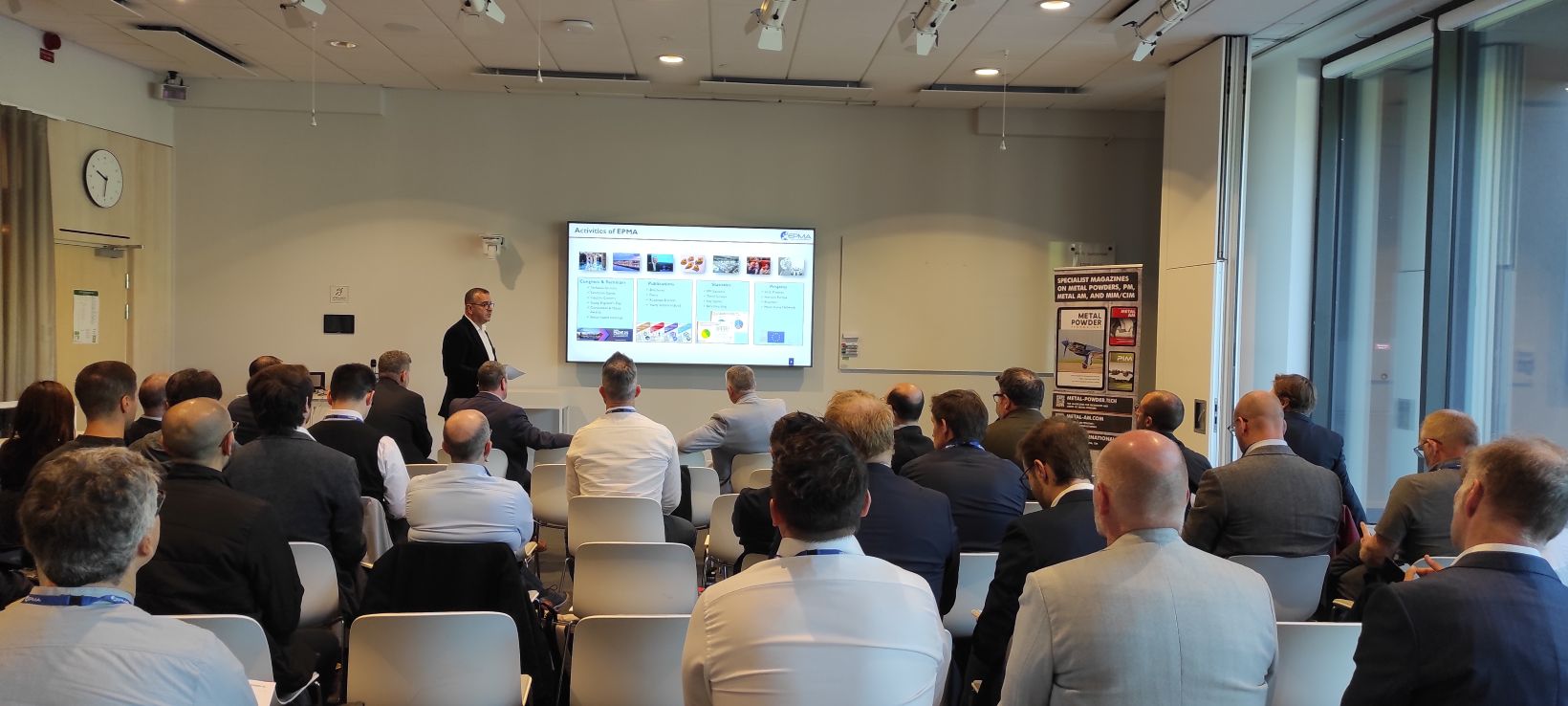
This article highlights some of the presentations from the EPMA Medical Seminar 2025, showcasing a wave of innovation at the intersection of material science, manufacturing, and medicine: from dental restorations to orthopedic implants, the innovations.
Leading companies and institutions will present solutions that push the boundaries of what is possible with powder-based technologies and redefining how implants and medical devices are designed, produced, and validated—delivering unprecedented levels of precision, personalization, and performance.
Which materials are dominating medical applications?
At the heart of these advancements are high-performance materials tailored for medical use. Cobalt-chromium (CoCr) alloys, for instance, are now being produced with optimized particle size distribution and chemical composition, ensuring exceptional mechanical strength and biocompatibility for dental applications. Speakers at the EPMA Seminar will highlight how precise testing—including laser diffraction and ICP-OES analysis—guarantees compliance with ISO standards, while streamlined CE certification processes accelerate time-to-market.
Meanwhile, titanium continues to dominate as the material of choice for implants, thanks to its lightweight properties and osseointegration capabilities. Innovations like fine-grained sintered titanium are pushing the boundaries further, enhancing fatigue resistance and enabling complex geometries that were once impossible with traditional manufacturing.
Transformative technologies reshaping medical manufacturing
The shift from conventional methods to powder-based technologies is unlocking new possibilities. The combination of powder metallurgy with plastic-based technologies is revolutionizing the way metal medical components are produced. Metal Injection Molding (MIM) and sinter-based AM techniques like Cold Metal Fusion (CMF) and Lithography-Based Manufacturing (LMM) are setting new benchmarks for efficiency and precision. These processes not only reduce production costs and material waste but also achieve fine-grained microstructures that enhance fatigue resistance and mechanical performance—critical factors for load-bearing implants.
The seminar will also showcase end-to-end AM workflows for highly customized implants. One standout example is binder jetting, which is revolutionizing patient-specific implants. By combining automated design tools with in-situ monitoring systems, manufacturers can now produce customized titanium implants—such as finger joints—with unmatched accuracy. This end-to-end approach not only ensures quality but also simplifies regulatory compliance, a critical factor in medical device production.
Overcoming industry challenges with smart solutions
One common thread throughout the Seminar’s presentations is the increasing focus on regulatory compliance and standardization. Regulatory hurdles and sustainability concerns remain key challenges, but the industry is responding with innovative strategies. In parallel, standardization bodies like ISO/TC 150 and ASTM F04 are working to harmonize international standards for surgical implants, particularly in the context of AM. Projects like ISO/FDIS 5092 are paving the way toward globally accepted guidelines for 3D-printed implants. Presenters will discuss how aligning material standards, testing methods, and production protocols across borders is essential for reducing time-to-market and ensuring patient safety.
Additionally, the need to comply with EU REACH regulations is driving the development of eco-friendly alternatives to cobalt alloys, balancing patient safety with environmental responsibility.
Comprehensive solutions for industrialization
One of the standout contributions at this year’s Seminar is from Lincotek, a long-standing leader in AM for the orthopedic sector. Through their ADDITIVE PLUS platform, they are redefining what it means to industrialize AM solutions: The platform integrates every stage of the manufacturing process: combining design optimization, advanced coatings, and post-processing into a seamless workflow. This not only cuts manufacturing time by 30% but also ensures compliance with stringent clinical requirements.
Why attend the medical seminar 2025?
The future of medical manufacturing is here, and it’s being shaped by PM and AM technologies. Whether you’re a researcher, engineer, or industry professional, the Medical Seminar 2025 offers a unique opportunity to:
- Discover the latest material innovations and their applications in dentistry, orthopedics, and beyond.
- Learn how sinter-based AM and binder jetting are enabling faster, cheaper, and more precise implant production.
- Explore strategies for navigating regulatory landscapes and achieving compliance without compromising innovation.
- Network with pioneers who are redefining what’s possible in medical technology.
Don’t miss your chance to witness the technologies that are transforming patient care. Register now.
This article has been written by Hamid YOUSEFI, European Powder Metallurgy Association.
Remember, you can post free-of-charge job opportunities in the AM Industry on 3D ADEPT Media or look for a job via our job board. Make sure to follow us on our social networks and subscribe to our weekly newsletter: Facebook, Twitter, LinkedIn & Instagram! If you want to be featured in the next issue of our digital magazine or if you hear a story that needs to be heard, make sure to send it to contact@3dadept.com.