

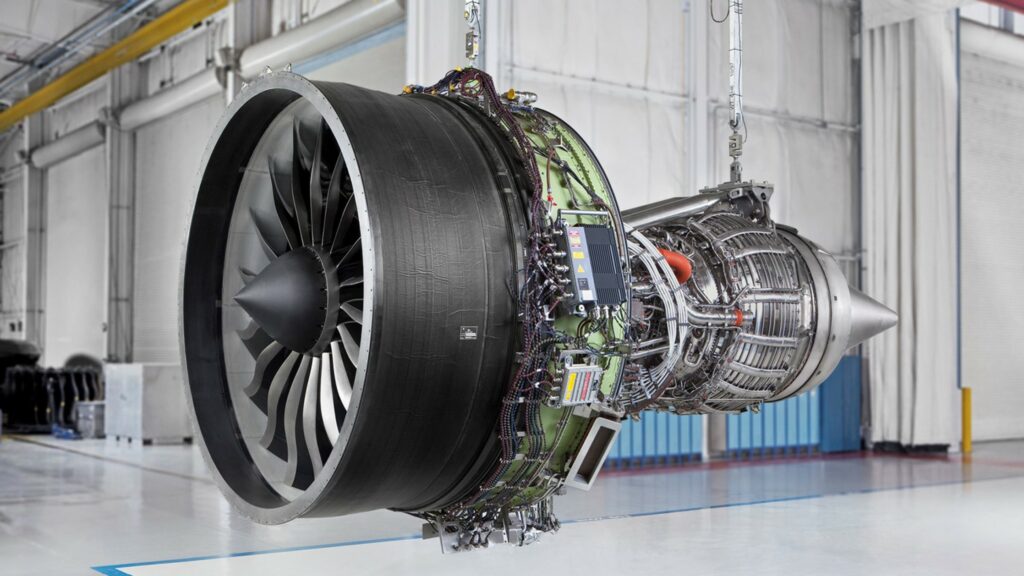
Feature from the January/February 2024 edition of 3D ADEPT Mag. Interviews and outlook remain in their original publication context.
It is no secret that an aircraft is a complex system that involves a long list of interior and exterior components designed to maintain safety, meet certification standards, ensure functionality, and enhance comfort. Given the competitive and demanding requirements of such a large industry, production optimization and efficiency are continuously of paramount importance – hence the increasing push for manufacturing processes such as Additive Manufacturing (AM). As the technology has developed, there has been an increasing shift in how aerospace parts are conceptualized, designed and produced. The article below aims to understand how the technology has evolved and how it’s being adopted today by aerospace companies and part manufacturers.
As one of the first industries to adopt AM and given the number of growing applications achieved in the field, one can legitimately say aerospace has successfully integrated the technology into its production operations. If design and manufacturing are two different aspects of a part production; one cannot truly work without the other. They reinforce each other to generate the biggest impact and it’s important to see how they evolve with the current advancements of the technologies.
This feature therefore examines:
- The current state of design in aerospace parts production – and applications revealing the greatest impact of AM
- Which AM processes are transforming aircraft production the most and why?
- How far can AM be taken in the aerospace industry?
The current state of design in aerospace parts production
In an example presented by Helen Lockett of the Open University, a wing rib about 2 metres long and weighing 20 kg is machined from an aluminum block. The alternative studied uses wire and arc additive manufacturing (WAAM) on a base plate, incorporated into the part where the design permits. Finish machining is still required. This illustrates a process choice, rather than describing every aircraft wing rib.
Design must account for both the manufacturing process and the part’s requirements. Design for additive manufacturing (DfAM) can combine several components into one: part consolidation. This is distinct from printing several separate parts at the same time.
Consolidation can reduce assembly operations and mass, but does not by itself guarantee greater structural integrity. Loads, fatigue, inspection, maintenance and total cost need to be assessed for each application.
In general, “AM design techniques and design strategies for aircrafts are being adopted differently in sectors like civil aviation, space, and ultralight aircraft vehicles in the context of urban air mobility and eVTOL.
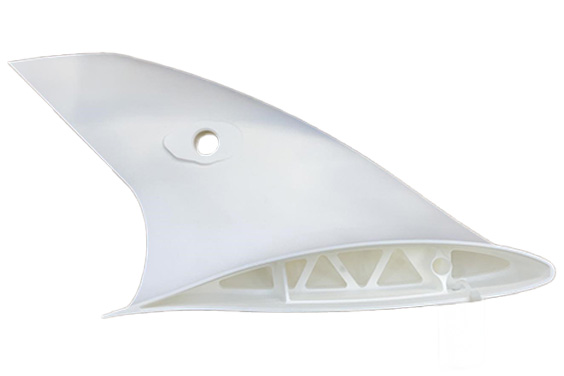
For ultralight aircraft vehicles, saving weight is, of course, a crucial element. AM supports this with proven design techniques like topology optimization, and all of AM’s design opportunities are considered for components, including structural parts, and in different materials. AM is being utilized exhaustively for structural optimization and lightweighting. We see a similar situation for space applications. In both areas, making optimal use of the design space while optimizing weight to functionality is essential. An interesting approach in this context is to switch to a lighter material or composite during the design exploration phase and compensate for its deviating material properties with geometric changes to the part design. In essence, AM is considered a valid manufacturing technology and is used as a complementary technology for a limited number of sophisticated solutions.
Looking at civil aviation the situation is different. Currently, the majority of the 3D-printed parts are not designed for AM. AM is ideal for sourcing low-criticality polymer parts for aircraft in civil aviation because parts can be printed off the virtual shelf, there’s no waste, and no stock languishing in warehouses. However, existing designs are used and produced with AM, because it makes sense from a lead time or minimum order quantity point of view.
Nonetheless, AM offers a new approach to designing for aerospace by providing an economical alternative for damage-prone parts on planes. AM can provide tailored repair solutions for such parts, offering a path other than replacement and minimizing the time planes would otherwise be grounded.
This shows it’s not always about finding the complex parts that require a complete redesign but the parts that make sense from a business case perspective. The right design approach is essential in this regard. Entirely redesigning a part is an investment, and the new design will require additional efforts to be accepted as a flying part. MROs and airlines are implementing Materialise’s AM software to digitalize the production process and use the data available of thousands of builds from Materialise manufacturing to standardize designs and comply with safety regulations. Redesigning existing parts often doesn’t have to rely on highly complex AM design technologies and only requires minor part changes. In civil aviation, safety is the primary concern, and the aerospace and AM industry must advance the standardization of 3D printing to raise its profile for civil aviation,” Erik de Zeeuw, Market Manager Aerospace, Materialise explains.
The reference to “no waste” in this interview concerns the value of manufacturing on demand. It should not be read as meaning that AM has no material losses or finishing operations.
Generative design and topology optimization can also help reduce mass or distribute material according to loads. Their benefit depends on the constraints selected and validation of the resulting design; it is not automatic.
AM processes that are transforming aircraft production the most – and applications revealing the greatest impact of AM

The historical figures cited in this feature referred to more than 70,000 3D-printed parts at Boeing and more than 2,500 parts in orbit at Maxar. They measure different scopes and do not rank the companies. For Collins Aerospace, the July 20, 2023 announcement concerns a $14 million expansion of its West Des Moines additive manufacturing center. The original figure of 75 parts is not substantiated by that announcement and has been removed.
These examples illustrate uses from prototyping and tooling to flight parts. Volumes alone do not establish a process’s readiness for a different application.
Aerospace applications use both metals and polymers, selected for loads, temperature, mass, environment and function-specific requirements. Polymers are not limited to prototypes, as the cabin parts in this feature illustrate. SLA and filament extrusion can serve prototyping; polymer laser sintering also serves functional parts, while large-format AM can produce tooling. Each material, process and application combination requires appropriate qualification.
Laser powder bed fusion and directed deposition offer different metal AM routes. Readiness should be assessed for a specific application, including repeatability, inspection and finishing requirements, rather than through a count of available technologies.
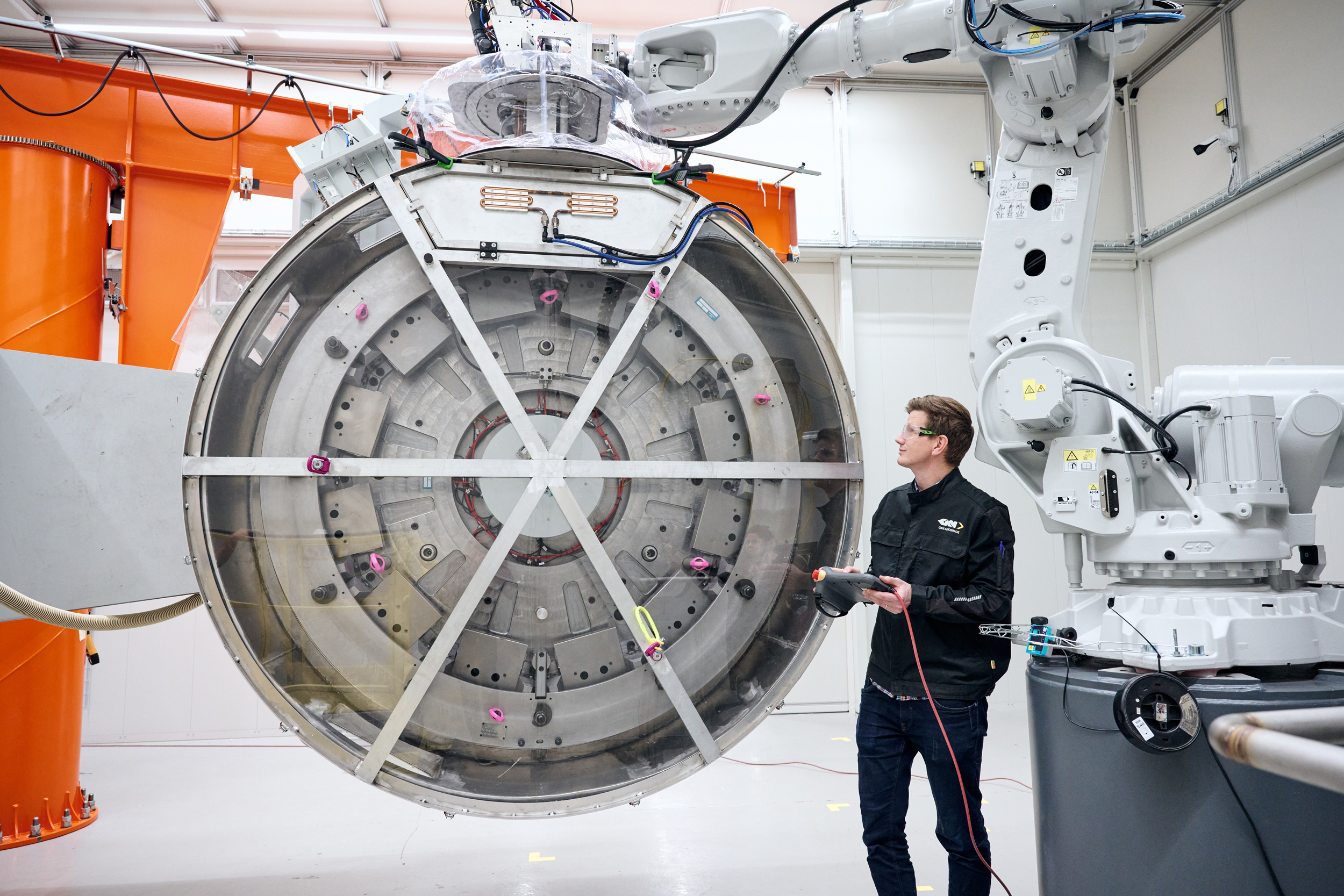
At GKN Aerospace, large-scale laser metal deposition with wire (LMD-w) builds structures layer by layer from metallic wire. It is distinct from powder-fed deposition variants. The company presents this route as a way to make complex structures while using material more efficiently.
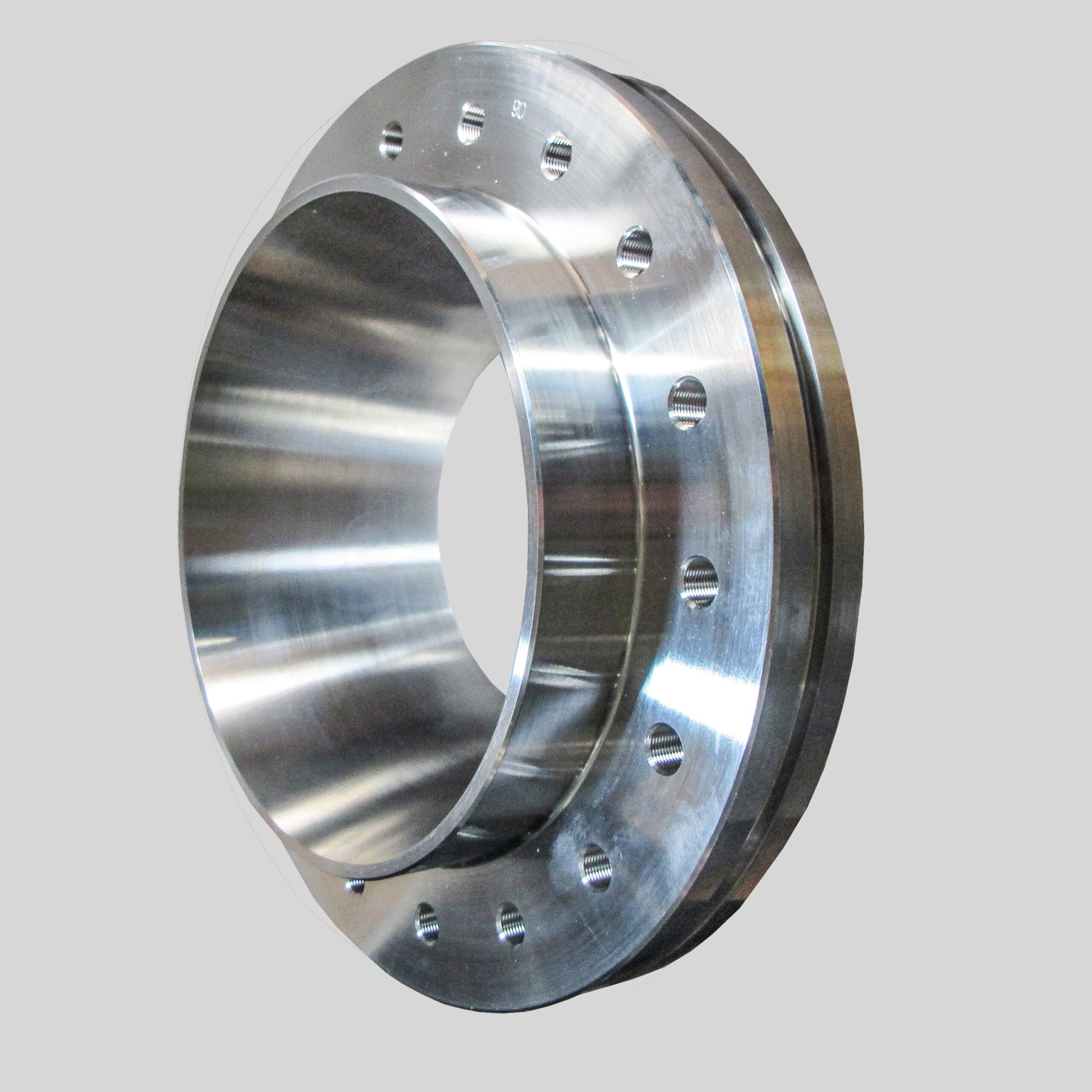
According to Sébastien Aknouche, Responsible for Material Solutions at GKN Aerospace in Sweden, when considering aircraft engines, regardless of the AM process, to appreciate the impact of the technology on aircraft production, one must be able to identify in the short term, the following transformation factors:
- The lead-time of demand – design – make – deliver. It is probably down to 5%, maybe even less, of the traditional approach for a new demand.
- There are fewer steps in the process than the traditional manufacturing of aircraft parts
- AM allows us to utilize the already limited global availability of super alloys significantly more efficiently. We may produce 2 to 10 times as many engines with the same amount of metal. This again reduces the amount of waste material (carvings)
- Through AM, the lead time for industrialized production is just a fraction of traditional productions lead-time, where any change in demand may take over 2 years to meet.
- AM allows for rapid changes in demand and a much more flexible supply situation. This will allow for much smaller inventory and unlock a huge amount of cash currently tied to inventory
- AM allows for less cost to the customer through higher flexibility of supply, less cash tied to inventory, higher security of supply with less under-absorption and much faster process from new product to industrialized process
- Any AM production process provides for a significant and positive environmental factor. The CO2 emission is substantially less through less energy-demanding processes and less shipping, and the utilization of our global resources is significantly more effective
The gains above, including lead time reduced to 5% and two to ten times as many engines from the same metal quantity, are Sébastien Aknouche’s estimates. No detailed comparative protocol is provided here. Environmental performance requires case-specific life-cycle assessment; the statement does not establish that every AM process emits less CO₂.
Parts intended for flight must meet the applicable airworthiness requirements under the relevant authorities, including the FAA or EASA. IASA assesses aviation safety oversight; it is not a third parts-certification authority. Qualification time depends on the project, process, material and function. This feature does not establish a general seven-to-ten-year requirement for every metal component.
When asked if there are lessons one can learn and replicate from plastic 3D printed parts to advance the use of metal 3D printed parts, Aknouche said these lessons could be “adopting a more iterative testing approach, leveraging simulation tools for virtual testing, and establishing standardized testing protocols. By incorporating these practices, the aerospace industry can potentially reduce the validation timeline for metal components, ensuring safety and compliance without compromising efficiency.”
Nevertheless, the applications revealing the greatest impact of AM remain those complex, lightweight components such as engine components. “These parts benefit from the design freedom offered by AM processes, resulting in improved performance, fuel efficiency, and reduced environmental impact. Moreover, the ability to consolidate multiple components into a single, intricately designed AM part contributes to overall weight reduction and increased aircraft efficiency,” GKN Aerospace expert adds.
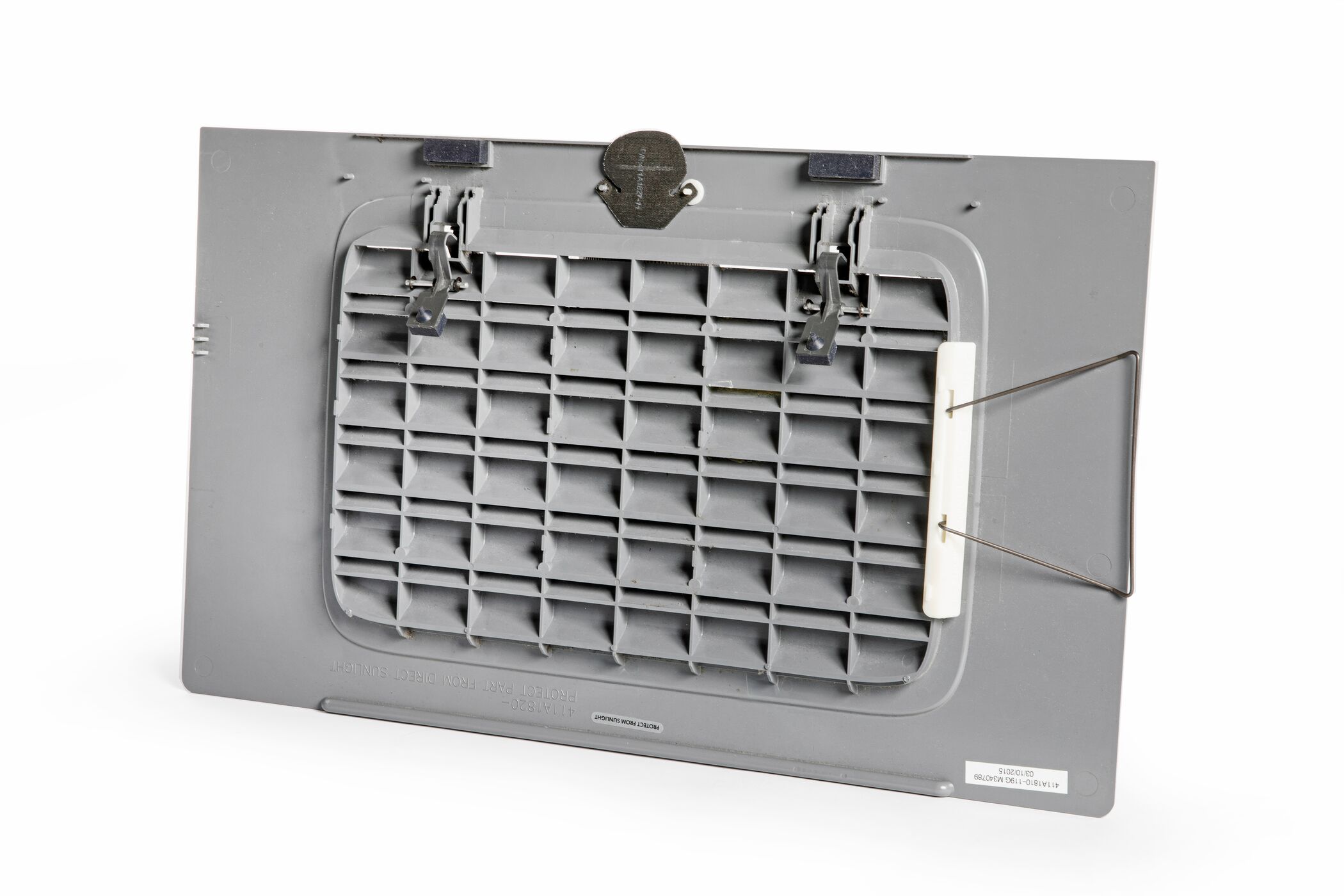
Outside of the metal AM segment, Erik de Zeeuw notes that “low-criticality polymer parts or parts prone to breakage in and around the aircraft are perhaps where AM stands out the most in terms of impact. One such example is the cabin decompression panel on the Boeing B737. The latches and pins on the panel tend to break frequently. Stirling Dynamics worked with Materialise to design a reinforced panel that had the same functionality but was stronger and less likely to break than the original part.
These low-criticality parts are not just the bread and butter of AM for aerospace. They also provide the data required to work on high-criticality parts. This data is being used by aerospace companies today to ensure repeatability in their manufacturing processes.”
How further can AM be taken in the aerospace industry?
Based on our conversations with experts invited to share insights into this topic, one would like to keep in mind three main areas of interest: new designs, aircraft structural components, and the buy-to-fly ratio.
When we look at design, the most important transformation factor that will help propel the adoption of AM in aerospace is new designs. According to Aknouche, “new designs of jet engines, for example, will make them lighter and more effective and thus save CO2 emissions every minute the airplane flies. “Even though we have been able to design and calculate the advantages of a future vision of new engines, we have not been able to realize them until metal-based AM was introduced,” he outlines.
Redesigning a structural part may require a new demonstration of compliance and suitable inspection. This does not mean that no AM structures are already in service: GKN reported certified load-bearing AM structures in serial production in June 2023. The prospects discussed here concern extending applications and introducing new designs.
“AM and Materialise haven’t rushed to tackle the high-criticality metal structural components market. Part of that is due to the strict safety regulations that are necessary in the aerospace industry, but some of it has to do with the readiness of the 3D printing technology itself. However, with Materialise’s track record of providing low-criticality polymer parts, the data now available through our work, and the investments by major aerospace companies such as GKN, AM is being considered for structural aircraft components. The wingtip of the Eviation Alice aircraft designed by GKN is just one example of work in this space. In parallel, Materialise and other partners are working to create a path to qualify the process of producing metal AM parts. The group consisting of aerospace and AM experts will provide a whitepaper as a first effort to author an SAE Aerospace Recommended Practice for using in-situ process monitoring to validate an AM process. Such efforts will drive the technological readiness of AM and motivate more aerospace companies to consider AM for high-criticality parts in airlines”, de Zeeuw comments.
The Alice wingtip cited by Materialise is a polymer AM example, as the joint GKN–Materialise announcement explains. It is not evidence of qualification of a metal structural part.
As for the buy-to-fly ratio, GKN Aerospace’s expert confirmed “improved buy-to-fly ratio” could be a key transformation factor in the industry in the long run: “the weight ratio between a substrate and a completed part) will enable us to utilize available metal even more efficiently with even less waste. Indeed, there is a reduced waste of material the more the AM process becomes efficient, and the more the “buy-to-fly” ratio moves closer to 1,0.”
The buy-to-fly ratio compares purchased material mass with finished-part mass. “Substrate” in the quotation is therefore too narrow a definition. A ratio near 1 indicates efficient material use; it does not establish a process’s complete environmental footprint.
“There is probably no clear border to where we may end up, but we will not be able to make parts with no material, but maybe parts with a “buy to fly ratio close to 1,0”, and will not have lead-times down to zero, but very short, and the production will probably not have zero emission, but very little. The question is more how close to that ideal stage will we get? The answer to that one will have to follow the development to find out”, he concludes.
Obviously, other areas of interest could have been mentioned. In the end, let us not forget that the way AM advances, depends on the player that is making use of it.
This dossier was first published in the 2024 January/February edition of 3D ADEPT Mag. Featured image credit: GKN Aerospace.
Editor’s notes
GKN Aerospace and Materialise are collaborating on several projects to address certification and additive production of functional and flight-critical aerostructures. However, none of the companies was aware the other one was participating in this dossier.
GKN Aerospace has been invited to share insights into this topic as its expertise lies in leveraging AM to optimize aircraft design and production processes. The company said its latest project involves the development of advanced AM techniques for critical structural components, showcasing the profound impact on both design flexibility and manufacturing efficiency. The company says that integrating AM into its workflow has achieved notable advancements in weight reduction, part consolidation, and overall system performance.
As for Materialise, at the time of the interview it described a mature aftermarket offering for low-criticality cabin parts. Over the last 10 years, the company said it had built a body of data to demonstrate the consistency of the technology, process, material, and machines it operates. Despite process certification about five years before this interview, getting printed parts on an existing aircraft is not as easy as it may sound given the strict requirements of the industry. The company continues to collaborate with aerospace companies to advance key areas of improvement in the aerospace industry. Apart from GKN Aerospace, one of its recent partnerships was signed with Stirling Dynamics.
Review note: the unsupported first-use date was removed; consolidation, LMD-w and qualification were clarified; IASA and the Eviation example were corrected. The unsubstantiated Collins count was removed. Interview estimates remain attributed.
THE 3D ADEPT WEEKLY NEWSLETTER
The industry moves fast. Stay ahead.
Every week, the latest additive manufacturing news, in-depth features and real-world applications, straight to your inbox. Plus, be the first to know when a new issue of 3D ADEPT Mag is out.
Free · One email a week · Unsubscribe anytime
Clicking loads our email provider’s sign-up form, including its analytics and Google’s anti-bot protection. You’re only subscribed if you complete the sign-up. Read our privacy policy.