


Feature published in 2023 with Owen Murray, then CEO of Aprecia, and Dr Anna Worsley, then Director of Innovation at FabRx. Projects, forecasts and roles reflect that interview.
One of the great complexities in projecting the prescription drug benefit costs for future benefit years lies in tracking new therapies in the pharmaceutical development pipeline and anticipating both their release date and the market dynamics (including price), and how they might affect the utilization and cost-per-unit factors. This complexity is amplified with the manufacturing of small batches of drugs with adjusted (and sometimes personalized formulation).
Conventional batch production can manufacture large volumes of medicines with uniform characteristics. Small runs and personalized formulations present different cost, timing and control requirements. AM can be an option in some cases, subject to formulation, process and product-quality validation; it is not invariably faster or cheaper.
In 2023, 3D printed medicines were the subject of research, industrial development and work in healthcare institutions. This did not mean that every application was authorized or in routine clinical use. Regulation, required evidence and production arrangements shaped adoption.
This feature examines routes to market and applications discussed with our contributors in 2023.
To discuss this topic, we invited Aprecia’s CEO Owen Murray and Dr. Anna Worsley, Director of Innovation at FabRx to share their experience of 3D pharma printing.
Headquartered in the US, Aprecia Pharmaceuticals addresses unmet healthcare needs leveraging commercial scale 3D Printing for pharmaceutical manufacturing. Headquartered in the UK, FabRx is a biotech company that focuses on developing 3D printing technology for fabricating pharmaceuticals and medical devices.
Production and commercialization of 3D printed medicines
Market entry depends on the product and jurisdiction. In the US, the FDA reviews the relevant applications. In the EU centralized procedure, EMA conducts the scientific evaluation and the European Commission grants authorization. Pharmaceutical compounding operates under specific frameworks distinct from that procedure.
A new manufacturing technology does not remove quality, safety and efficacy requirements. Established regulatory pathways do not imply identical evidence requirements for every application or an uncomplicated development process. Murray describes Aprecia’s perspective on the US pathways:

“3D printed pharmaceutical products do not have a special path to approval in the United States. The same pathways apply for both traditional manufacturing and Additive Manufacturing. So, the process for an NDA or an ANDA is no different than product candidates manufactured by traditional technology. That said, careful construction of an acceptable clinical trial protocol with broad dosing range is needed to accommodate customized precision dosing based on individual patient need”, Owen Murray states from the outset.
NDA means a New Drug Application; ANDA is an Abbreviated New Drug Application, used for generics. Their evidence packages are not identical.
Worsley highlights the difficulty of adapting regulation to manufacturing closer to the patient. In the UK, the MHRA consultation response published in January 2023 proposed a framework for point-of-care manufacture. This was not shared legislation across the FDA, EMA and MHRA.

“At the moment, many drug dosages are already personalized via pharmaceutical compounding in specialist pharmacies around the world. Using this method, you can develop the new 3D printable formulation, carry out quality control assessments and then integrate it into your compounding workflows. To commercialize one of these formulations, or intermediate products, you would need to work with a 3D printer supplier such as FABRX and regulatory bodies for printing reliability and patient safety across different printing sites”, Dr. Anna Worsley completes.
Using a compounding workflow does not remove the rules applying to the product, professional or manufacturing site.
Customization may involve dose, combinations of substances, release profile and shape. These depend on formulation and a validated process, not software settings alone. Their economics at scale are a separate question.
“Mass customization is possible”, Worsley notes. “However, it will take much more field development and market growth for this to happen. Also, only drugs that need personalizing will be personalized. For example, drugs with a narrow therapeutic index will probably be the ones entering the market first and drugs like paracetamol will never be personalized. In the future, polypills combining your daily pills into 1 would also be very beneficial for many people on complex poly-pharmacy prescriptions.”
These comments express Worsley’s expectations at the time of the interview, rather than a general rule about which medicines could be personalized.
Beyond the economic concern, another important aspect to take into consideration is medication prescription and administration. Since 3D printing may enable the integration of several formulations into one single drug, does it change the “standard” prescription protocols? Are healthcare professionals able to reduce medication errors and harm by respecting the five rights: the right patient, the right drug, the right dose, the right route, and the right time?
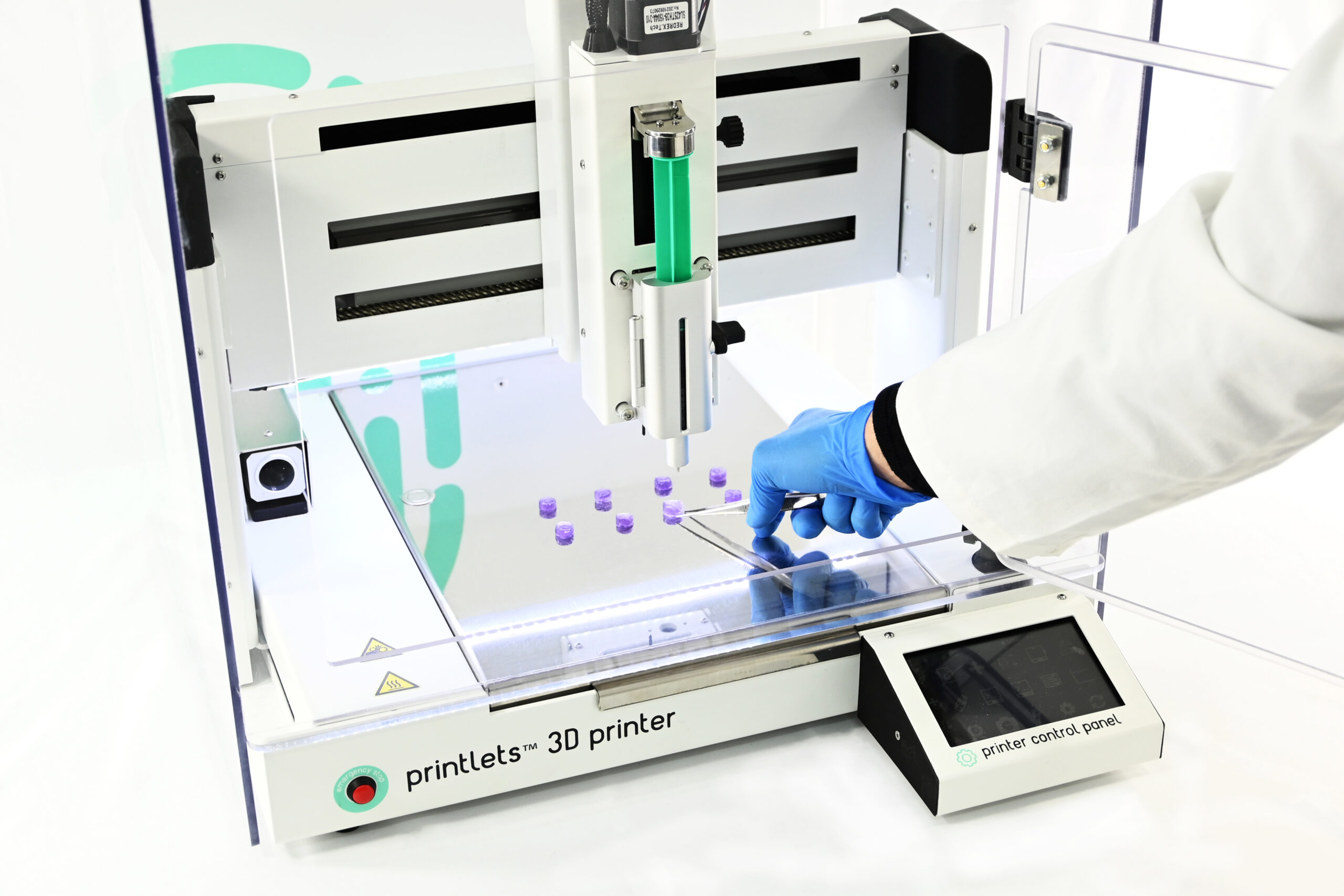
According to Murray, “once a product is approved for optimized dosing based on the individual needs of a patient suffering with a particular disease or disorder, the healthcare professional would not be required to change their current medication prescribing practice. Likewise, patients would not experience any change in the way they receive medications. Aprecia envisions a similar approach to how specialty medications are prescribed and dispensed. This often includes various hub services such as reimbursement support and clinical care guidance. The new piece would be the addition of a bespoke cGMP-compliant pharmaceutical manufacturing capability enabled by Aprecia’s proprietary 3DP technologies”.
“For medication that is already personalized via compounding, prescriptions can in theory stay the same. However, 3D printing increases the personalization options, meaning you can get an even more precise dosage, and personalize things like color and flavor. This would require additional prescription details but would benefit some patients massively. For drugs not already personalized, obviously the prescription would become more complex, but with the benefits that 3D printing offers, the treatment should be more effective overall”, FabRx’ Director of innovation highlights.
The anticipated benefits require assessment for each formulation and population; 3D printing alone does not demonstrate superior clinical efficacy.
Cost depends on volume, formulation, quality control, equipment and care delivery. Comparing a customized preparation with standard industrial production is therefore insufficient to establish an economic advantage. The two contributors offer their assessment:
“Like any pharmaceutical product, the cost to the patient will ultimately depend upon the unmet medical need being addressed, the clinical benefit of the product, and the level of payer reimbursement. This is largely driven by the pharmacoeconomic value proposition of the product. With respect to COGs, a comparison between technologies is not directly one-to-one. Aprecia’s 3DP manufacturing technologies are often enabling and help pharmaceutical companies solve problems beyond the capabilities of traditional manufacturing technologies. 3D-printed products are often more complex and thus have different pricing components to be considered. Additive Manufacturing is competitive with other enabling manufacturing technologies for pharmaceuticals. However, the potential for supply chain efficiencies may result in significant cost savings”, Aprecia’s CEO shares.
“We foresee 3D printing to be cheaper than the current compounding methods used to personalize medicine, as it automates the process, freeing up staff time. It will be more expensive than mass manufacturing, although these higher expenses will be worth it down the line with more effective treatments, reduced hospitalizations and reduced waste”, FabRx’ expert adds.
These are forecasts made in 2023. The interview does not provide a comparative study demonstrating an overall reduction in costs or hospital admissions.
Are the applications worth the final cost then?

Potential applications include formulations requiring precise dose adjustment, including some pediatric populations and drugs with a narrow therapeutic index. These are areas of investigation, not all represented by already-authorized printed medicines.
Rare diseases and complex treatment regimens can also motivate investigation of personalized small batches. A formulation’s value must be established for its indication, considering dose, stability and administration.
“One major advantage provided by Aprecia’s 3DP technologies and our ZipDose formulation platform is drug delivery via tablets that disintegrate very rapidly with a small sip of liquid regardless of the weight. For example, Aprecia won FDA approval for a 1000 mg strength orodispersible tablet, which is much larger than any strength approved as an ODT product. This benefits patient populations that suffer from dysphagia, or difficulty swallowing. In addition to children, the elderly, and special needs patients, dysphagia is common in certain therapeutic areas such as neurology, psychiatry, oncology, and gastroenterology. Spritam®, Aprecia’s FDA-approved 3DP product, is prescribed to treat epilepsy”, Murray enthuses.
The FDA approved Spritam, containing levetiracetam, in 2015. ZipDose is Aprecia’s manufacturing and formulation platform, not a separate tablet product. In the 2015 label, 1,000 mg denotes the active-ingredient strength of one presentation, not total tablet weight. Rapid disintegration concerns administration; it does not justify increasing a prescribed dose.
At the time of the interview, FabRx reported involvement in more than four clinical studies and trials, with further projects planned. No results or trial identifiers were supplied here; the statement describes work reported in 2023.
Moving forward, the company believes that if large pharmaceutical companies get involved and develop their own formulations of medicines using 3D printing, this might help propel the 3D pharma printing market forward.
About the companies at the time of the interview
Aprecia described layer-by-layer deposition technology able to combine two powder blends and two liquid blends to adapt formulations. It discussed incorporating active pharmaceutical ingredients (APIs), intermediates and API-containing particles. The company emphasized manufacture in primary packaging, tablet-level traceability and centralized or distributed configurations meeting current good manufacturing practice requirements. These reported capabilities are not blanket authorization for every formulation.
FabRx develops technologies to personalize dose, shape, size and combinations of medicines, including in pharmacies and clinical trial units. In 2023, the company was exploring several processes with healthcare institutions. Easier administration and improved patient outcomes were among its aims.
THE 3D ADEPT WEEKLY NEWSLETTER
The industry moves fast. Stay ahead.
Every week, the latest additive manufacturing news, in-depth features and real-world applications, straight to your inbox. Plus, be the first to know when a new issue of 3D ADEPT Mag is out.
Free · One email a week · Unsubscribe anytime
Clicking loads our email provider’s sign-up form, including its analytics and Google’s anti-bot protection. You’re only subscribed if you complete the sign-up. Read our privacy policy.