

Feature published in the September/October 2022 issue, then online in January 2023, with Valland’s Alex Giorgini. The results below describe life-cycle assessment scenarios reported at that time, not measurements of all valves in service.
In 2022, oil and gas companies faced strong energy-price volatility while seeking to control costs. This feature examines possible AM contributions across people, economic performance and the environment. A gain in one dimension does not automatically establish benefits in the others.
The challenges of the oil and gas industry with regards to sustainability have already been discussed in a previous edition of 3D ADEPT Mag. Over time we came to realize that, while regulations dictated by governing bodies continue to establish strict guidelines to follow, there has been a strong shift towards the customers themselves setting tight demands on valves in industrial processes.
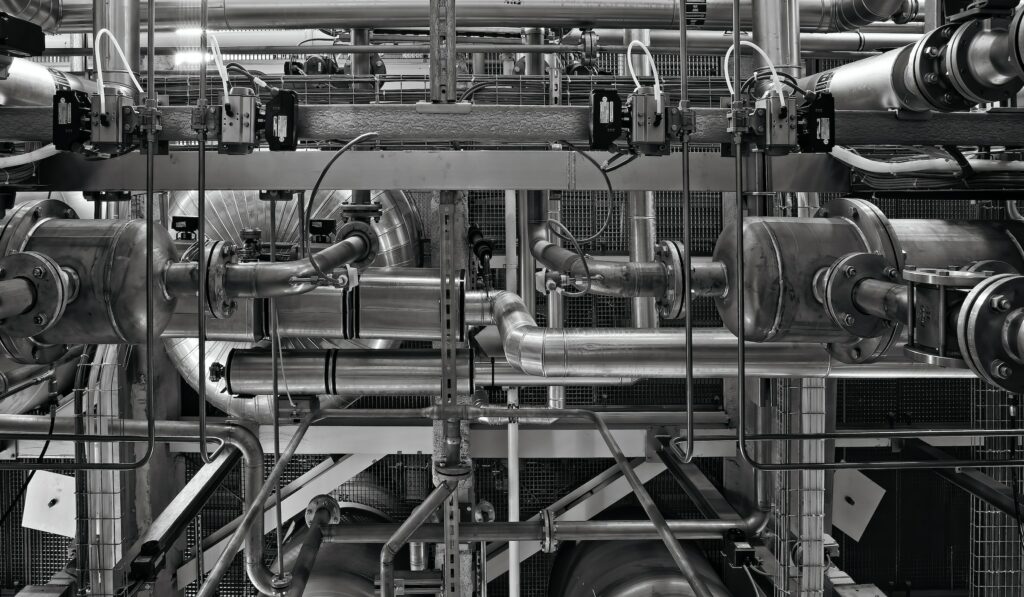
In case you are an outsider to this industry, please note that valves are a pivotal component of any piping system, hence their importance for the oil and gas industry. They can be used to control flow rates, isolate, protect equipment, and operate in the refining process of oil, gas, hydrogen and other such media. This makes them essential to a wide range of functions and applications.
The thing is, companies that manufacture valves have to respond to a confluence of forces that are changing their manufacturing landscape – automation, agility and digitalization, to name a few – no matter what they are, they have to be perfectly in sync with that triple bottom line.
The triple bottom line
People
Worker safety informs testing and maintenance. Automation, diagnostics and monitoring can help limit exposure or support a repair decision. They belong in qualified procedures; a repaired or printed valve is not compliant merely because of the chosen process.
Profit and Planet
Reconditioning by a qualified facility can extend service life when valve condition and applicable requirements permit it. Its economics depend on repairs, testing, lead times and replacement cost. The original article’s 40–60% savings range was not documented and cannot be generalized.
When replacement is necessary, metal recovery can contribute to circularity. It still consumes energy and requires appropriate sorting and qualification. In that context, powder producer f3nice and valve manufacturer Valland examine AM using recycled feedstock.
The confluence of forces changing the manufacturing landscape of valves

As discussed in our coverage of f3nice, the company converts selected metal scrap into AM powders. Material qualification still depends on composition, cleanliness and application requirements.
Valland on the other hand, has been operating in the oil and gas industry since 2006. Founded by experts who have been working for more than three decades in the valves business, the company focuses on engineering valves. Their main market is oil & gas exploration and production sectors, including subsea and transmission, and other special service industrial application. In 2016, they started experiencing additive manufacturing (AM) and how the technology could benefit their target industries. The year 2019 marked a period of commitment to developing an AM-related business with the installation of 2 FDM 3D printers. This business continuously expands and 2021 saw the development of an AM-dedicated business unit, named Valland3D, with a 3D printing lab capable of handling a wide range of materials spanning polymers, resins and metals.
“Valland3D currently make uses of AM technologies to develop innovative solutions and produce components for Valland’s core and related products which consist of high quality and tailor-made valves for the oil & gas and energy sectors. Building on this, the company aims at spreading through the AM industry an innovative approach based on the concept of working in synergy with the client (eg: end users or EPCs) assisting it along the entire AM value chain.
To confirm this, in addition to the pure 3D printing-related services, we offer components’ design or re-design applying advanced topology optimization tools and additive process simulation services. Moreover, Valland3D’s action is also geared toward supporting partners during the components’ usage life cycle through the possibility of adopting spare parts digital inventory solutions significantly contributing in squeezing the spare parts lead time and allowing so for the full realization of an on-demand maintenance approach”, Alex Giorgini, R&D Engineer told 3D ADEPT Media.
In addition to their in-house AM capabilities that include FDM, SLA, LB-PBF technologies and a metal powder atomization R&D hybrid platform capable of combining alternative AM feedstock production technologies, Valland3D can also handle post-processing activities such as components heat treatment and optimization of surface finishing degree through shot peening and sandblasting processes.
Valland3D is one of those companies that believes that AM can positively influence the shift towards a triple bottom line paradigm. As a matter of fact, it has become a regular practice for the team to support AM projects through Life Cycle Assessment (LCA) studies. Last year, it took part in a Joint Industrial Project promoted by Wilhelmsen and thyssenkrupp related to the redesign for AM and subsequent 3D printing of critical valve components. “In the context of the described project roughly 50% of GHG emissions savings have been assessed by comparing the AM scenario to the conventional manufacturing one through the development of a simulation model based on LCA methodologies”, Giorgini comments.
The study with f3nice examines redesign and manufacture of a valve body and closure components. It compares energy use and greenhouse-gas emissions under several scenarios. That scope alone establishes neither every environmental impact nor the valve’s functional compliance.
LCA of 3D printed valve components

As part of this project, f3nice brought its expertise in the development of metal 3D printable powder through the sourcing of metal scrap and disused parts while Valland brought its experience in the design and manufacture of valve components in the oil and gas industry.
According to a report issued on this topic, five main contributions in respect to both the conventional as well as the Additive Manufacturing (AM) routes have been considered:
- The embodied energy in the steel material, which is the energetic cost associated with the mining of new material to produce the steel and/or the recycling of pre-existing metal scrap.
- The creation of the raw product. This term accounts for the manufacturing of the metal bar which is later used to fabricate the valves components from traditional machining. On the other hand, in the AM values chain, the energy required to produce the steel powder is considered.
- The manufacturing of the finished components, consisting in the CNC machining for the conventional parts, while printing and finishing for the AM ones.
- The utilization, a relative contribution based on the weight reduction of the printed parts installed on the FPSO vessel.
- The transportation and logistics, due to the different supply chain models adopted in the conventional and AM approaches.
The project team have studied three scenarios for this last consideration (transport and logistics).
In conventional Scenario 1, the model assumes steel billet production in India or China followed by CNC machining in Singapore. India and China are in Asia, but not Southeast Asia.
Scenario 2 assumes powder atomization in Germany from European scrap, followed by manufacture in Singapore. Scenario 3 places atomization nearer Singapore, in Indonesia or Malaysia, using local scrap; printing remains in Singapore.
Calculations have been carried out taking reference data for each specific process (i.e., energy consumption values in MJ/kg). When possible, real data have been used instead, starting from the atomization of powder carried out by f3nice in 2021, one reads. The final results have been shared through various tables:
| Contribution | Scenario 1 — conventional | Scenario 2 — European powder | Scenario 3 — regional powder |
|---|---|---|---|
| Embodied energy | 874 | 95 | 95 |
| Raw product | 266 | 80 | 80 |
| Manufacturing | 93 | 867 | 867 |
| Use (relative credit) | 0 | -116 | -116 |
| Logistics | 15 | 18 | 2 |
| Reported total | 1248 | 945 | 928 |
Reading note: Scenario 2’s displayed values sum to 944 MJ, while the reported total is 945 MJ. Original figures are retained; the available data do not explain the 1 MJ difference.
In this model, reported totals correspond to roughly 24–26% energy savings. The negative use-phase contribution is a relative credit associated with weight reduction on the FPSO vessel, not physically negative energy consumption. Recycled feedstock alone does not guarantee a better result for every application.
The results of the energy consumption in each scenario have also helped to estimate each of their carbon footprint. With the goal of making calculations easier, the standard energy mixes of the aforementioned countries have been considered as input parameters here.
| Contribution | Scenario 1 — conventional | Scenario 2 — European powder | Scenario 3 — regional powder |
|---|---|---|---|
| Embodied energy | 64.6 | 3.4 | 4.9 |
| Raw product | 19.6 | 2.8 | 4.1 |
| Manufacturing | 4.8 | 44.8 | 44.8 |
| Use (relative credit) | 0 | -8.2 | -8.2 |
| Logistics | 1.1 | 1.3 | 0.1 |
| Reported total | 90.1 | 44.1 | 45.7 |
Reported emissions are 90.1 kg CO₂e per unit for Scenario 1, 44.1 for Scenario 2 and 45.7 for Scenario 3: approximately 51% and 49% reductions. These differences depend on electricity mix, model boundaries and use assumptions. Nearer atomization reduces logistics here, but does not automatically give the lowest total carbon footprint.
At the time of the 2022 feature, these scenarios were not presented as a demonstrated industrial rollout of AM valve components made from recycled metal. One of the very first step that will encourage organizations to follow the AM scenarios and benefit from the triple bottom line advantages might be to foster the adoption of sustainable feedstocks produced from waste material or end-of-life components. For Valland’s R&D Engineer, another area of interest would be the “energy and consumables consumption efficiency of AM technologies”. By focusing on this area, the environmental impact related to the components building process would be significantly reduced.
Furthermore, while AM technology providers would need to continually work on the optimization of their processes, exploring the replacement of valve components using AM and 3D printable recycled metal powder could be a win-win for both the end-user and materials producer’ business. The role of “AM feedstocks suppliers (…) will become increasingly relevant considering the issues of critical raw material availability which the world economy will progressively have to face”, Giorgini explains.
Agility and Change
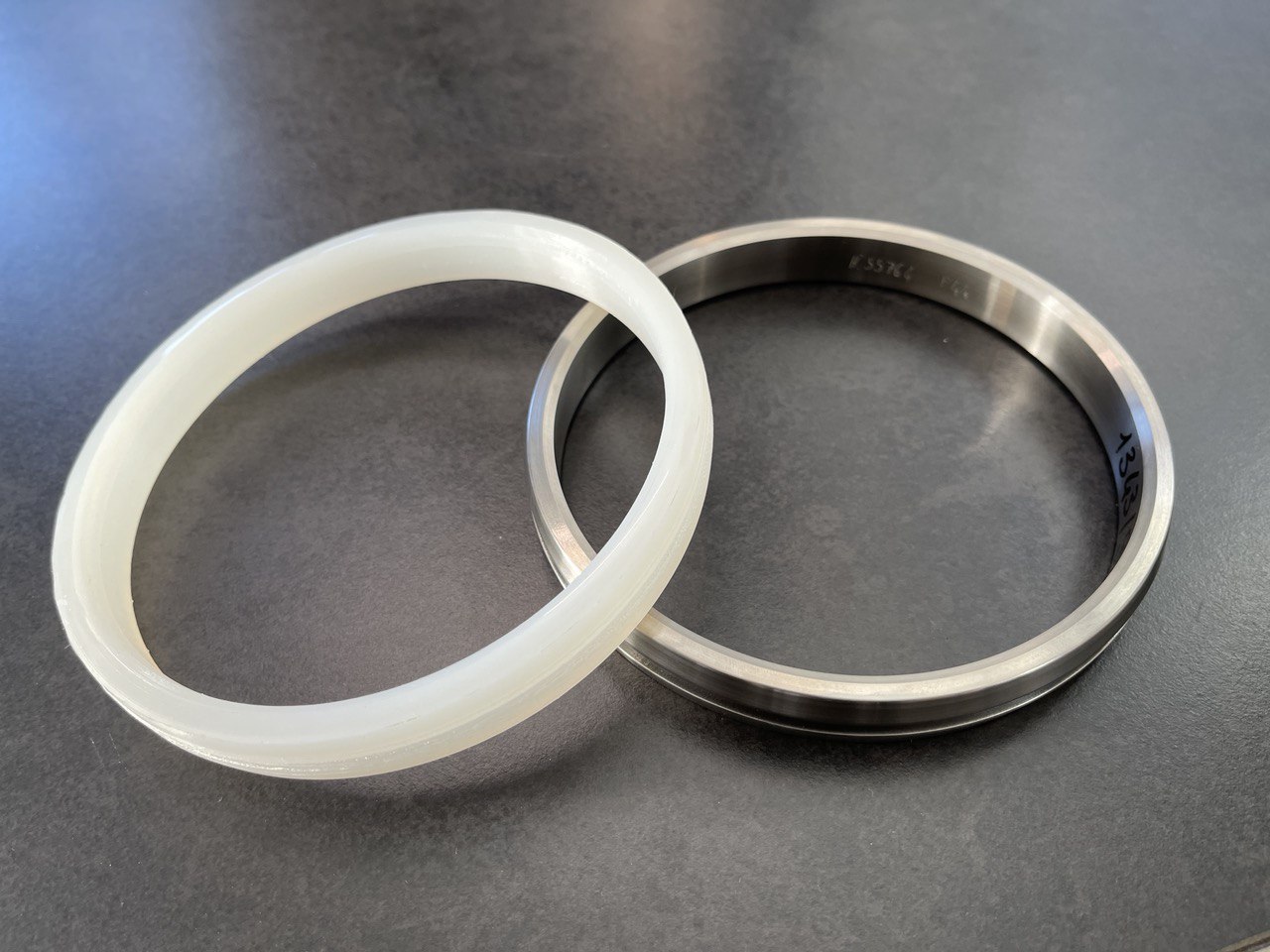
Selecting a manufacturing chain requires valve performance, traceability, qualification and life-cycle impacts to be considered together. These scenarios offer options for evaluation; they establish neither universal savings nor automatic reductions in risks to people.
This article was initially published in the 2022 September/October edition of 3D ADEPT Mag.
THE 3D ADEPT WEEKLY NEWSLETTER
The industry moves fast. Stay ahead.
Every week, the latest additive manufacturing news, in-depth features and real-world applications, straight to your inbox. Plus, be the first to know when a new issue of 3D ADEPT Mag is out.
Free · One email a week · Unsubscribe anytime
Clicking loads our email provider’s sign-up form, including its analytics and Google’s anti-bot protection. You’re only subscribed if you complete the sign-up. Read our privacy policy.