

Feature first published in the May/June 2022 issue of 3D ADEPT Mag. Interviews and examples reflect that period; cited research should be read in its original context and date.
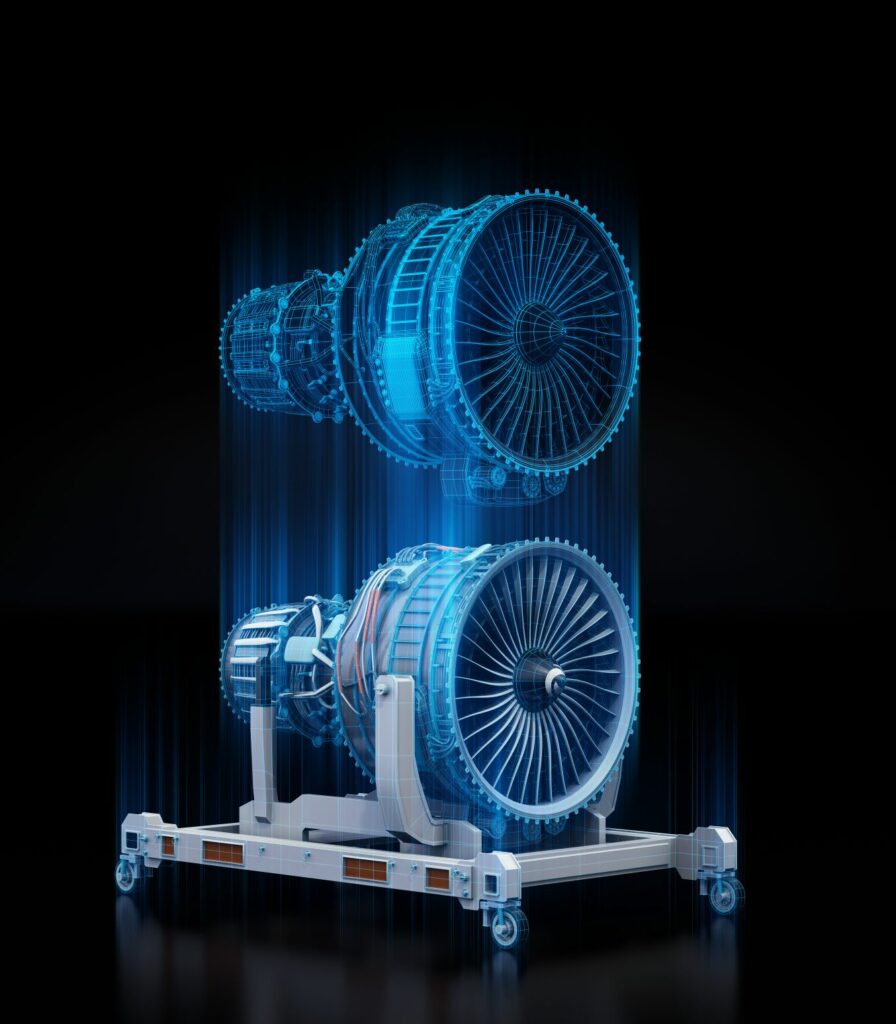
In additive manufacturing, repeated trials without a model or structured feedback can consume time and money. A digital twin (DT) can help teams understand a process and inform decisions, provided they define what it represents, the data it uses and the results they need to validate.
A digital twin represents a physical object, process or system and is linked to data about its state. It may include simulations, but a CAD model or an isolated simulation does not by itself establish a digital twin. Update frequency and model detail depend on the intended use; continuous real-time synchronisation is not a universal requirement.
The 2021 NIST report on the ISO 23247 framework presents several implementation scenarios for manufacturing.
On a production floor, data from a component or machine can be associated with its representation to study its operation and interactions with other equipment.
In additive manufacturing in particular, the greatest adoption of ‘digital twins’ would be tied to the design and manufacturing phase – according to Duann Scott, Consultant & Founder of Bits to Atoms. “I have only seen performance in testing during the design iteration phase, less so in the performance of a manufactured part over time”, he states.
This feature examines how the concept applies to additive manufacturing, its potential and the conditions for deployment.
What framework applies to the use of DT in manufacturing?
No matter what manufacturing process is utilized, the first step required to integrate a DT technology is to create or provide access to virtual representations of the products, machines, and environments that organizations design, manufacture or operate.
Depending on the use case, integration may involve CAD, connected equipment, version control, multiphysics simulation, data analytics or machine learning. Not every project needs all these tools. Reducing physical trials and development time is a possible aim, but the model itself needs validation and does not automatically replace qualification tests.
“To ensure accurate modelling over the entire lifetime of a product or its production, digital twins use data from sensors installed on physical objects to determine the objects’ real-time performance, operating conditions, and changes over time. Using this data, the digital twin evolves and continuously updates to reflect any change to the physical counterpart throughout the product lifecycle, creating a closed-loop of feedback in a virtual environment that enables companies to continuously optimize their products, production, and performance at minimal cost”, experts from Siemens Digital Industries Software said.
These tools can address several manufacturing needs:
- Preparing production decisions. Testing configurations and production lines can help identify constraints before investment. The Ingersoll Machine Tools case illustrates this approach. The Shell project at Pulau Bukom is another industrial example; these cases are not all AM applications.
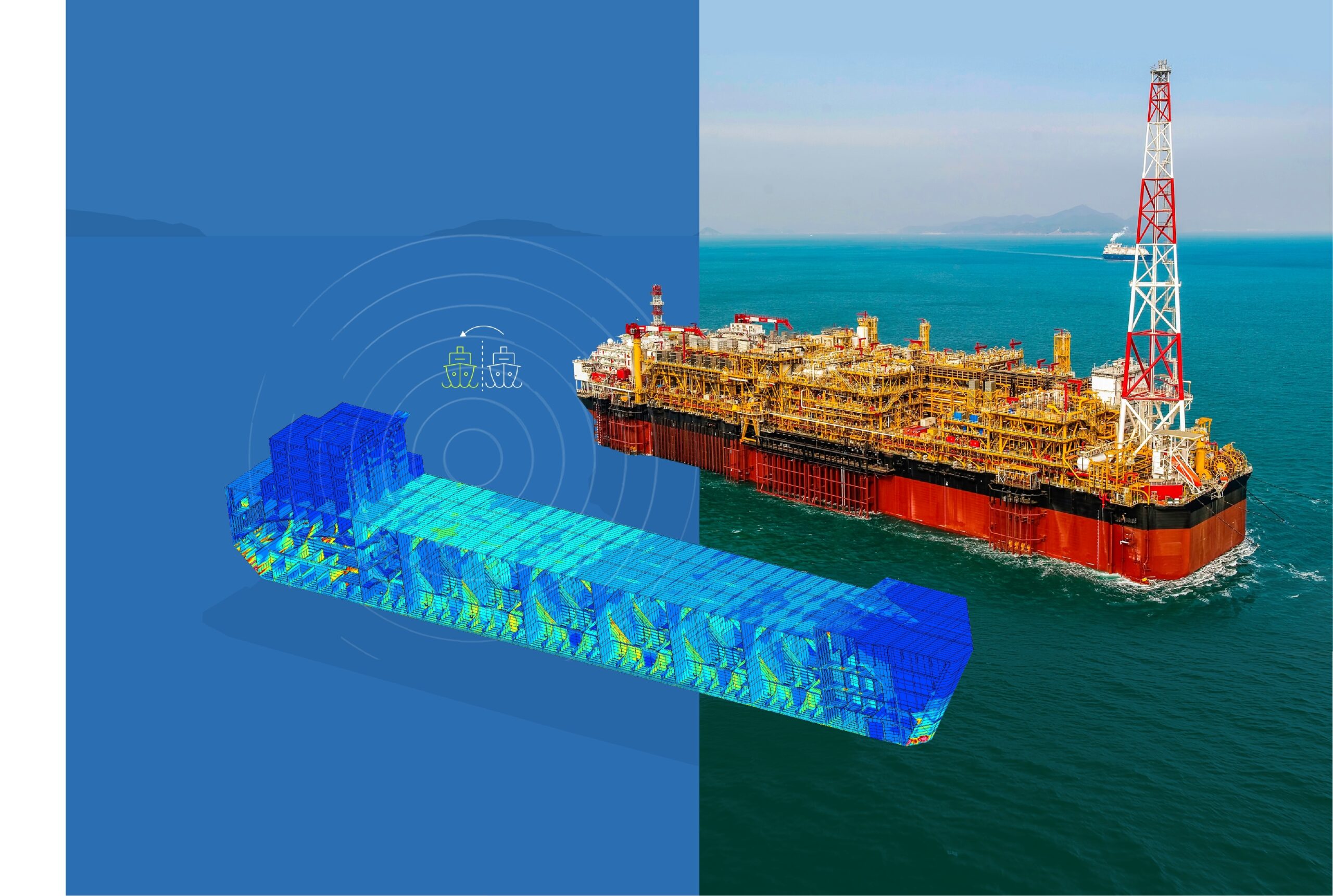
Studying maintenance. Decision Lab and Siemens developed ATOM to model maintenance operations for a turbine fleet. The model supports scenario analysis, resource planning and performance indicators.
- Connecting factory data. Solukon’s Digital Factory Tool records depowdering data and offers integration interfaces. This connectivity can contribute to a digital twin, but does not by itself establish a complete twin. Monitoring can flag deviations without guaranteeing that every failure is anticipated.
- Supporting technicians. Augmented reality can overlay models or specifications on equipment, provided the underlying data is current.
In 2022, several projects were adapting these approaches to additive manufacturing. The technology stack depends on the machine, process, available information and decision to be made. There is no single combination suited to every piece of equipment.
The challenges: data, models and integration
Data quality and exchange are major obstacles, even for a project limited to one machine or use case.
According to Scott, “the most challenging aspect of implementing and deploying a digital twin, is that the data typically needs to flow through different software and hardware vendors, so becomes less of a digital twin, and more of a digital quintuplet unless there is a unified file format that meets the needs of every software. Having sometimes competing companies collaborate on behalf of the customer to ensure the data is communicated without loss or fragility due to software or firmware updates can be very challenging and time consuming.”
These difficulties also affect process representation, databases, physical models and their connection to equipment.
For a metal process involving melting, relevant phenomena may include heat transfer, solidification, residual stress and distortion. Not all can be measured directly: sensors and simulations provide complementary information. Other AM processes require different parameters.
“A lot of information needs to be computed and simulated, which is very time consuming based on the current available computing capabilities. Currently, the prediction of temperature distribution inside an AM part that is being printed with non-proprietary mesh-based finite element models will take at least several hours, if not days”, a research reads.
This passage comes from Zhang and colleagues’ review published in November 2020. The computing times depend on the model, mesh and hardware; they are not a benchmark for every current solution.
Data-driven models may use experiments, sensors and simulations. Collection, classification, provenance and consistency need to be managed. Cloud resources can support some workloads without being mandatory in every architecture.
Physics-based models need reliable thermophysical properties, including their temperature dependence. Having these data does not by itself eliminate computational cost or the need for validation.
Integration must also address existing equipment, often described as brownfield systems. Interfaces, formats, timestamps, access controls and version management affect the consistency of exchanges among sensors, machines and models.
Machine learning is one option; not every digital twin depends on it.
It may help estimate properties or detect defects from suitable data. Fast inference does not remove the work of preparing data, training a model and testing it on independent cases. Representativeness, uncertainty and operating limits matter alongside data volume.
So, how do we foster the adoption of DT across AM production floors ?
Progress starts with a concrete decision to improve, followed by the data, models and validation criteria needed to support it.
Examples discussed in 2022 included Siemens NX, Autodesk with Netfabb and Fusion 360, Authentise and Nebumind, Intellegens and Ansys, and Vertex. They covered different simulation, analytics and data-connection functions; each tool was not necessarily a complete digital twin on its own. This is not a catalogue of current offerings.
Moving forward, “the quickest way to adopt digitization of the manufacturing process is to empower those working on the factory floor to implement connectivity and analyze the results. We are seeing new waves of digital tools that make this possible to implement, with less reliance on IT departments and information officers which may slow things down in getting buy-in. It is often said that every time a decision has to go ‘up the chain’ you half the chance that it will be understood or approved. By enabling those closest to create and connect, the time and cost of adoption is lower, and the ability to tune the connectivity quickly [makes it possible to leverage data in the most efficient way within] the manufacturing process”, Scott concludes.
This feature was first published in the May/June 2022 issue of 3D ADEPT Mag.
THE 3D ADEPT WEEKLY NEWSLETTER
The industry moves fast. Stay ahead.
Every week, the latest additive manufacturing news, in-depth features and real-world applications, straight to your inbox. Plus, be the first to know when a new issue of 3D ADEPT Mag is out.
Free · One email a week · Unsubscribe anytime
Clicking loads our email provider’s sign-up form, including its analytics and Google’s anti-bot protection. You’re only subscribed if you complete the sign-up. Read our privacy policy.