

Interview first published in the March–April 2021 issue of 3D ADEPT MAG. Roles, product ranges and expectations reflect that period. Evonik’s statements are retained as attributed claims; they do not constitute clinical or regulatory validation of a device.
A look at medical 3D printing materials and other materials development
Material selection contributes to an additive manufacturing application alongside design, processing and quality controls. This interview with Evonik examines polymers for medical applications and the development directions the company presented in 2021.
Evonik contributes a materials supplier’s perspective. The discussion covers its products, intended uses and the qualification steps needed to translate materials into applications.
The German specialty chemicals group introduced INFINAM in October 2020 for additive manufacturing powders, resins and filaments. Its biomedical VESTAKEEP and RESOMER ranges retained their names, as explained in the interview below.
When asked if this name stands for a specific meaning, Sylvia Monsheimer, Head of Additive Manufacturing & New 3D Technologies at Evonik states:
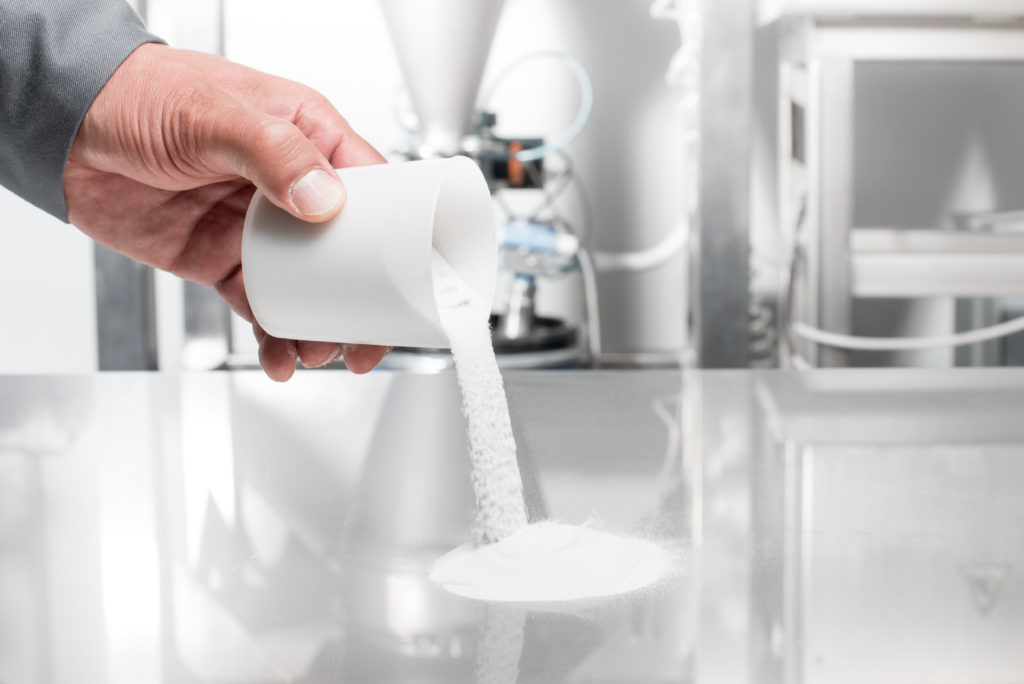
“Our new INFINAM® brand stands for polymer-based materials – powders, resins and filaments – that enable infinite 3D applications. The brand name themselves comes from INFINity + Additive Manufacturing and is aligned with our unique market communication approach which we, by the way, claim #InfinityMeetsReality. In other words, introducing INFINAM®, we boost the chemistry of high-performance polymers and additives into ready-to-use materials for infinite 3D applications.”
As you can see, a glimpse at a materials producer’s activities like Evonik reveals that there are so much to say that it will require more than one article to cover each aspect related to the materials business.
Recognizing all this, we have made a very deliberate choice to address in this article, Evonik’s approach to develop medical 3D printing materials as well as the next steps in terms of materials development the company plans to focus on.
The prism of 3D printing materials for medical applications: the case of polymers
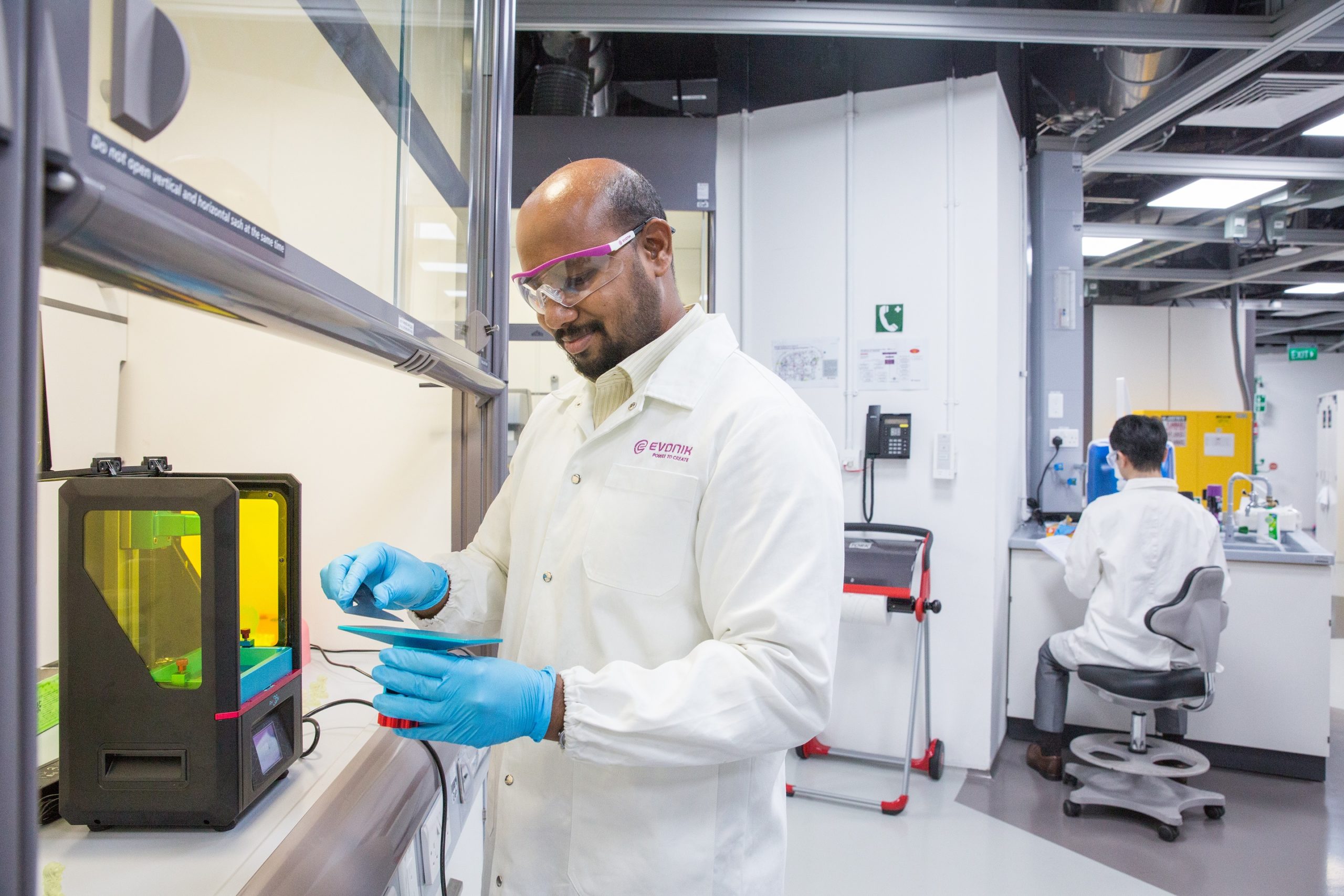
Medical applications span different purposes and stages of maturity:
- Tissue and organ research, which must not be confused with clinically available printed transplantable organs;
- Prosthetics, implants and anatomical models, with different uses and requirements;
- Pharmaceutical research, including dosage forms and drug delivery.
Titanium or cobalt-chromium alloys and polymers may be used depending on the application. Raw-material documentation does not authorise a finished device: design, manufacturing, cleaning and, where applicable, sterilisation also matter. The FDA’s 2017 technical guidance addresses these controls for additively manufactured devices.
“Biomaterial” covers materials intended to interact with biological systems. Suitability depends on the use, intended contact and device; it cannot be inferred from a polymer’s name alone.
Evonik distinguishes its medical application ranges from its other additive manufacturing materials. This product positioning does not replace use-specific qualification. Marc Knebel explains the distinction:

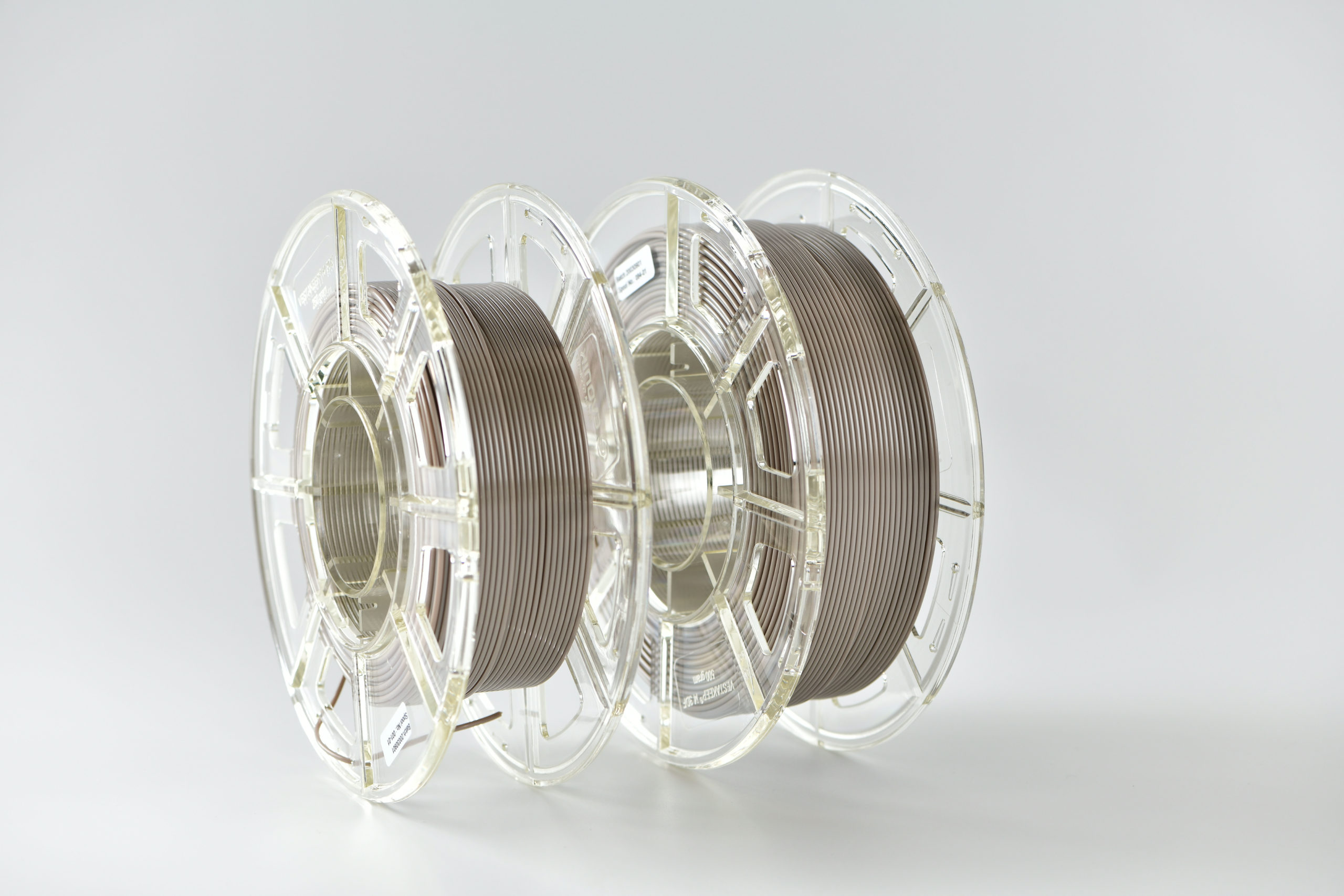
“Evonik offers the most extensive portfolio in the sector of 3D printable biomedical materials for medical technology. For plastic implants the portfolio includes, in addition to VESTAKEEP® i4 3DF PEEK filament for permanent body contact, also the RESOMER® product line with bioresorbable filaments, powders, and granules.”
“ These specialty materials are subject to strict standard specifications for polymers in medical applications that apply to the respective brands mentioned above. For this reason, these products have been excluded from transfer to the INFINAM® product family and will continue to be marketed under the VESTAKEEP® and RESOMER® brands”, Marc Knebel, Head of Medical, Evonik explains.
The European Patent Office’s 2020 report records more European applications for polymers in additive manufacturing during 2010–2018 than for the other studied material groups combined. This covers AM materials overall and does not measure medical adoption. Compositions and surfaces can be tailored to an application, but a desired property such as antimicrobial activity must be evaluated alongside its effects on device safety and performance.
Surface chemistry, mechanical properties and topography are among the characteristics to examine. Knebel also highlights the importance of matching material and process to the device’s intended use:
“The most important factor is a good fit of material and processing technology that assure safety and effectiveness for the production 3D printed medical devices. Powders as well as filaments are already successfully used for those applications. INFINAM® PA12 powders are used for short-term body contact devices. VESTAKEEP® PEEK filament is available for long-term body implants, as FFF is the state-of-the-art technology to produce high quality parts in a safe process with this material. When it comes to filaments, an additional advantage is the fact that FFF/FDM printers are typically smaller which can favour the use directly in a hospital environment, with the potential of point-of-care, production of implants. In any case, the freedom of design and the quality is the determining factor over the costs.”
Editorial clarification. These possibilities described by the supplier do not mean that placing an FFF printer in a hospital directly enables usable implant production. The device, process and production workflow require appropriate validation.
Filament extrusion is one possible route. Other applications use processes such as powder bed fusion, photopolymerisation or bioprinting. These process families are not interchangeable: suitability depends on the material and intended use.
Biomedical polymer applications are not limited to drug delivery or space filling. Evonik already described PEEK implant applications in 2018. Material availability and the validation of each application remain separate questions.
According to Evonik’s Head of Medical, the main reason that explains this slow adoption might lie in the fact that the qualification process of a material takes a lot of time that depends on regulatory authorities but also on the work of medical device manufacturers.
“Any new material and technology need to go through a careful step-by-step validation and approval process which does take time. Evonik is already offering a broad range of biomaterials of its VESTAKEEP® PEEK and RESOMER® brands with the required quality and with the needed documentation. Validation and qualification of the printers and printing processes are moving forward quickly. In addition, we note a high interest of medical device manufacturers across the globe thus already in 2021 we are confident that biomaterials will be used in many different applications”, he concludes.
Development directions presented in 2021
Evonik also cites a flexible TPA thermoplastic elastomer powder and a new US 3D printing centre among its 2020 activities. The group was also expanding polyamide 12 capacity in Marl. Chronological clarification: Evonik announced that construction of the new complex was virtually complete on 8 July 2021, with full start-up then planned for the fourth quarter. This expanded capacity rather than creating the company’s first PA12 plant.

Monsheimer points out the polyamide 12’s outstanding properties make it an ideal material candidate for applications where “high stability paired with flexibility” and “high temperature resistance and low weight” are required. Given its wide range of applications in automotive, oil and gas and even medical devices, “the polyamide 12 market is posting annual growth rates exceeding 5 percent worldwide, significantly outpacing the global gross domestic product.”
Speaking of the AM industry in particular, the materials expert announced that its growth rates even reach double digits.
The properties and growth rates quoted are those presented by Evonik in this 2021 interview. They are neither an updated forecast nor a guarantee covering every grade or device; use conditions and material-specific data remain decisive.
“We plan to broaden our portfolio of polyamides but also non-polyamide polymers by developing materials with enhanced properties to open new infinite applications. Our new 3D printing centre in Austin, Texas, on the one hand can supply application support to customers and on the other hand our new site has a focus on the material development manufactured by the structured polymers technology which complements our proven methods for powder production beside precipitated polymers”, she announces.
No matter what direction Evonik follows, the company remains driven by the market needs. To do so, the company keeps in mind its primary goal which is to develop “ready-to-use” high-performance materials that can meet the requirements of various technology lines. A goal that necessarily requires an in-depth collaboration with 3D printer manufacturers as we saw with HP and today with Evolve Additive Solutions for the STEP technology – a process that would need a dedicated powder material -.
In this vein, other developments we might expect from the company includes “a new product line of photopolymer resins with unique combination of material properties” which will fill “the gap of today’s commercially available photopolymers for VAT Polymerization.”
Last but not least, at the heart of these activities, also lies the ambition to contribute to a more sustainable industry, but the battle is even harder for a materials producer given the nature of their activity. That’s why sustainability is pursued in various ways, within the group’s Additive Manufacturing Innovation Growth Field:
“On the one hand, we are constantly improving our own production processes to make them as efficient and safe as possible. On the other hand, we are putting our innovative power into the development of, for instance, new powder materials to increase their reusability rate during a 3D printing process. As a matter of fact, some of our INFINAM® PA12 powders can be already reused by only replacing the powder needed for the parts of the previous job”,Monsheimer outlines.
This reuse capability is the supplier’s claim for particular powders and process conditions, not a universal reuse rate for every batch. Powder and part properties need checking; reuse alone does not establish an overall environmental benefit without life-cycle assessment.
This exclusive feature has initially been published in the 2021 March/April edition of 3D ADEPT Mag.
Further reading from our archives
- An earlier interview with Sylvia Monsheimer on Evonik’s powder business
- Evonik and HP: a thermoplastic elastomer for Multi Jet Fusion
- Evonik’s US 3D printing centre announcement
- The bioresorbable powder presented by Evonik
- The implant-grade PEEK filament presented by Evonik
THE 3D ADEPT WEEKLY NEWSLETTER
The industry moves fast. Stay ahead.
Every week, the latest additive manufacturing news, in-depth features and real-world applications, straight to your inbox. Plus, be the first to know when a new issue of 3D ADEPT Mag is out.
Free · One email a week · Unsubscribe anytime
Clicking loads our email provider’s sign-up form, including its analytics and Google’s anti-bot protection. You’re only subscribed if you complete the sign-up. Read our privacy policy.