

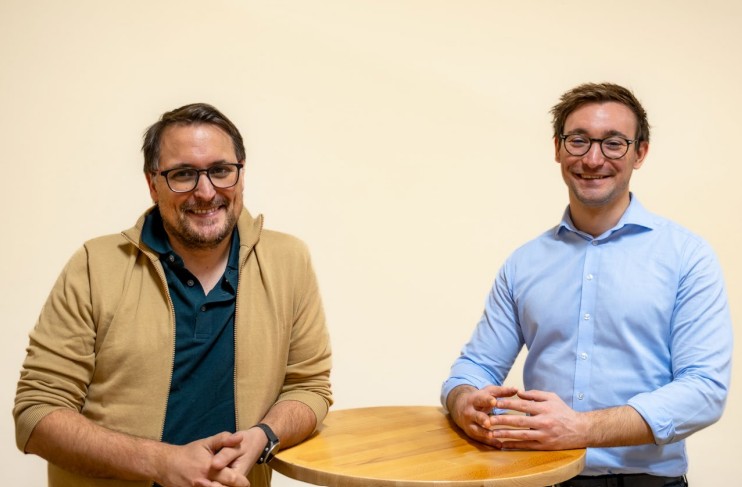
In a statement dated September 30, 2026, French company MB Therapeutics says it has received authorization from the French National Agency for the Safety of Medicines and Health Products (ANSM) to open a pharmaceutical establishment manufacturing a semi-solid intermediate in cartridges for 3D printing solid oral dosage forms.
The company describes this authorization as a world first for these cartridges under pharmaceutical manufacturer status. This differs from the Finnish company CurifyLabs, which already offers excipient bases that it says are manufactured under Good Manufacturing Practices (GMP), and which pharmacists combine with the active ingredient. The two announcements concern different intermediate products.
Standardizing the cartridge to personalize the dose
Standardized doses may not meet the needs of some patients, including children or elderly people who require tailored doses or oral forms that are easier to take. In the approach described by MB Therapeutics, a patented cartridge is intended to be the standardized pharmaceutical product, manufactured under Good Manufacturing Practices.
Personalization is then planned at the point of care: the company’s 3D printers, designed for hospital pharmacies, would use these cartridges to produce oral forms with a dose adapted to each patient. The company presents the model as a way to ensure quality and traceability from cartridge production through to printing.
In its communication accompanying the announcement, MB Therapeutics describes the authorization as paving the way for the future opening of its establishment. It does not describe an already operational site.
“Beyond precise dose adjustment and rapid availability in the pharmacy, 3D printing makes it possible to offer adapted dosage forms, such as personalized dispersible and orodispersible forms,” says Dr Manon Perez, pharmacist and Quality Director at MB Therapeutics.
That said, regulatory clearance is one hurdle while market access is another one. As we explored in our dossier on reimbursement pathways for 3D printing in Europe, the technology is often ready before the system is.
*We curate insights that matter to help you grow in your AM journey. Receive them once a week, straight to your inbox. Subscribe to our weekly newsletter.
THE 3D ADEPT WEEKLY NEWSLETTER
The industry moves fast. Stay ahead.
Every week, the latest additive manufacturing news, in-depth features and real-world applications, straight to your inbox. Plus, be the first to know when a new issue of 3D ADEPT Mag is out.
Free · One email a week · Unsubscribe anytime
Clicking loads our email provider’s sign-up form, including its analytics and Google’s anti-bot protection. You’re only subscribed if you complete the sign-up. Read our privacy policy.