

Phase3D and Rowan University’s Digital Engineering Hub (DEHub) recently teamed up to advance data-driven metal additive manufacturing research, education, and process confidence. The collaboration demonstrated its practical value during DEHub’s first independent build after installation of its new metal additive manufacturing system.
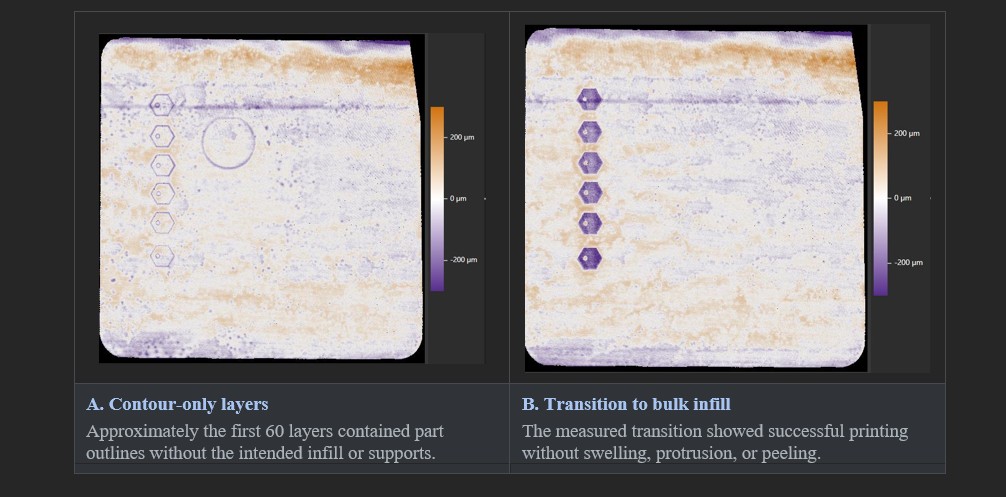
The build ran on DEHub’s newly installed DMG MORI LASERTEC 30 SLM US system. Phase3D’s Fringe Inspection™ measured the build surface layer by layer. Early in the printing process, a build-preparation output error affected approximately the first 60 layers. They printed only the contours of the parts, effectively skipping the intended infill or support structures.
Such errors can produce a defective part and pose a risk to the printer. The transition from an erroneous contours-only setting to full infill without the intended supporting geometry poses a high risk. A part could peel, deform, protrude above the powder bed, or fail to form. A single protruding part can also disrupt the recoater and create cascading effects across the build and damage the printer. With such an error occurring so early in a build, many operators would cancel this part as a precaution or continue with unmeasured risk.
From an uncertain build to a measured decision
DEHub’s team decided to proceed, but developed a clear stop condition together with Phase3D. They would watch the Fringe Inspection heightmaps for part protrusions, abnormal swelling, improper powder coverage, or incorrectly forming parts. If any of these appeared, the team would cancel the build immediately.
Throughout the transition, the DEHub and Phase3D teams monitored the height of the melted areas after exposure. They also checked the subsequent powder layers for recoater-related issues. Standard machine observation and layer images can show that something looks different. However, they do not provide any quantitative surface-height information. Fringe Inspection supplied the measurement data needed to make a defensible go/no-go decision as the build progressed, with calibrated, validated accuracy.
The result: evidence to keep building
The heightmaps captured the transition from contour-only layers to the bulk part geometry. The measurements showed that the parts were printing successfully, with no signs of swelling, part protrusion, or peeling. The powder layers also remained healthy, with no indication that the recoater was being disrupted. With that evidence, the team continued the build to successful completion.
The value was immediate: the team had a quantitative basis to continue. They could avoid stopping solely because of uncertainty or accepting an unmeasured risk. On DEHub’s first independent build, Phase3D turned an unexpected process event into a monitored, evidence-based decision.
A platform for research, education, and qualification
The partnership gives Rowan students and researchers access to calibrated, unit-based heightmaps from the metal additive manufacturing process. The teams plan to use those measurements to support process understanding, anomaly detection, qualification research, and hands-on education in data-driven manufacturing.
“Our goal in DEHub is to connect advanced manufacturing with trusted data. This first build showed our students and researchers how real-time, quantitative inspection can support decisions at the moment they matter most.” Professor Antonios Kontsos, Ph.D., Director, Digital Engineering Hub at Rowan University, states.
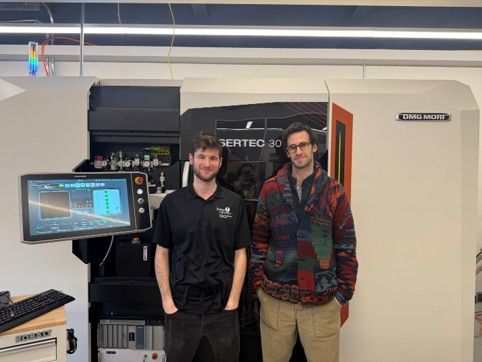
Featured image: Alex Kinoian, Undergraduate Research Student (left) and Andrew Holliday, Phase3D Applications Engineering Manager (right), after Fringe Inspection installation on the DMG MORI LASERTEC 30 SLM US metal 3D printer
THE 3D ADEPT WEEKLY NEWSLETTER
The industry moves fast. Stay ahead.
Every week, the latest additive manufacturing news, in-depth features and real-world applications, straight to your inbox. Plus, be the first to know when a new issue of 3D ADEPT Mag is out.
Free · One email a week · Unsubscribe anytime
Clicking loads our email provider’s sign-up form, including its analytics and Google’s anti-bot protection. You’re only subscribed if you complete the sign-up. Read our privacy policy.