CMS will debut its six-axis Krearob robotic LFAM system at Formnext 2026, alongside the gantry-based Kreator A3.
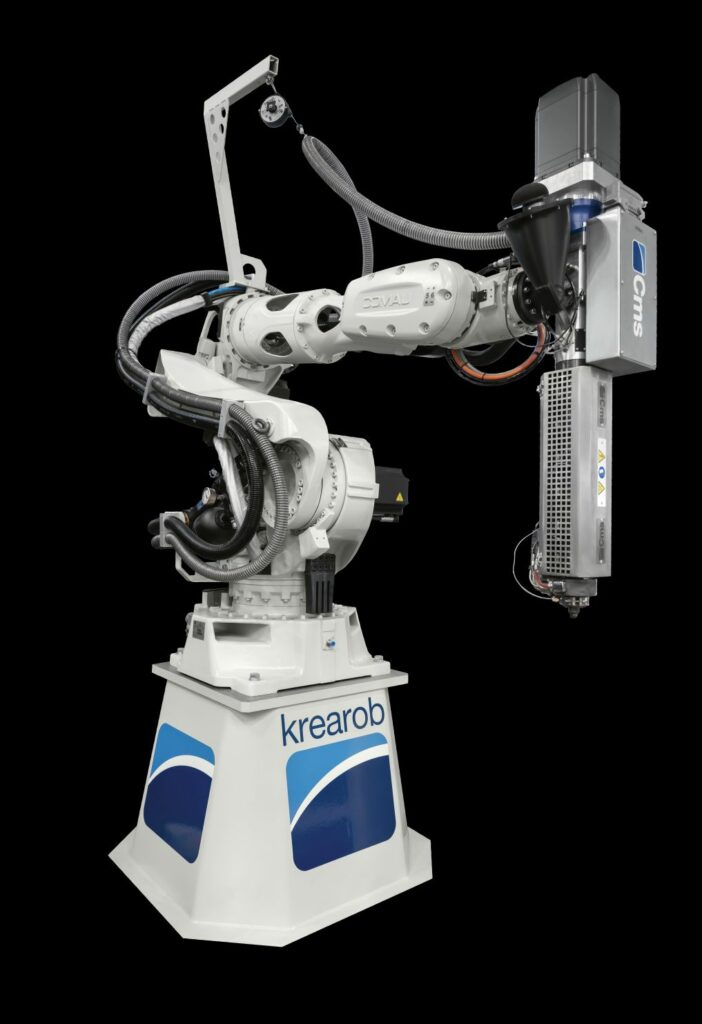
CMS SpA, is an Italian machine builder and part of SCM Group. It will bring its six-axis Krearob robotic large format additive manufacturing (LFAM) system to Formnext for the first time. Visitors can watch it print live in Hall 12.0, Stand D51. The show runs in Frankfurt from November 17 to 20.
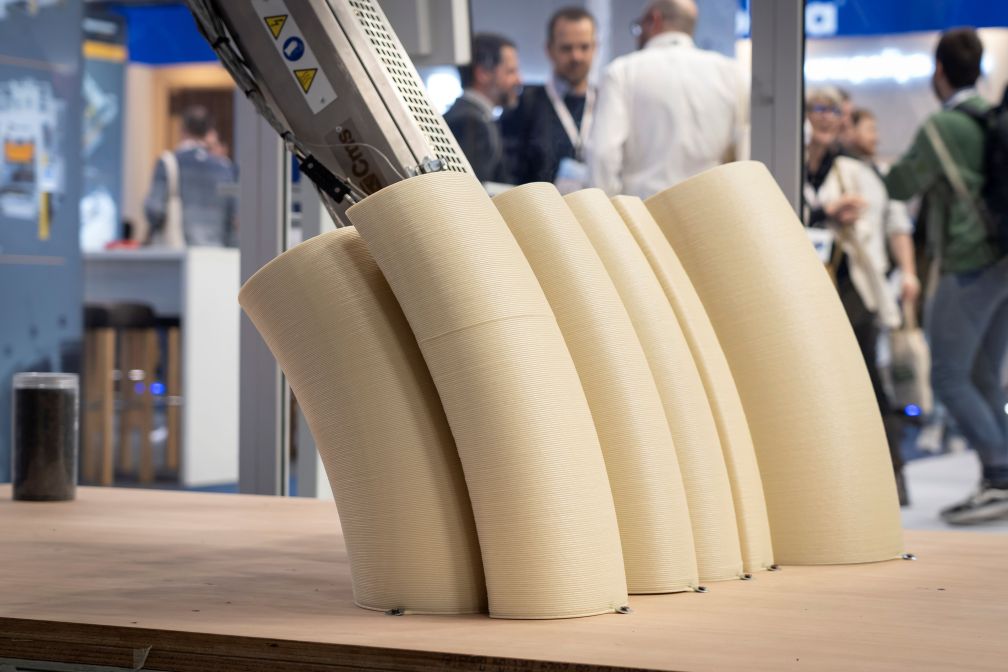
Launched earlier this year, Krearob is the latest addition to CMS’s additive manufacturing portfolio. It produces large thermoplastic tooling, molds and parts with complex shapes. CMS targets aerospace, automotive and industrial manufacturing. The system combines the company’s extrusion unit with dedicated slicing software and an HMI. As a result, operators can program, simulate and print within one platform.
CMS reports potential material and weight savings of up to 80% compared with traditional manufacturing. However, the result depends on the part and the process it replaces.
What else to discover at the CMS booth
CMS will also showcase Kreator A3, its flagship gantry-based LFAM system. It uses screw extrusion to make large thermoplastic parts, including composite tooling and molds. Material throughput reaches up to 30 kg/hour. Moreover, it can print vertically, horizontally and at 45°. CMS presents this flexibility as a way to use resources more efficiently than conventional methods.
Choosing between a robot and a gantry can be difficult. A robotic cell offers reach and freedom along several axes. This helps the deposition head follow a part’s shape. In contrast, a gantry offers a rigid, clearly defined build envelope.
“With one of the industry’s broadest LFAM portfolios – spanning standalone 3D printing, hybrid and double-bridge systems, and robotic solutions – these two solutions demonstrate our ability to offer manufacturers the right technology for their specific production requirements, rather than expecting them to adapt to a single manufacturing approach,” says Marino Chiappa, Division Director, Advanced Materials & Plastic at CMS.
As we noted in our analysis of composites AM, tooling and mold making remain the main applications. However, activity is becoming more selective, with a focus on high-value uses. LFAM is moving from proof-of-concept to industrial deployment, but it is still earning widespread industrial trust.
With that in mind, CMS’s diverse portfolio options may resonate more with OEMs. Formnext visitors will be able to judge for themselves how the robot’s multi-axis freedom translates into real parts on the stand.
THE 3D ADEPT WEEKLY NEWSLETTER Every week, the latest additive manufacturing news, in-depth features and real-world applications, straight to your inbox. Plus, be the first to know when a new issue of 3D ADEPT Mag is out. Free · One email a week · Unsubscribe anytime Clicking loads our email provider’s sign-up form, including its analytics and Google’s anti-bot protection. You’re only subscribed if you complete the sign-up. Read our privacy policy.The industry moves fast. Stay ahead.