In a collaboration with 3D printing service bureau Sculpteo, fashion designer ROMI creates five haute couture looks for iconic haute couture fashion house Jean Paul Gaultier. Brought to life using 3D printing, the new designs are part of the fashion house’s Autumn/Winter 2026–27 haute couture line.
According to Sculpteo, each piece explores a different application of additive manufacturing, featuring intricate textures, organic forms, and complex geometries that would be difficult to produce using conventional methods.
No prominent records or public disclosures indicate that the Jean Paul Gaultier fashion house used additive manufacturing in its collections prior to working with Sculpteo for this Autumn/Winter 2026–27 haute couture line.
Using Multi Jet Fusion (MJF) technology, Sculpteo produced intricate components in PA12, a lightweight yet durable polymer, alongside flexible TPU materials to balance structure with wearer comfort.
“The combination of speed, precision, and design freedom made it possible to realize a highly complex concept within a demanding timeline,” the house comments on the collaboration, adding that TPU’s flexibility met both the creative and the technical requirements.
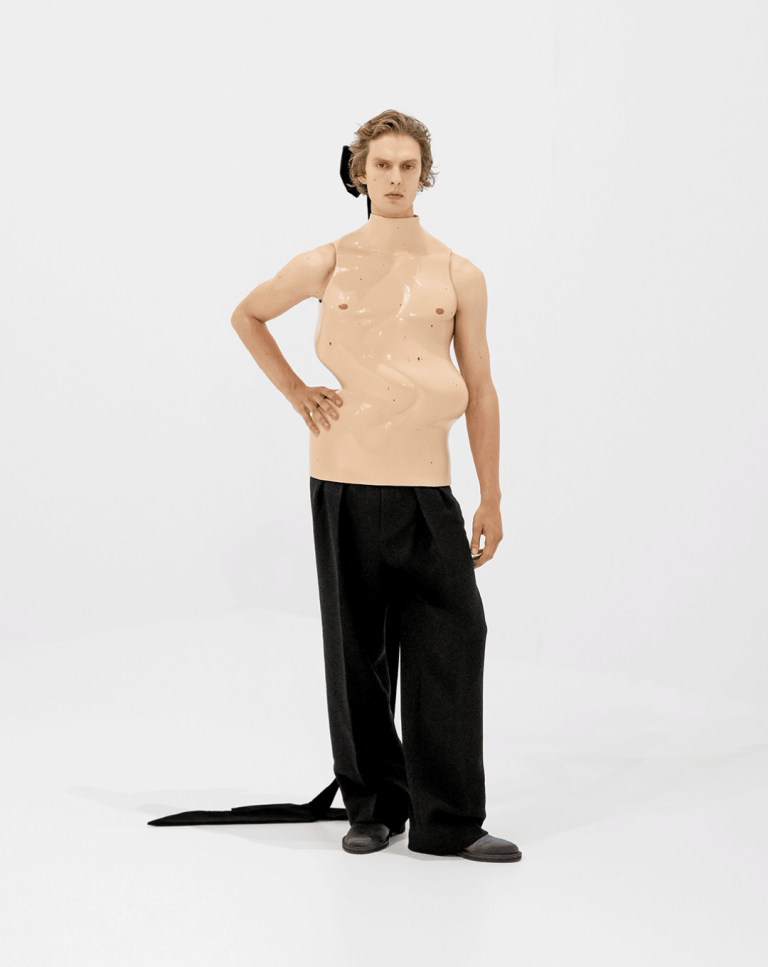
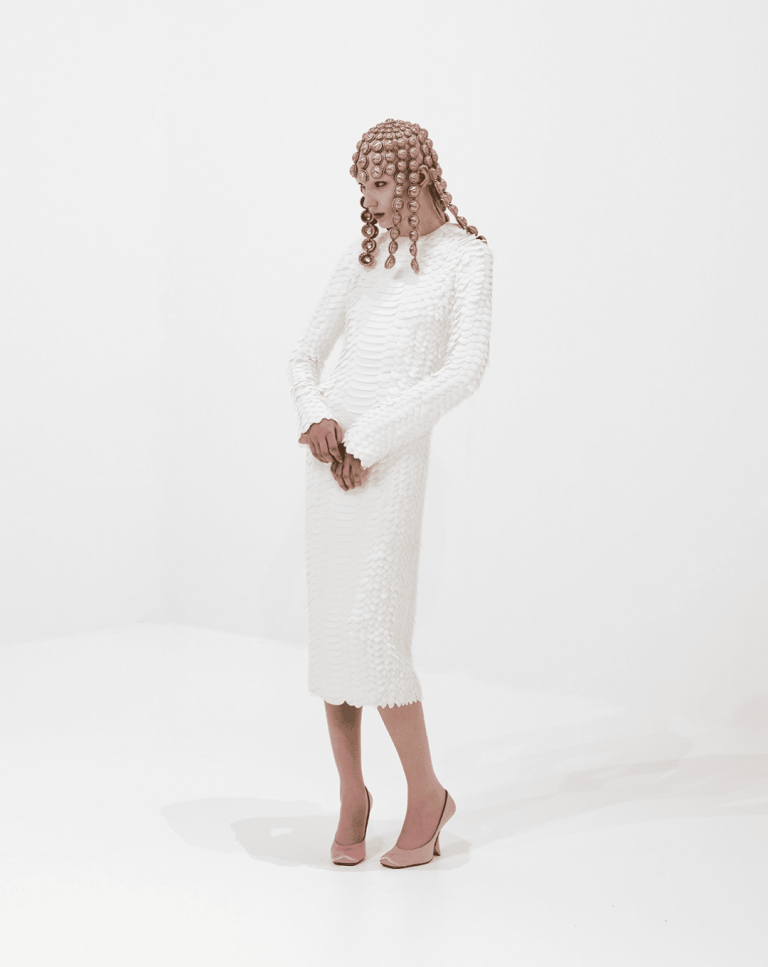
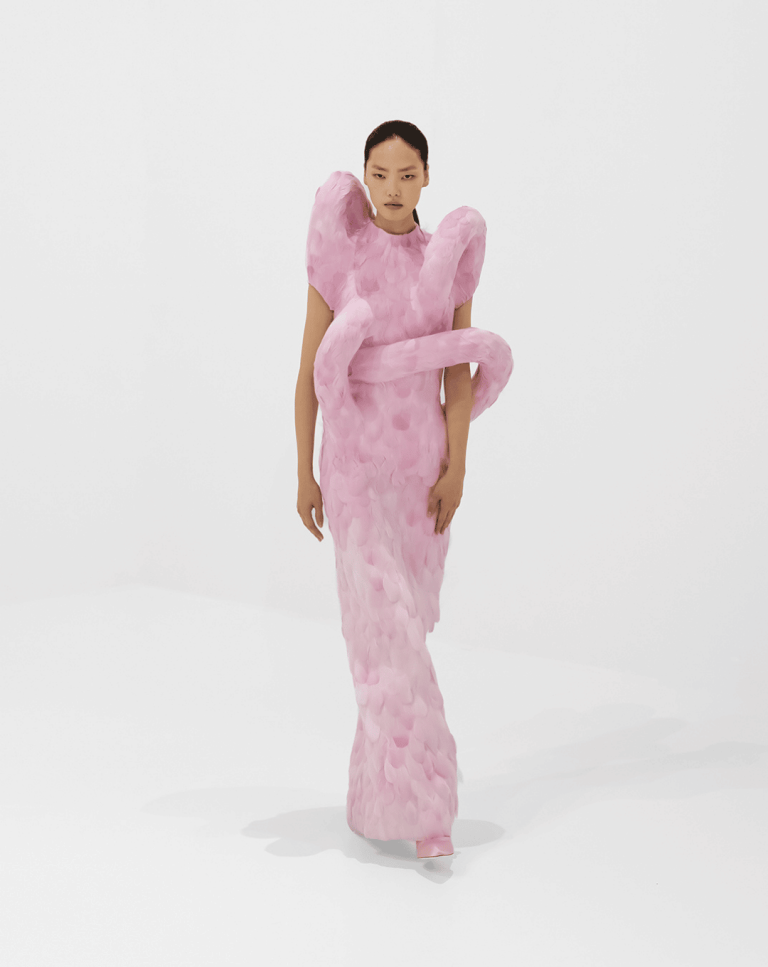
Looks 7, 19 and 26
Out of the five designs, AM plays a different structural role across looks 7, 19 and 26.
In Look 7, a sculptural bust, the 3D printed part is a foundation rather than a finished surface: the base was sanded, primed and repeatedly latex-dipped to a skin-like finish matched to the model’s complexion, with beauty marks painted on, anatomical details worked by hand and a winding zipper set into the back. Here AM’s contribution is the dimensional accuracy of a body-fitted substrate that hand craft can then build on.
 In Look 19, the logic is modular: individual PA12 petals were printed separately and hand-assembled into a complex three-dimensional composition, so AM stands out for reproducing intricate, lightweight elements at consistent precision while leaving each one open to customization.
 In Look 26, the 3D printed part is the garment’s architecture, a custom TPU structure engineered for fluid, continuous forms that stay flexible and lightweight, defining the silhouette itself and pointing to a different approach to garment construction.
 In each case, the manufacturing route reveals the possibility with the material choice (PA12 versus TPU) tracking whether the piece needed rigidity or wearable flex.
Discover here other applications of AM in the fashion and creative industries. *All images: courtesy of Sculpteo.
*We curate insights that matter to help you grow in your AM journey. Receive them once a week, straight to your inbox. Subscribe to our weekly newsletter.