The US Air Force has selected a small, Virginia-based company as the only small business prime contractor in its Family of Affordable Mass Missiles (FAMM) framework agreement.
Named CoAspire, the prime contractor was founded in 2013 by Doug Denneny, a former naval officer with over 3,300 flight hours in fighters including the F-14 Tomcat and F/A-18 Super Hornet.
Before establishing CoAspire, Denneny served as an instructor at the prestigious TOPGUN School and held leadership roles at Boeing and MBDA. The company operates a production facility in Manassas, Virginia, and its leadership team includes a former US Navy admiral and engineers with extensive experience in USAF weapons programs.
This background provides a solid foundation for the company to understand operational needs from the inside.
The FAMM Program: Scale without cost
The FAMM initiative represents a strategic pivot for the Department of War. Current high-precision cruise missiles, such as the Lockheed Martin JASSM, cost over $1 million per unit. The FAMM goal is to slash that to approximately $218,000, enabling deployment in large swarms for the cost of a single conventional weapon. The program aims to deliver up to 28,000 missiles over its first five years, with production beginning in 2027.
CoAspire’s additive manufacturing approach
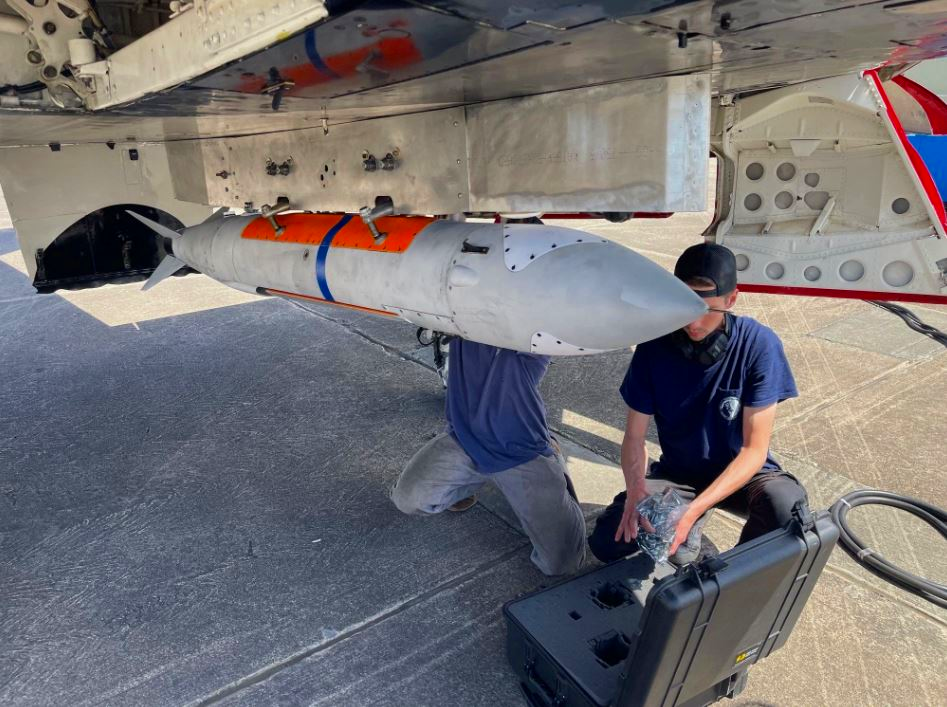
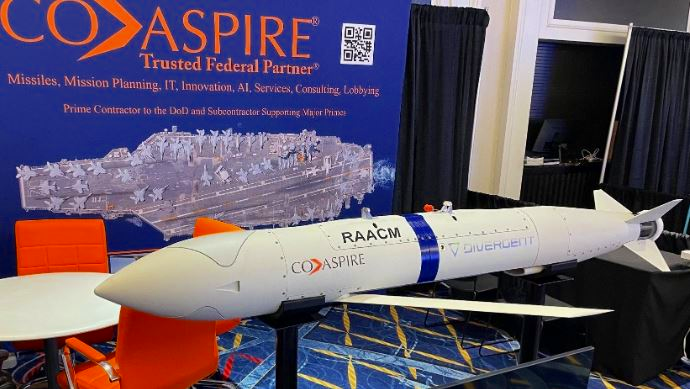
At the heart of CoAspire’s competitive advantage lies the RAACM (Rapidly Adaptable Affordable Cruise Missile), designed for production using additive manufacturing.
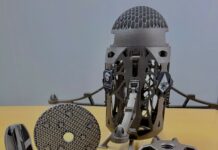
Unlike traditional cruise missile production, which relies on extensive tooling and manual assembly, the RAACM’s 3D-printed fuselage, wings and stabilizers require no special tooling during assembly, significantly reducing touch labour and production cost.
The approach delivers tangible advantages. CoAspire has already demonstrated the ability to design, build and flight-test a missile in four months. As reported by 3D ADEPT in May 2025, Divergent Technologies delivered the RAACM’s fuselage, wings and fins within just 10 weeks, using its DAPS manufacturing system. This speed was crucial to enable design iteration, rapid deployment of variants and the kind of adaptive production FAMM requires.
A network of 56 suppliers
CoAspire operates through a network of over 56 US suppliers, including propulsion specialists, composite experts and additive manufacturing leaders such as Divergent Technologies and X-Bow.
This distributed, partnership-driven approach spreads capacity across the country and reduces supply chain vulnerability.
“Our inclusion in this FAMM programme underscores CoAspire’s ability to revolutionise our country’s attack capabilities with a long-range solution deployable across multiple platforms. We and our 56 suppliers are excited to support the USAF’s need to acquire thousands of FAMM cruise missiles affordably. This is a true commitment to expanding the defence industrial base whilst creating jobs across the US and bringing affordable cruise missile capabilities to the Air Force,” said Doug Denneny, CEO and founder.
Looking ahead
CoAspire’s selection validates the idea that AM is a fundamentally different approach to production economics, design flexibility and supply chain resilience.
Whether CoAspire and its suppliers can scale to 28,000 units whilst managing the complexities of flight-critical systems will become the defining test of that principle.
The initial article proposed by David del Fresno Torrecillas has been edited for clarity.
*We curate insights that matter to help you grow in your AM journey. Receive them once a week, straight to your inbox. Subscribe to our weekly newsletter