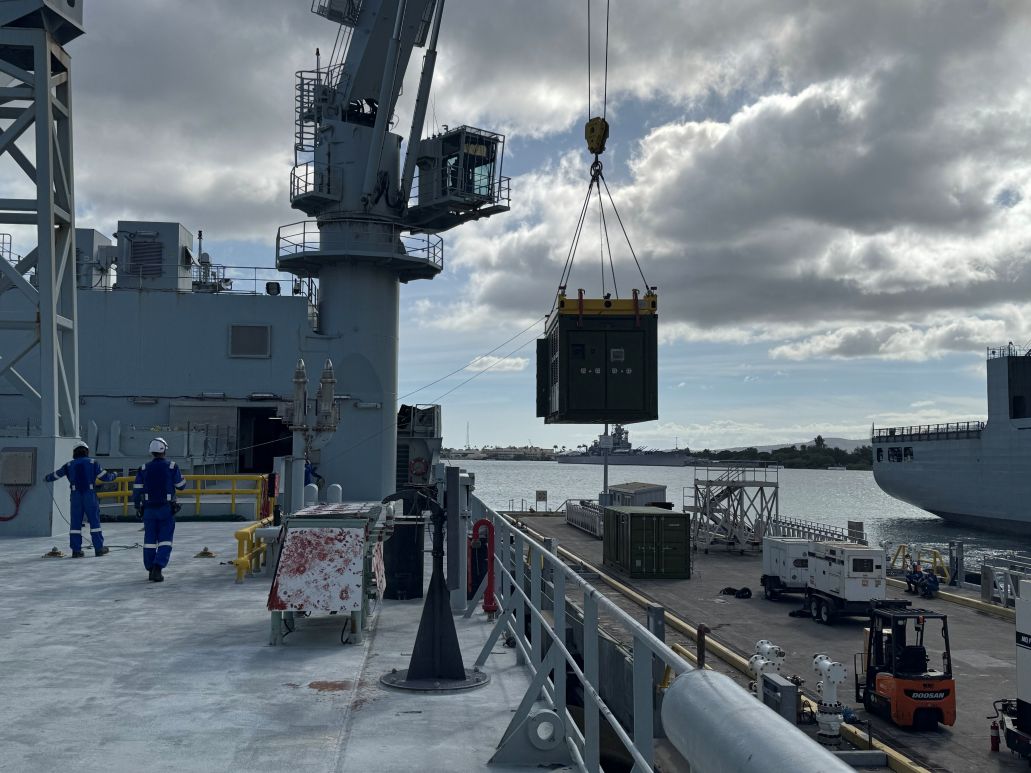
SPEE3D’s cold spray metal additive manufacturing was recently chosen to manufacture mission-critical parts at sea across a distributed network reaching from ship to shore.
The manufacturing process of these parts took part at RIMPAC 2026, the world’s largest international maritime exercise. The US join-branch effort is made up of the Consortium for Advanced Manufacturing Research and Education (CAMRE) at the Naval Postgraduate School (NPS), with the US Army Combat Capability Development Command Army Research Laboratory (ARL) as its government lead, alongside the Tennessee Army National Guard and the University of Tennessee Knoxville (UTK) Defense Development and Applied Research Center (DARC).
All the manufacturing technologies used onsite were deployed through a Partnership Intermediary Agreement with FLEETWERX, an innovation hub bringing together experts from government, industry, and academia.
“Producing parts at sea on NATO vessels using coalition equipment is an example of the flexibility and interoperability that are key to modern operations,” said Morgan Bower, FLEETWERX Hub Director. “RIMPAC offers a unique opportunity to bring innovative advanced manufacturing capabilities out of the lab and test them in a realistic maritime environment.”
The exercise conducted with cold spray metal AM
In the list of 50+ advanced manufacturing technologies deployed across the exercise, SPEE3D cold spray systems were used to 3D print 32 mission-critical metal parts.
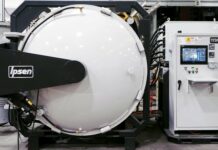
Twenty-four were printed through the global reach back capability of the Knoxville Armory, and eight at sea aboard the MV Asterix using SPEE3D’s EMU system. Twenty-nine of the 32 were taken to full completion, including heat treatment and machining.
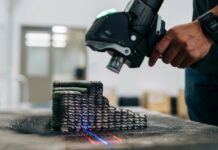
As a reminder, SPEE3D’s Cold Spray AM deposits metal powder at supersonic speed to build dense metal parts without melting, making it rugged and compact enough to work in the field and at sea. The EMU pairs the containerized XSPEE3D metal 3D printer with an integrated SPEE3Dcell post-processing and machining unit, so a part can go from print to finished component without leaving the ship.
“At RIMPAC 2026 we deployed our Expeditionary Manufacturing Unit at sea for the first time, printing mission-critical metal parts on an open deck in heavy seas aboard the MV Asterix, alongside the US Navy and the Royal Canadian Navy. That is what it means to bring production to the fight. Across our deployments, we have now proven Cold Spray Manufacturing in sub-zero, tropical, battle-damage and at-sea conditions, the proof that SPEE3D works where supply chains fail. We’re proud to have supported our partners in putting this to the test in one of the most demanding environments there is,” said Byron Kennedy, CEO of SPEE3D.
RIMPAC 2026, the 30th iteration of the world’s largest international maritime exercise, ran in and around the Hawaiian Islands brought together dozens of allied and partner nations, 40 surface ships, five submarines, 140 aircraft, and more than 25,000 personnel.
All images: SPEE3D. *We curate insights that matter to help you grow in your AM journey. Receive them once a week, straight to your inbox. Subscribe to our weekly newsletter.