The Institute Digital Additive Production (DAP) at RWTH Aachen University is making computational geometry algorithms for the development of computer-aided manufacturing software for additive manufacturing (AM CAM software) available as open source.
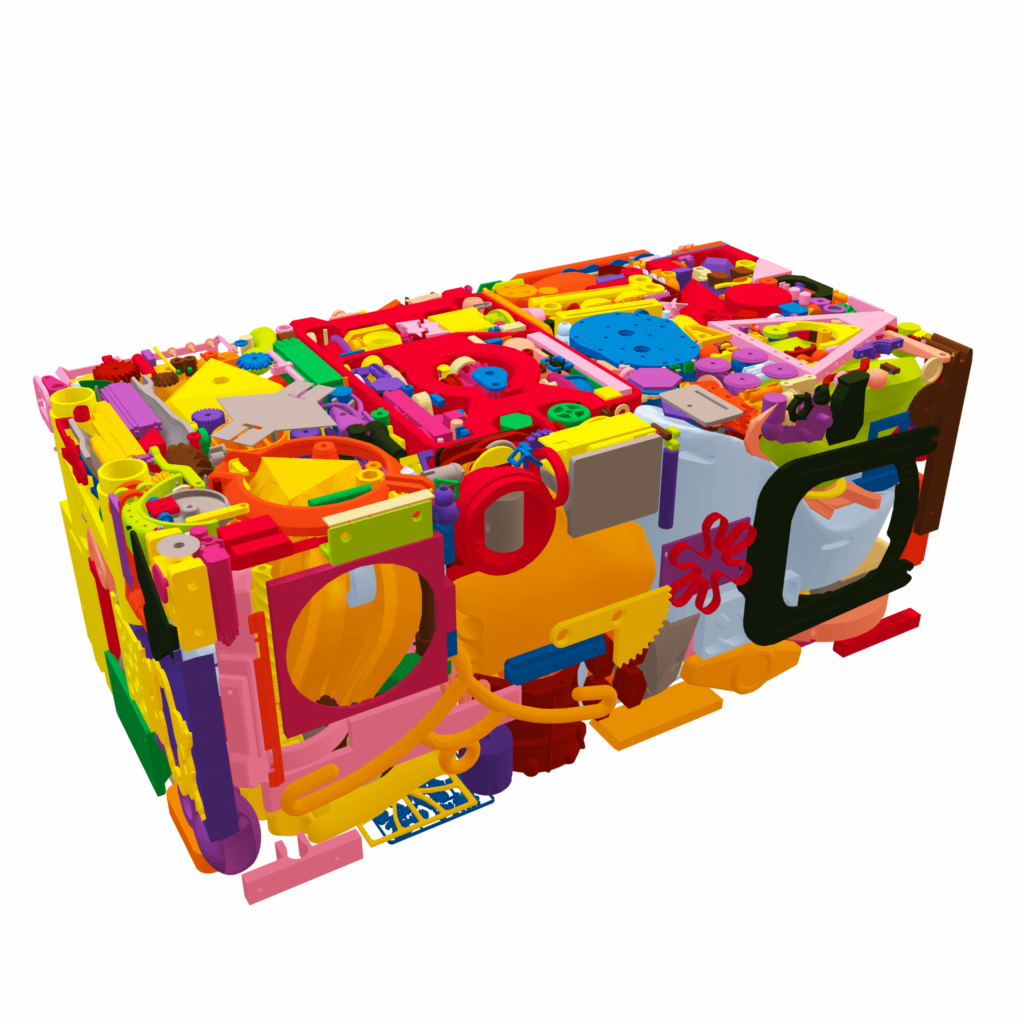
AM CAM functions, such as determining the orientation of part geometries and arranging them without overlapping within the build volume through nesting (as seen in the multicolor image below) rely on geometry-processing algorithms.
The choice of algorithms and the way they are implemented have a significant impact on the computational workload, memory requirements, and robustness of an AM CAM software system. These factors, in turn, affect the manufacturing costs, lead times, and quality of additively manufactured parts.
As parts become larger and machines incorporate multiple lasers, the volume of data that AM CAM software must process continues to grow. If data structures and geometry algorithms have poor scaling characteristics, processing times can increase from a few minutes to several hours or even days. At the same time, memory requirements may increase severalfold, eventually pushing the software to the limits of practical usability.
More powerful computing infrastructure can compensate for this only to a limited extent. In many cases, efficient geometry-processing algorithms can avoid much of this additional computational overhead altogether.
Geometry algorithms for robust, high-performance CAM software
DAPComputationalGeometry (DAP-CG) provides geometry algorithms for optimizing or developing AM CAM software for build orientation, support structure generation, nesting, slicing, and scan strategy calculation.
The library is implemented in C# and builds on the open-source libraries geometry3Sharp and Clipper2. It contains substantial extensions and performance optimizations, particularly for processing two-dimensional polygons and vectors.
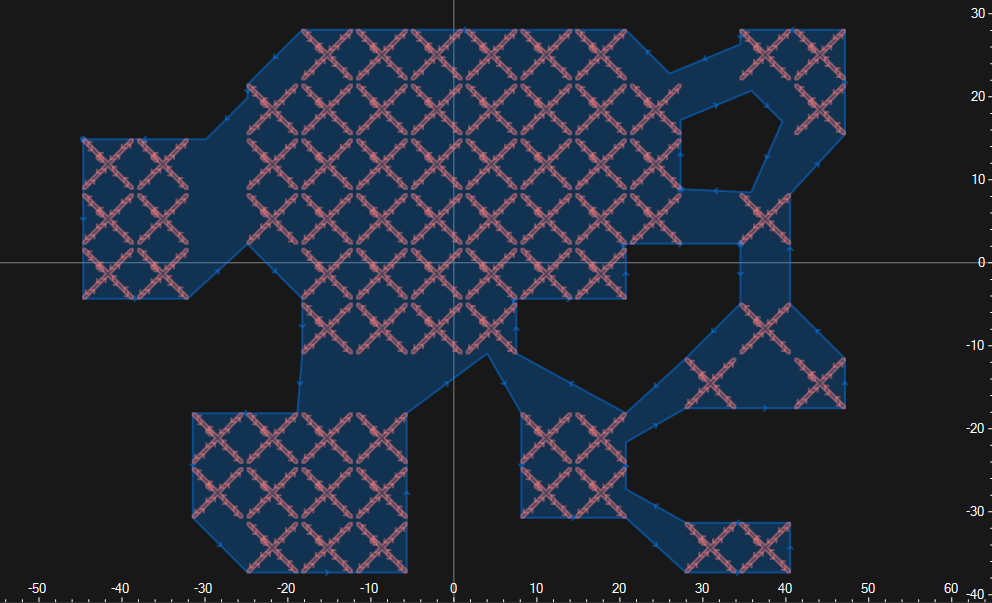
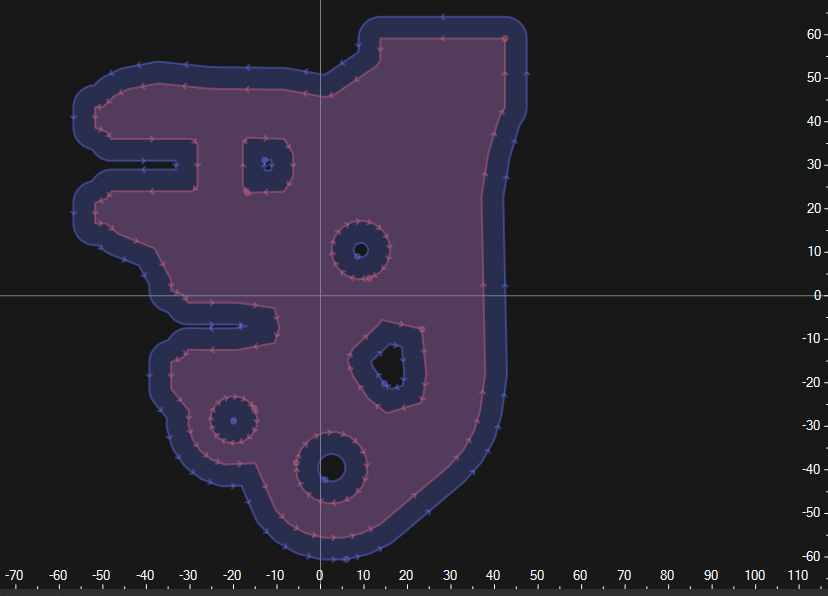
These include algorithms that aggregate multiple polygons into one (as seen in the image below), reducing data volume before computationally intensive processing steps, as well as polygon operations that robustly avoid self-intersecting polygons and remove redundant polygon vertices. By using modern C# language features such as Span and SIMD, the library significantly accelerates the translation and rotation of geometries.
Developed for industrial requirements
The functions included in DAP-CG originated from industry-oriented development tasks at DAP. During the development of nesting optimization software in the project “Industrialization and Digitalization of Additive Manufacturing (IDAM)”, the use of a polygon compression algorithm reduced the memory required for nesting by a factor of 5. Applying polygon compression in slicing and scan strategy calculation software achieves savings of a similar magnitude. In practice, this determines whether a large build job can still be processed on a standard desktop computer with 32 GB of RAM or whether a workstation or server with several times that amount of memory is required – and, in the case of rented computing infrastructure, how much memory has to be paid for.
A second application example is the institute’s part orientation software. Based on quality- and cost-related target criteria, it determines the most favorable orientation in which a part is manufactured.
Algorithms from DAP-CG calculate, among other things, whether and to what extent the various orientation options require support structures, which is one of the key cost drivers and post-processing factors in additive manufacturing.
Integrating DAP-CG into your own software environment
DAP-CG is released under the Boost Software License, a widely used permissive open-source license (https://spdx.org/licenses/BSL-1.0.html). The library can therefore be used free of charge in research and industry, including commercial and industrial products.
*We curate insights that matter to help you grow in your AM journey. Receive them once a week, straight to your inbox. Subscribe to our weekly newsletter.