


Feature first published in the October–November 2019 issue of 3D ADEPT MAG, then online in June 2021. Interviews and material values retain their historical context and do not replace a current technical data sheet.
Elastomers are materials that are part of the big family of polymers. Generally speaking, they refer to rubbers, i.e. macromolecular, natural or synthetic substances that integrate the elasticity of rubber. They are found in almost all daily objects. They are also widely used across a wide range of industries including the automotive, aeronautics, transport, electrical industry and medicine; sectors that harness additive manufacturing, hence the interest in tackling this topic.
Elastomers are formulated with additives or fillers to achieve selected properties. Some products can also be reinforced, but adding metal or textile does not itself define an elastomer. Formulations, sometimes proprietary, and manufacturing conditions explain why two grades may perform differently.
General characteristics of elastomers
The distinction between rigid plastics and rubber is incomplete: thermoplastic elastomers (TPEs) combine flexible, elastic behaviour with thermoplastic processing. TPU is a family of TPEs, not a separate peer category.
Elastomeric materials that are mechanically recognized as a rubber are:
- Flexibility: relatively low stiffness, varying with grade and temperature.
- Deformability: large strains before fracture; elongation at break measures a limit, not a strain that is always recoverable.
- Elasticity and viscoelasticity: recovery towards the original shape under suitable conditions, with some energy dissipation and potentially residual deformation.
In 2019, interviewees still described limitations in AM material choice and qualification. Each formulation must suit its process: flow and thermal behaviour in extrusion, powder properties in SLS, or photopolymerisation chemistry for a resin.
Elastomers that are suitable for additive manufacturing
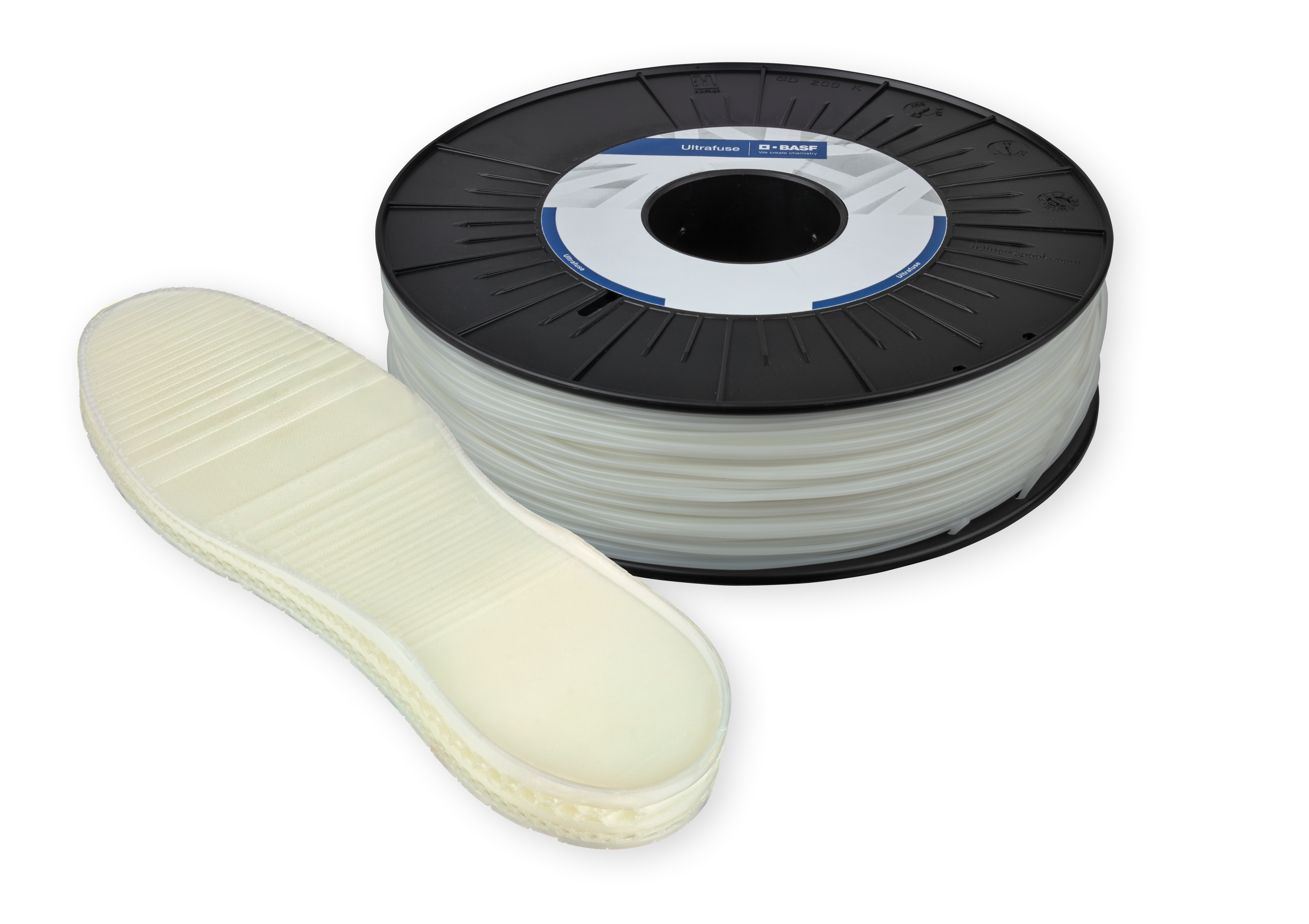
The flexible offerings discussed include TPUs, flexible PLA or PE formulations and rubber-like photopolymers. Flexibility alone does not classify a material as an elastomer: shape recovery, hardness and service behaviour need characterisation.
For this 2019 feature, Albert de Boer, additive manufacturing engineer at Innofil3D, and Franco Cevolini, VP & CTO of CRP Technology, discuss their companies’ materials and processes.
Dutch FDM/FFF filament producer Innofil3D was acquired by BASF in August 2017. The acquisition was therefore not new when this feature appeared online in 2021.
CRP Technology is part of an industrial group associated with motorsport, precision machining and component development. Its Windform materials are notably used with laser sintering.
For Albert de Boer: “an elastomer is far more flexible than the more regular used rigid thermoplastic polymers such as PLA for example. The main elastomeric polymers I think, which are used in AM, are TPU materials with different shore grades. TPU stands for Thermoplastic polyurethanes. Consisting of hard and soft segments to control the shore hardness.”
Franco Cevolini states that “the main elastomers used in the AM market belong to TPE and TPU. TPE stands for Thermoplastic elastomers, TPU stands for thermoplastic polyurethane. CRP Technology’s elastomer is Windform® RL, and it is part of TPE family.”
These accounts highlight TPEs, including TPUs. They reflect the interviewees’ offerings and markets rather than a global market-share measurement.
Which elastomer for which AM technology?
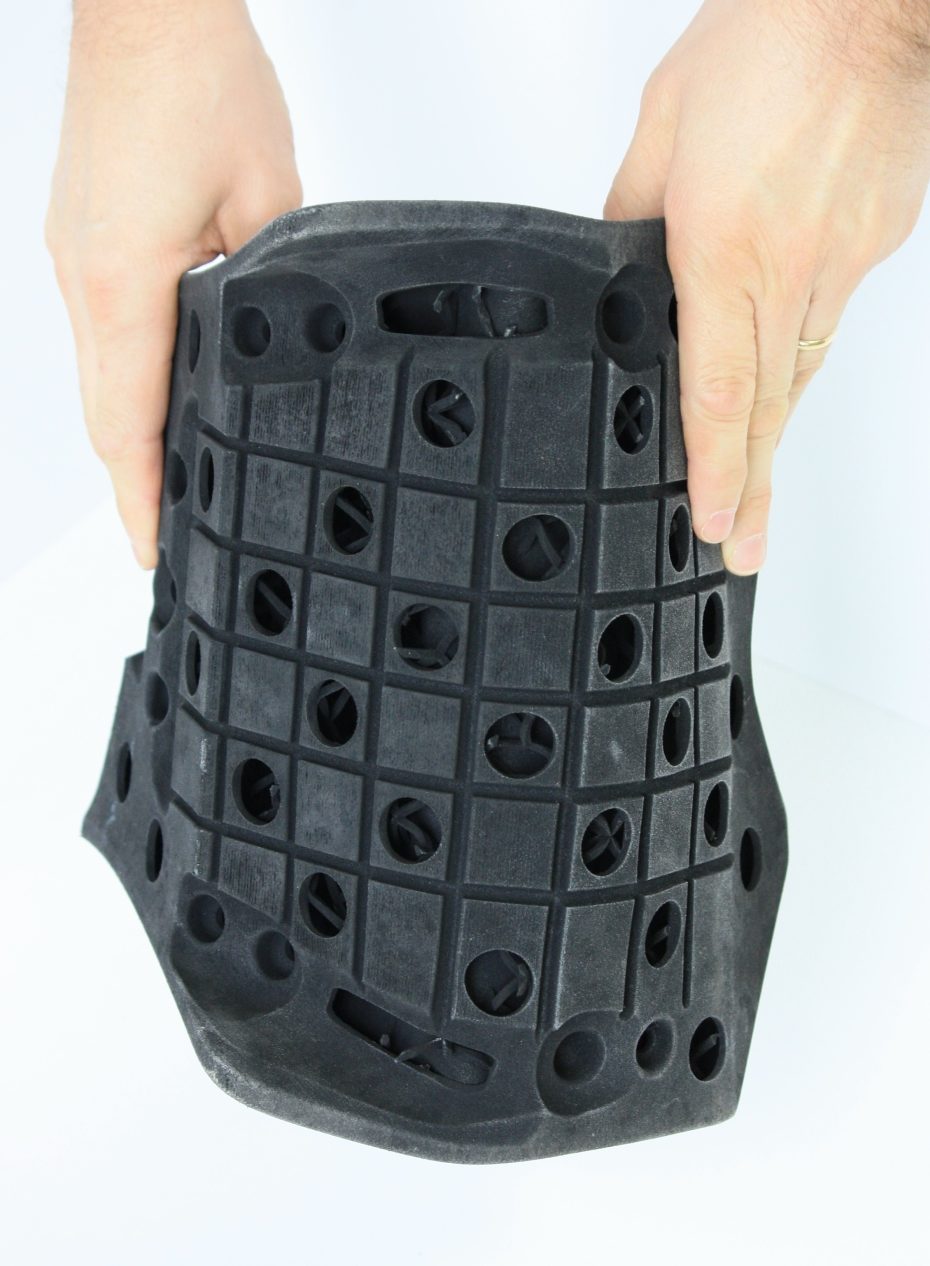
Printable elastomers are not exclusive to FDM/FFF. The Innofil3D filaments discussed here concern extrusion; other formulations serve powder bed fusion or photopolymerisation processes.
CRP Technology presents SLS as its process of choice for these applications. That preference reflects its offering and experience; selection also depends on geometry, material and manufacturing requirements.
However, it should be noted some AM suppliers have developed materials that can be used to produce functional parts.
In its November 2018 announcement, Stratasys distinguished TPU 92A for FDM with soluble supports from new materials for more realistic PolyJet prototypes. These are different processes and materials, not interchangeable descriptions.
Offered across the F123 3D Printer platform, the Stratasys TPU 92A Elastomer is designed to meet the needs of manufacturers requiring high part elongation, superior toughness, and full design freedom.
“Creating elastomer parts using traditional silicone or CNC molds are extremely costly and time-consuming – while it is our view that other additive techniques just cannot deliver parts with the size and complexity of our elastomer approach,” Zehavit Reisin, Vice President and Head of Solutions and Materials Business, Stratasys. “Manufacturers demand 3D printing solutions that can be put to work in real prototyping and extreme production environments. With reliable and highly resilient parts, our solutions are designed to enable customers to do just that.”
This comparison expresses Stratasys’ view at the material’s launch; it does not establish a general impossibility for other processes.
Technical specifications and applications of elastomers in AM
Properties depend on grade, process and test conditions. Ultrafuse TPU 85A is a TPU; CRP describes Windform RL as a TPE whose formulation is not disclosed here. Both should not therefore be presented as the same type of TPU.
Albert de Boer describes Ultrafuse TPU 85A as a natural-white filament offering resilience, wear resistance, low-temperature flexibility and damping. Suitability still needs verification under the intended operating conditions.
“Its chemical properties (e.g. resistance against particular substances) and tolerance for solvents can be made available, if these factors are relevant for a specific application”, adds the company.
Franco Cevolini on the other side, presents Windform® RL (“RL” stands for rubber like), the first thermoplastic elastomer material within Windform® TOP-LINE family of high-performance composite materials.
“Just like all Windform® TOP-LINE materials, it is designed for laser sintering technology. Windform® RL shows excellent durability and stability. If elastomers lose their properties over time; it should be noted that it doesn’t happen to Windform® RL. The material accommodates chemicals and heat resistance and combines superior tear resistance with burst strength. Windform® RL withstands repeated bending and deformation. It is also UV resistant. Being a TPE material and thanks to its main properties, it assures high performance sealing power. Since it is a TPE material and thanks to its main properties, Windform® RL can be sealed to assure high performance sealing power.”
The stability claim is the supplier’s assessment: it does not rule out ageing or the need for testing under the application’s heat, chemical exposure and loading conditions.
| Property | As sintered | After RL Seal infiltration |
|---|---|---|
| Tensile strength (MPa) | 5.2 | 5.0 |
| Tensile modulus (MPa) | 20.0 | 20.3 |
| Elongation at break (%) | 397.1 | 383.6 |
| Shore A hardness | 84.8 | 83.0 |
These historical values are retained to represent the interview. The manufacturer sheet revised in October 2025 gives different elongation values and a different test method. For a current project, request the sheet applicable to the grade and process; do not treat the 2019 table as a current guarantee.
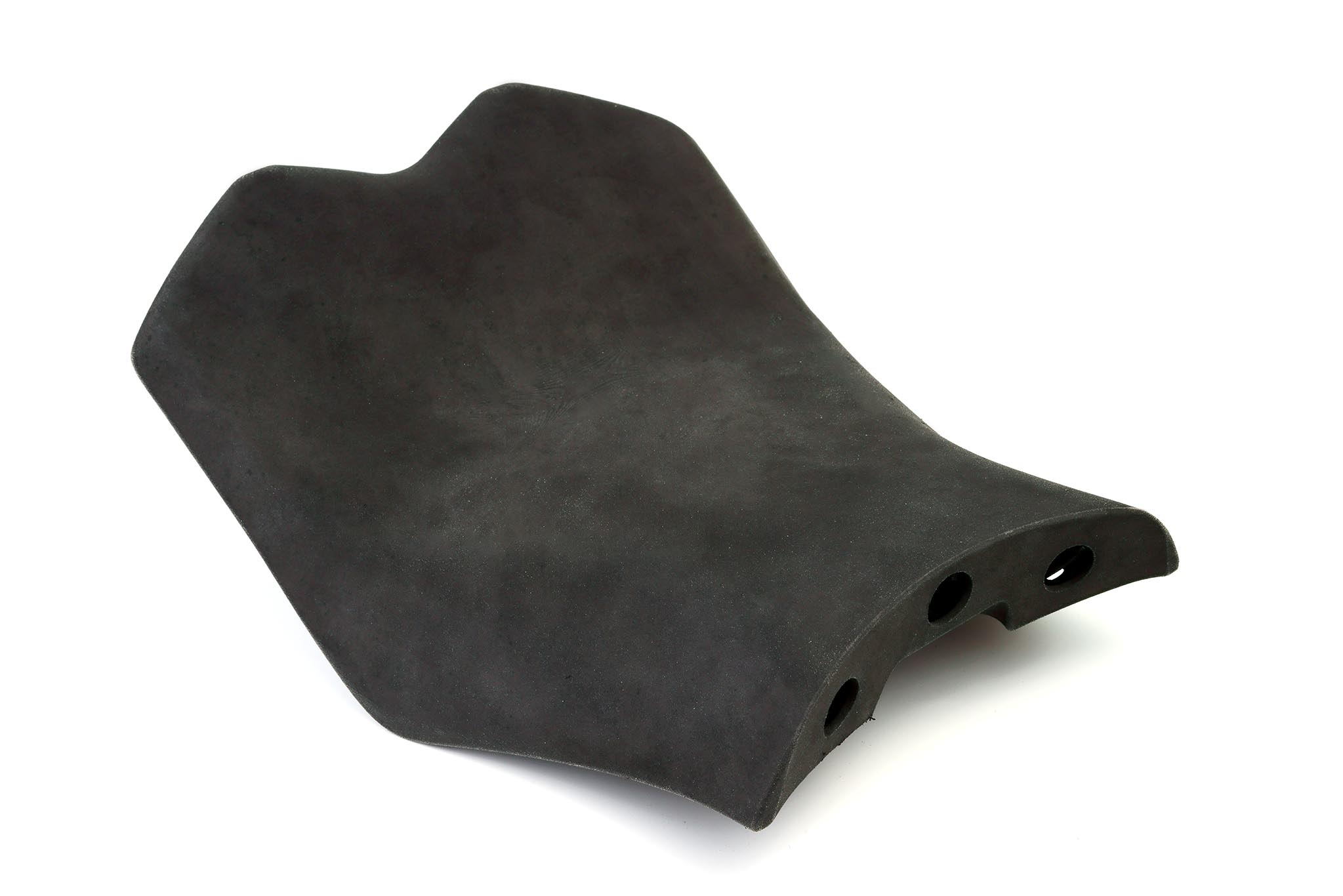
The Energica case documented by CRP combines a soft Windform RL component with a Windform GT seat plate. These seat prototypes supported assembly and road testing before injection tooling was made. The photographs show the soft seat component, not an air inlet.
Market expectations
In his technical article published in 2000 by Techniques de l’Ingénieur, Michel Biron describes TPEs as combining elastic behaviour with ease of processing. He notes that their elasticity operates within a temperature range limited by the softening of their rigid domains.
These 2019 examples show several material–process combinations, not an exhaustive market inventory. Qualification for one machine or application does not establish qualification for every other one.
Developing series-production applications depends on repeatable properties, controlled costs and in-service validation. Flexibility alone guarantees neither performance nor market growth.
Disclaimer: this article has originally been published in 2019 October-November issue of 3D ADEPT Mag
THE 3D ADEPT WEEKLY NEWSLETTER
The industry moves fast. Stay ahead.
Every week, the latest additive manufacturing news, in-depth features and real-world applications, straight to your inbox. Plus, be the first to know when a new issue of 3D ADEPT Mag is out.
Free · One email a week · Unsubscribe anytime
Clicking loads our email provider’s sign-up form, including its analytics and Google’s anti-bot protection. You’re only subscribed if you complete the sign-up. Read our privacy policy.